Table of Contents
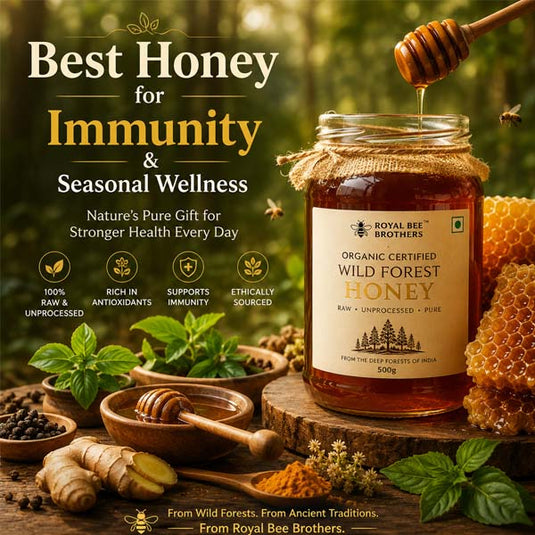
Best Honey for Immunity and Seasonal Wellness

Why Royal Bee Brothers Wild Forest Honey is Nature’s Timeless Wellness Treasure
In the untouched forests of India, where ancient trees bloom through changing seasons and bees travel freely across medicinal flowers, wild honey has always been more than a sweetener. It is tradition, wellness, survival, and a symbol of the bond between humans and nature.
Long before modern wellness trends popularized immunity-boosting foods, tribal communities and forest dwellers across India relied on raw wild forest honey for seasonal strength, nourishment, and vitality. Deep within the forests of Sundarbans, Western Ghats, Bastar, and Odisha, honey hunters collected golden nectar using traditional methods passed down through generations.
Today, as people increasingly search for the best honey for immunity, best raw honey in India, and natural wellness alternatives, authentic raw forest honey is once again gaining recognition for its richness, purity, and traditional value.
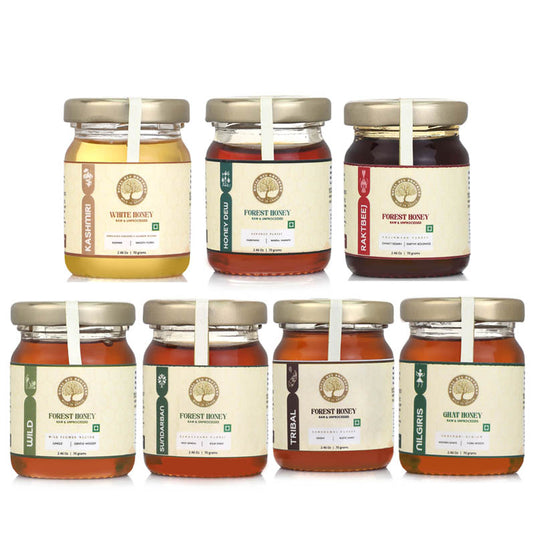
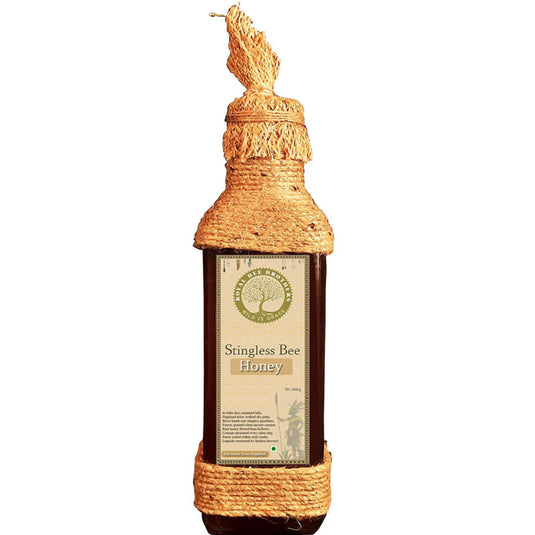
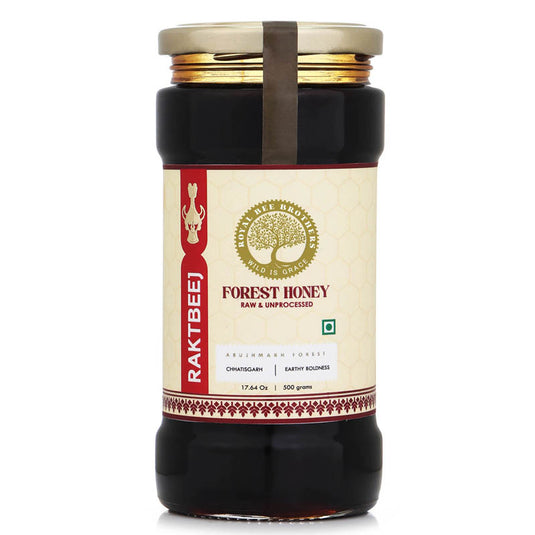
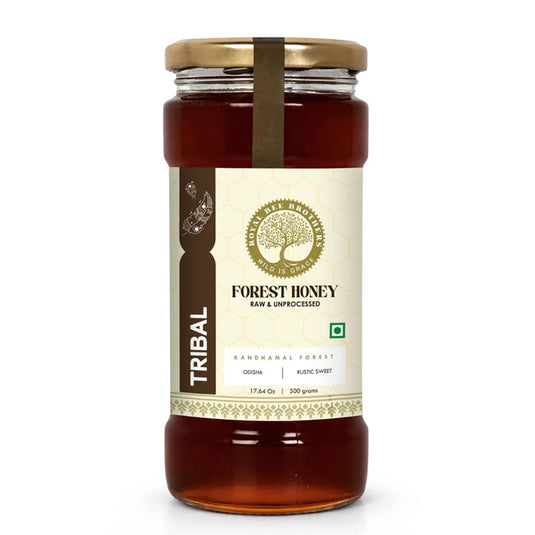
At Royal Bee Brothers, every jar of Organic Certified Wild Forest Honey and Tribal Forest Honey carries the story of forests, bees, indigenous wisdom, and sustainable living.
Why Honey Has Been Associated with Wellness for Centuries
Across Ayurveda and traditional wellness systems, honey has been respected as a natural ingredient valued for its soothing texture, antioxidant content, and nutritional complexity. Ancient Indian households often used honey during seasonal transitions, winter months, and monsoon weather.
Natural Components Found in Raw Honey
- Enzymes
- Antioxidants
- Polyphenols
- Amino acids
- Trace minerals
- Natural sugars
The composition of wild forest honey becomes even more unique because bees forage from diverse medicinal flora, forest blossoms, wild herbs, and native flowering plants.
Why Consumers Prefer Forest Honey
- Pure forest honey for immunity
- Antioxidant rich honey India
- Natural honey for winter wellness
- Raw forest honey India
- Forest honey online India
What Makes Wild Forest Honey Different from Commercial Honey
Many commercial honey products are heavily filtered, blended, heated, and standardized for uniform taste and appearance. Excessive processing may reduce natural enzymes and alter the complexity of raw honey.
Wild forest honey is different because it is harvested from forests where bees naturally forage across diverse ecosystems rather than monoculture farms.
Benefits of Wild Forest Honey
- Richer flavor complexity
- Diverse pollen composition
- Higher antioxidant variation
- Natural texture and aroma
- Seasonal uniqueness
The Science Behind Raw Honey Benefits
Modern nutritional research increasingly supports what forest communities have known for generations — raw honey contains naturally occurring bioactive compounds associated with antioxidant activity and overall wellness support.
Bioactive Compounds Found in Raw Honey
- Flavonoids
- Phenolic compounds
- Organic acids
- Enzymes
- Polyphenols
These compounds are often associated with antioxidant activity. Foods rich in natural antioxidants may help support the body’s natural defense systems.
Natural Enzymes Found in Raw Forest Honey
Raw honey contains naturally occurring enzymes that contribute to its biological complexity.
Common Enzymes in Raw Honey
- Glucose oxidase
- Diastase
- Invertase
Raw forest honey undergoes minimal processing, helping preserve much of its natural composition and nutritional integrity.
Why Floral Diversity Matters in Honey
The botanical origin of honey plays a major role in determining its flavor, aroma, antioxidant activity, and nutritional variation.
Advantages of Polyfloral Forest Honey
- Greater micronutrient diversity
- Complex flavor compounds
- Rich aromatic profiles
- Seasonal uniqueness
- Broader floral nutrition
Honey and Seasonal Wellness
In Indian households, honey has traditionally been consumed during changing weather conditions and colder months.
Traditional Wellness Combinations
- Honey with ginger
- Honey with tulsi
- Honey with turmeric
- Honey with cinnamon
- Honey with black pepper
The Role of Bees in Forest Ecosystems
Bees are among nature’s most important pollinators, supporting biodiversity, flowering plants, agricultural systems, and ecological sustainability.
Why Sustainable Honey Harvesting Matters
- Protects bee populations
- Preserves forest ecosystems
- Supports tribal livelihoods
- Encourages biodiversity conservation
- Maintains ecological balance
The Story of Honey Hunters and Forest Traditions
Behind every jar of wild forest honey is a story rarely seen by the modern world. Honey hunters often travel deep into forests, climbing tall trees and navigating difficult terrains to harvest honey sustainably.
These traditions are rooted in indigenous knowledge passed down across generations.
What Wild Honey Represents
- Forest heritage
- Indigenous wisdom
- Human resilience
- Ecological harmony
- Sustainable living
Why Consumers Prefer Raw Forest Honey Today
Modern consumers are becoming increasingly conscious about food purity and wellness. People are moving away from heavily processed products and searching for foods that feel natural, transparent, and ethically sourced.
What Modern Consumers Value
- Traceability
- Sustainability
- Authentic sourcing
- Minimal processing
- Traditional heritage
How to Include Raw Honey in Your Daily Routine
Raw forest honey can be incorporated into modern lifestyles in many simple ways.
Popular Daily Wellness Uses
- Honey with warm water
- Honey with herbal tea
- Honey with ginger and tulsi
- Honey as a natural sweetener
- Honey drizzled over fruits and nuts
Why Royal Bee Brothers Wild Forest Honey Stands Apart
Royal Bee Brothers is not simply a honey brand. It is a celebration of India’s forests, indigenous traditions, and sustainable wellness.
What Makes Royal Bee Brothers Unique
- Ethical sourcing
- Forest biodiversity
- Traditional honey harvesting
- Sustainable practices
- Authentic storytelling
Conclusion
In a world increasingly dominated by artificial ingredients and industrial food systems, raw wild forest honey reminds us of something ancient and deeply human — our connection with nature.
Royal Bee Brothers Wild Forest Honey represents more than wellness. It represents sustainability, heritage, purity, and the timeless stories of honey hunters who continue protecting forest traditions generation after generation.
Frequently Asked Questions
Is wild forest honey good for immunity?
Wild forest honey naturally contains antioxidants, enzymes, and bioactive compounds traditionally associated with seasonal wellness and overall vitality.
What makes raw honey different from processed honey?
Raw honey undergoes minimal heating and filtration, helping preserve natural enzymes and nutritional complexity compared to heavily processed commercial honey.
Which is the best raw honey in India?
Consumers increasingly prefer organic certified wild forest honey because of its purity, biodiversity-rich sourcing, and minimal processing.
Can honey be consumed daily?
Many people include moderate amounts of raw honey in their daily wellness routines as a natural sweetener and traditional wellness ingredient.
Why is forest honey unique?
Forest honey comes from bees foraging across diverse wild flora, medicinal plants, and native forest blossoms, creating richer flavor and nutritional variation.
Experience a Rare Forest Treasure
Discover the unique sweet-sour taste of Sundarbans Forest Honey from West Bengal — a rare, small-batch honey crafted by nature and presented as a premium gift.
Shop Mangrove Forest HoneyLimited harvest • Nectar of Wild Flora • Raw & Unprocessed
About Royal Bee Brothers
Royal Bee Brothers is dedicated to ethically sourced wild forest honey, tribal honey traditions, and sustainable wellness inspired by India's forests.
Explore Our Other Stories
From wild forests to ancient traditions, discover more untold journeys of nature, honey, and heritage.
Exploring India’s Wild Bounty
Stories of ancient wisdom, wild honey traditions, sacred forests, and nature’s timeless connection with humanity.
Mahwa: The Sacred Flower of Bastar
Mahwa symbolizes tribal culture, forest traditions, natural abundance, spirituality, and sustainable indigenous living.
Bastar’s Chapda Chutney
Bastar’s Chapda Chutney is a mysterious tribal delicacy, blending forest traditions, red ants, bold flavors, and ancient indigenous heritage.
The Honey Hunter of Katarniyaghat
Discover wild forest honey traditions, tribal honey hunters, jungle survival, natural heritage, and untamed wilderness stories.
Tales from Sundarban ! Part-1
Explore how mangroves protect coastlines and sustain rare biodiversity in tidal forests.
Tales from Sundarban ! Part-2
In Sundarbans folklore, Bengal tigers guard wild honey forests, where fearless honey hunters journey through dangerous mangroves for survival.
The Lush Forests of Kandhamal & Honeyguide
Mythical stories that define the spiritual balance between humans, birds, and forest.