Komaram Bheem: The Eternal Voice of Jal, Jangal, Jameen
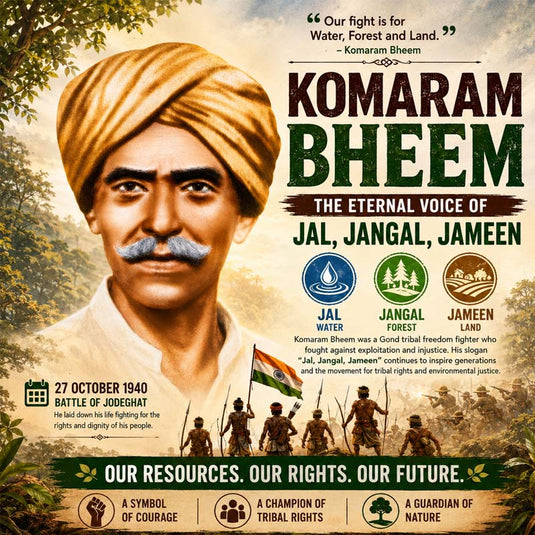
Komaram Bheem was one of India's greatest tribal freedom fighters and a powerful voice for indigenous rights. Known for the slogan Jal, Jangal, Jameen (Water, Forest, and Land), he dedicated his life to protecting the rights of tribal communities over their natural resources. His story continues to inspire environmental conservation, sustainability movements, and community-led development across India.
Table of Contents
- Introduction: A Hero Born from the Forests
- Birth and Family Background
- The Tragedy That Changed His Life
- Life Beyond the Village
- Understanding the World Through Tribal Wisdom
- The Birth of Jal, Jangal, Jameen
- Organizing Tribal Resistance
- The Historical Context of British-Era India
- The Battle of Jodeghat
- Komaram Bheem and the Philosophy of Royal Bee Brothers
- Legacy and Recognition
- Frequently Asked Questions
Introduction: A Hero Born from the Forests
India's freedom struggle is often remembered through national leaders who challenged colonial rule. Yet, deep within the forests of central India emerged a remarkable tribal hero whose fight was not only for freedom but also for the protection of nature and indigenous rights.
That hero was Komaram Bheem, a Gond tribal freedom fighter whose message continues to resonate across generations.
Long before sustainability became a global concern, Komaram Bheem advocated a simple yet powerful philosophy:
"Jal, Jangal, Jameen" — Water, Forest, and Land.
This slogan represented survival, identity, dignity, and the fundamental rights of tribal communities over their natural resources.
Birth and Family Background
Komaram Bheem was born around 1900–1901 in Sankepalli village in present-day Telangana. He belonged to the Gond tribe, one of India's largest indigenous communities.
His father, Komaram Chinnu, and mother, Som Bai, lived a simple life dependent on agriculture and forest resources.
For the Gond people, forests were not merely sources of livelihood. They were home, food, medicine, culture, and spirituality.
Young Bheem grew up surrounded by rivers, forests, wildlife, and traditional knowledge passed down through generations.
These early experiences shaped his understanding of ecological balance and community life.
The Tragedy That Changed His Life
During Bheem's childhood, increasing restrictions on forests and land rights began affecting tribal communities.
One of the most significant events in his life was the death of his father during disputes linked to land and forest rights.
The tragedy deeply affected him and exposed him to the realities of oppression faced by indigenous communities.
It was during this period that the seeds of resistance began taking root.
Life Beyond the Village
As a young man, Komaram Bheem traveled to different regions, including present-day Chhattisgarh and Assam.
These journeys exposed him to wider political developments and the growing Indian freedom movement.
He observed that indigenous communities across India faced similar challenges:
- Loss of land
- Restrictions on forest access
- Economic exploitation
- Loss of traditional livelihoods
These experiences strengthened his determination to fight for tribal rights.
Understanding the World Through Tribal Wisdom
Unlike many political leaders, Komaram Bheem's education came from lived experience.
He understood the relationship between rivers, forests, wildlife, and communities.
He believed that nature was not a resource to be exploited but a living system that sustained all life.
This worldview later became the foundation of the Jal Jangal Jameen movement.
The Birth of Jal, Jangal, Jameen
As tribal struggles intensified, Komaram Bheem articulated a slogan that would define his legacy.
Jal (Water)
Water sustains life. Rivers, streams, and natural water sources are essential for communities, agriculture, and ecosystems.
Jangal (Forest)
Forests provide food, fuel, medicine, shelter, and biodiversity. For tribal communities, forests are central to identity and culture.
Jameen (Land)
Land represents livelihood, ancestry, and belonging. Without land, communities lose both economic security and cultural roots.
Together, these three elements formed a comprehensive vision for indigenous self-determination.
Organizing Tribal Resistance
Throughout the 1920s and 1930s, Komaram Bheem emerged as a respected leader among Gond communities.
He organized villages and encouraged people to unite against exploitation.
His movement focused on:
- Protection of forest rights
- Access to water resources
- Defense of ancestral lands
- Preservation of tribal identity
- Community self-governance
His leadership transformed local grievances into a larger movement for tribal dignity.
The Historical Context of British-Era India
Although the region was governed by the Hyderabad State, the wider political environment was shaped by British colonial influence.
Across India, indigenous communities increasingly faced displacement and restrictions on traditional practices.
Forests that had supported tribal populations for centuries came under administrative control.
Many tribal communities found themselves excluded from resources they had protected for generations.
Komaram Bheem's movement became one of the most significant tribal resistance movements in India.
Life in the Forest Camps
As resistance grew, Bheem and his followers often operated from forest regions.
The forests provided safety, support, and strategic advantages.
Villages shared information, resources, and solidarity.
For the movement, forests symbolized freedom and survival.
The Battle of Jodeghat
The defining event in Komaram Bheem history occurred at Jodeghat in 1940.
Authorities viewed the growing movement as a challenge and launched operations to suppress it.
In October 1940, forces surrounded Bheem and his followers.
Refusing to surrender, Komaram Bheem chose to stand with his people.
On October 27, 1940, he was martyred during the encounter.
The Battle of Jodeghat transformed him from a tribal leader into a symbol of resistance and courage.
Why Komaram Bheem Remains Important Today
Komaram Bheem's struggle was not only about political freedom.
It was about dignity, environmental stewardship, indigenous rights, and sustainable living.
His vision continues to inspire:
- Environmental movements
- Forest conservation initiatives
- Indigenous rights campaigns
- Sustainable development programs
The Forests That Sustained His People
The forests protected by Gond communities provided:
- Wild fruits
- Medicinal plants
- Natural honey
- Fuelwood
- Grazing land
- Water conservation
- Biodiversity habitats
For tribal communities, protecting forests meant protecting future generations.
The Honey Connection: Lessons from Nature
A thriving honey bee colony depends upon healthy forests, biodiversity, flowering plants, and clean water.
The relationship between bees and forests perfectly illustrates the philosophy of Jal Jangal Jameen.
If forests disappear, pollinators decline.
If biodiversity declines, ecosystems weaken.
If ecosystems weaken, communities suffer.
This interconnected relationship reflects the ecological wisdom championed by Komaram Bheem.
Komaram Bheem and the Philosophy of Royal Bee Brothers
The values championed by Komaram Bheem continue to resonate today.
At Royal Bee Brothers, forest honey represents more than a natural product.
It represents thriving ecosystems, biodiversity conservation, and respect for nature.
Every jar of forest honey begins with healthy forests and sustainable relationships between communities and ecosystems.
This reflects the same principles that inspired the Jal Jangal Jameen movement.
Tribal Knowledge and Sustainability
Modern sustainability increasingly recognizes the value of indigenous knowledge.
For centuries, tribal communities practiced:
- Sustainable harvesting
- Biodiversity conservation
- Water management
- Forest stewardship
- Resource regeneration
These practices remain highly relevant in addressing modern environmental challenges.
Cultural Heritage and Tribal Art
Tribal culture extends beyond environmental stewardship.
It encompasses storytelling, rituals, art, and community identity.
Traditional Indian art forms such as Pattachitra, Madhubani, and Worli Art celebrate humanity's connection with nature.
These traditions reflect values that align closely with Komaram Bheem's philosophy.
Lessons for Modern India
Respect Nature
Natural resources must be used responsibly.
Protect Biodiversity
Healthy ecosystems support both people and wildlife.
Value Indigenous Communities
Traditional knowledge provides valuable sustainability solutions.
Think Beyond Profit
Long-term well-being requires balancing economic growth and environmental protection.
Preserve Cultural Heritage
Communities thrive when traditions and identities are respected.
Legacy and Recognition
Today, Komaram Bheem is remembered as one of India's greatest tribal revolutionaries.
His legacy survives through memorials, museums, educational institutions, and public commemorations.
The district of Komaram Bheem Asifabad in Telangana bears his name.
His story is increasingly studied as part of India's tribal freedom movement and indigenous rights history.
Why Jal, Jangal, Jameen Matters More Than Ever
The world faces major challenges including climate change, biodiversity loss, deforestation, water scarcity, and land degradation.
Komaram Bheem's message offers a simple framework:
- Protect water
- Protect forests
- Protect land
These principles remain essential for building a sustainable future.
Frequently Asked Questions
Who was Komaram Bheem?
Komaram Bheem was a Gond tribal freedom fighter from Telangana who fought for indigenous rights and became famous for the slogan Jal Jangal Jameen.
What does Jal Jangal Jameen mean?
Jal Jangal Jameen means Water, Forest, and Land. It represents the rights of indigenous communities over natural resources.
Where was Komaram Bheem born?
He was born in Sankepalli village in present-day Telangana around 1900–1901.
What happened at Jodeghat?
The Battle of Jodeghat took place in 1940, where Komaram Bheem was martyred while resisting oppressive rule and defending tribal rights.
Why is Komaram Bheem important today?
His ideas continue to inspire environmental conservation, tribal empowerment, indigenous rights, and sustainable development initiatives.
Related Reading
- Birsa Munda: Tribal Hero of India
- Tantia Bhil: The Robin Hood of India
- Rani Gaidinliu: The Naga Freedom Fighter
- Benefits of Wild Forest Honey
- Top Tribal Revolutionaries of India
Conclusion: The Voice That Still Echoes Through the Forests
More than eight decades after his martyrdom, Komaram Bheem's message continues to inspire India.
His slogan, Jal, Jangal, Jameen, remains one of the most powerful expressions of environmental justice, tribal rights, and sustainable living.
As forests bloom, rivers flow, and bees gather nectar from wildflowers, the spirit of Komaram Bheem lives on.
His dream of protecting Water, Forest, and Land remains as relevant today as it was more than a century ago.