Forest Honey vs Regular Honey: Understanding the Real Differences Between Wild and Commercial Honey
Table of Contents
Introduction
Honey has been cherished for thousands of years as a natural sweetener, traditional remedy, and nutrient-rich food. Yet when consumers look to buy raw unpasteurized honey online or browse supermarket shelves, they are often faced with a confusing range of options—raw honey, organic honey, forest honey, wild honey, multifloral honey, commercial honey, and more.
One of the most common questions health-conscious buyers ask is: What is the difference between forest honey and regular honey? At first glance, both may appear similar. Both are produced by bees, contain natural sugars, and offer a sweet taste. However, when examined closely, forest honey and regular honey can differ significantly in terms of origin, nutritional composition, biodiversity, processing methods, flavor profile, purity, and biological activity.
Understanding these differences is important for anyone seeking healthier food choices, authentic natural products, or the best pure honey brand in India to support their wellness journey. In this comprehensive guide, we explore the key distinctions between forest honey and regular honey, helping you make informed decisions about which type best suits your lifestyle and wellness goals.
Read our Complete Forest Honey Origin Guide →Experience the Depth of Wild Polyfloral Terroir
Step away from highly processed commercial sugars. Elevate your well-being with authentic, unheated forest honey harvested directly from native forest reserves.
Explore Raw Wild HoneyDefining Forest Honey vs Regular Honey
What Is Forest Honey?
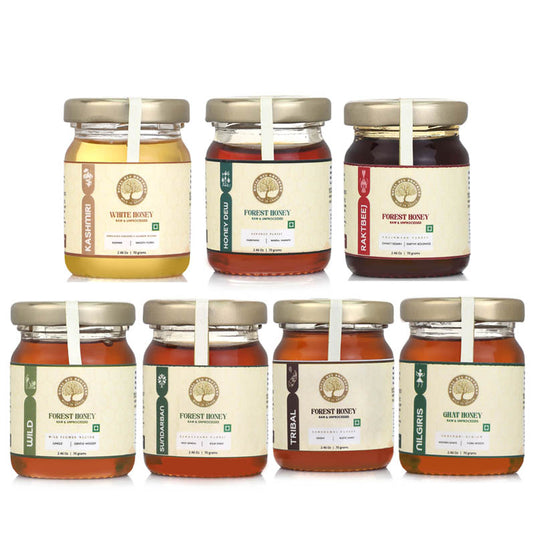
Forest honey is a premium, organic wild honey produced by bees that forage primarily in natural forests, deep woodlands, biosphere reserves, and other uncultivated ecosystems. Unlike managed agricultural environments, untouched forests contain a vast diversity of wild flowering plants, medicinal herbs, shrubs, vines, and native canopy trees. As bees collect nectar from these varied sources, they create a highly complex and naturally diverse honey. It is raw, unheated, high in botanical variety, and rich in organic pollen traces that preserve the native profile of the wilderness.
What Is Regular Honey?
The term "regular honey" generally refers to mass-produced, commercially available honey sold through supermarkets and mainstream retail channels. This honey is typically produced in managed apiaries where bees are placed near single agricultural crops such as mustard fields, sunflower farms, eucalyptus plantations, litchi orchards, or clover fields. To ensure consistency, commercial honey commonly undergoes multiple high-heat pasteurization, ultra-filtration, and blending phases to provide an identical, uniform color and permanently prevent natural crystallization on store shelves.
Forest Honey vs Regular Honey: Quick Comparison Matrix

| Feature | Raw Forest Honey | Regular Commercial Honey |
|---|---|---|
| Nectar Source | Wild uncultivated forests & woodlands | Agricultural crops & commercial farms |
| Floral Diversity | Extremely high (Polyfloral) | Moderate to low (Often Monofloral) |
| Processing Profile | Minimal (Raw, unheated, coarse mesh filter) | Extensive (High-heat pasteurized & blended) |
| Antioxidants | Highly rich & chemically diverse | Moderate to low; reduced by thermal processing |
| Enzyme Activity | Completely intact live enzymes | Significantly lowered or entirely degraded |
| Pollen Content | Fully retained natural pollen grains | Often removed via ultra-filtration |
| Flavor Complexity | Rich, variable, earthy & herbal notes | Uniform, highly predictable, simple sweetness |
| Crystallization | Highly common & natural occurrence | Rare; artificially suppressed via processing |
| Price Profile | Premium, value-reflective value scale | Affordable, mass-produced commodity |
| Biodiversity Support | Strong; helps conserve pristine forest biomes | Moderate to low agricultural footprint |
Curious about true geographical honey profiles?
Browse Our Single-Origin Pure Wilderness Collections →Deep-Dive Structural Comparison
The Ultimate Root Difference: Sourcing of Nectar
The single most influential factor separating these two sweeteners is where the honeybees forage. Forest honey bees operate in deep wilderness corridors, collecting polyfloral nectar from hundreds of wild canopy trees, woodland shrubs, and rare medicinal forest herbs. These botanical sources are naturally diverse and rotate dynamically with the changing seasons.
Conversely, regular commercial honey bees typically forage in limited, heavily managed agricultural zones centered around monoculture farming systems. This foundational sourcing dynamic directly governs the honey's ultimate flavor notes, pigment shades, density, trace mineral structures, and biological activity. The greater the floral diversity, the richer and more bioavailable the resulting honey becomes.
Processing Methods & Thermal Alterations
Processing determines if a product retains its raw structural integrity. True forest honey is packed raw, unpasteurized, and unheated, using gentle mesh cloths to filter out heavy hive debris while keeping vital microscopic nutrients completely safe. Commercial mass-market brands follow a different factory strategy, relying on high-heat pasteurization to blend disparate batches into standard uniformity. It also involves aggressive ultra-filtration, which strips away the naturally occurring pollen grains that verify true botanical authenticity.
Natural Variations in Color, Aroma, and Flavor Profiles
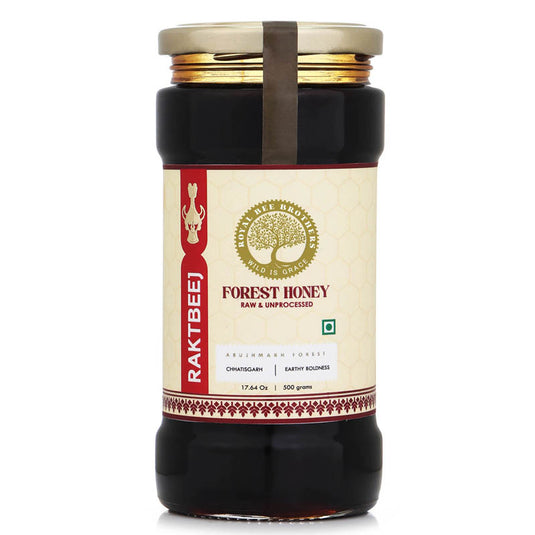
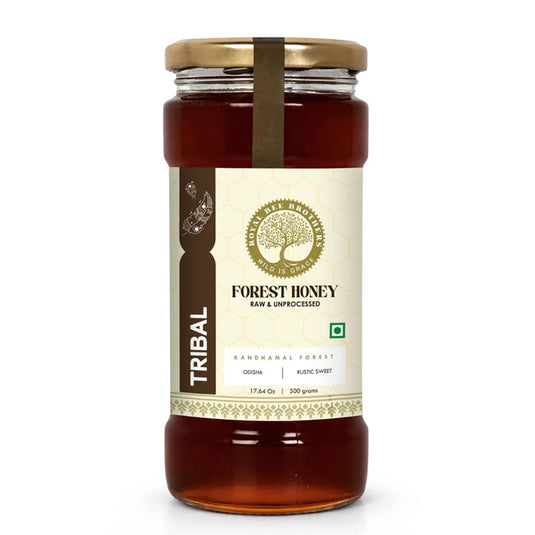
Commercial honey is engineered to look and taste identical across every single jar. In contrast, authentic forest honey completely embraces seasonal irregularity. Its appearance ranges from warm golden amber to deep reddish-brown and rich dark mahogany based on regional rain patterns and wild tree flora. Its flavor carries deep earthy tones, complex herbal notes, and woodsy aromas that offer a significantly richer tasting experience than basic corn, sugarcane, or rice syrup substitutes.

Understanding Honey Crystallization Realities
Many buyers wrongly assume that solid, granulated, or crystallized honey signifies an adulterated or artificial product. In reality, the exact opposite is true. Because authentic forest honey is raw and unfiltered, it retains trace bits of organic wax particles, natural enzymes, and wild pollen grains. These active particles serve as natural anchors that encourage healthy glucose crystallization. Pasteurized commercial honeys stay unnaturally liquid for long periods only because high heat has stripped these healthy organic particles completely out of the fluid matrix.
Health and Wellness Profiles
Nutritional and Micronutrient Enrichment
While both products contain natural energy-providing glucose and fructose sugars, their micronutrient density is vastly different. The proven organic wild honey benefits come from its role as a rich storage cell for natural enzymes (such as invertase, diastase, and glucose oxidase) and essential trace minerals like potassium, magnesium, iron, and zinc—absorbed by long-living trees from deep, unplowed wild forest soils.
Antioxidant Defense & Immune Biomarkers
Polyphenols, flavonoids, and organic phenolic acids are the true structural markers of a sweetener's therapeutic potential. Because forest bees harvest nectar from uncultivated, polyfloral medicinal plants, dark forest honey contains significantly higher concentrations of these cellular defense agents. These active organic compounds provide a much stronger foundation for immune health, seasonal respiratory comfort, and gut microbiome support compared to highly processed alternatives.
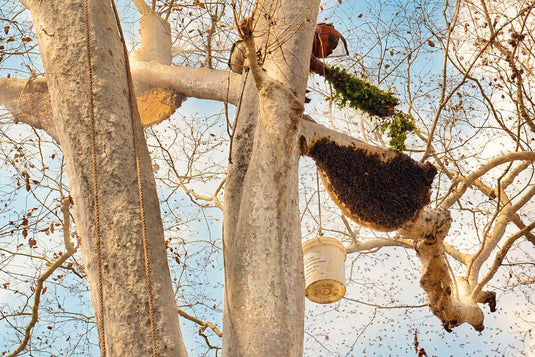
The Sourcing Impact on Ecology: Choosing ethically harvested forest honey also protects ancient forest tracts and supports indigenous tribal gatherers who use sustainable, traditional harvesting methods across India.
Distinct Regional Terroirs of India
True wild honey retains a unique regional character shaped by local ecosystems:
- Odisha Forest Honey: Globally recognized for its rich mineral profile, deep amber color, and robust medicinal herbal notes.
- Nagaland Forest Honey: Noted for its vibrant floral brightness, high mountain biodiversity, and smooth, delicate profile.
- Sundarbans Forest Honey: Shaped by dense mangrove floral sources, delivering a distinctive, exotic sweet-tart flavor profile.
Support Heritage Tribal Extraction and Environmental Conservation
Our wilderness honey batches are independently certified pure, chemical-free, and ethically harvested.
Secure Your Verified JarCulinary Use and Pricing Mechanics
When deciding between these two honey types, consider your budget and intended kitchen use:
- Cooking Application: Regular commercial honey is highly affordable and well-suited for high-temperature baking or large-scale food prep where heat destroys delicate nutrients anyway. Raw forest honey is best used as a premium finishing touch—stirred into warm morning tea, drizzled over yogurt, or taken by the spoonful to preserve its active healing properties.
- Pricing Factors: Forest honey commands a premium price because harvesting it requires specialized labor in challenging wilderness conditions, yields lower seasonal volumes, and involves thorough purity verification. Regular commercial honey benefits from automated, large-scale processing and year-round agricultural availability, making it highly economical.
Final Verdict

Both forest honey and regular honey offer distinct advantages, and both remain better alternatives than refined sugar. However, when comparing nutritional richness, botanical diversity, antioxidant content, enzyme preservation, flavor complexity, and ecological value, forest honey emerges as the clear winner.
Its direct connection to wild ecosystems gives it a nutritional depth and structural character that cannot easily be replicated in highly managed agricultural settings. Rich in natural plant compounds, minimally processed, and deeply rooted in traditional harvesting practices, forest honey represents one of the purest expressions of nature's sweetness.
For consumers seeking absolute authenticity, real nutritional value, and a genuine connection to biodiversity, forest honey offers a remarkable experience that extends far beyond taste. Every single spoonful reflects the richness of forests, the work of bees, and the extraordinary complexity of the natural world.
Frequently Asked Questions (FAQs)
1. Why does raw forest honey crystallize faster than commercial brands?
Authentic raw forest honey naturally contains micro-particles of beneficial floral pollen, wild plant sediments, and active living enzymes. These natural components serve as organic nuclei that encourage natural crystallization, proving the honey is unheated, unpasteurized, and completely unaltered.
2. Is commercial honey real honey?
Yes, regular commercial honey is fundamentally born from bees, but it typically undergoes heavy high-heat factory pasteurization and micro-filtration. While it is real honey, this extensive processing eliminates its natural enzyme structural complexity, trace nutrients, and health-promoting biological value to achieve standard shelf appearance and artificial uniformity.
3. Can I use premium forest honey for high-temperature baking?
Using raw forest honey in hot baking recipes is not recommended. Intense oven temperatures destroy the delicate live enzymes and rich volatile plant antioxidants that give premium forest honey its superior health and medicinal worth.
Savor the Ultimate Expression of Natural Vitality
Support traditional wilderness ecosystems and experience lab-tested, raw enzyme purity.
Order Authentic Forest HoneyWant to learn more about wild honey sourced directly from India's forests?
Explore our Ultimate Guide to Forest Honey in India: Benefits, Purity, Harvesting & Uses to understand how forest honey is collected, how it differs from regular honey, and the key signs of authentic, unprocessed forest honey.
Read the Ultimate Guide to Forest Honey in India →