The Sweet Revolution: India’s Top 5 Honey Producing States and the 2025–26 Apiculture Outlook
Driven by an expansive network of diverse botanical ecosystems, deep-rooted regional farming traditions, and aggressive technological scaling backed by the Government of India, the nation’s apiculture sector has grown into a global powerhouse. Popularly championed under the programmatic banner of the "Sweet Revolution," Indian apiculture has transitioned from a localized rural livelihood into an organized, high-yield, export-driven industry.
According to official parliamentary data tabled by the Ministry of Agriculture and Farmers Welfare and tracking reports from the Agricultural and Processed Food Products Export Development Authority (APEDA), India has securely positioned itself as the second-largest exporter of natural honey globally.

For agri-entrepreneurs, organic food brands, bulk suppliers, and health-conscious consumers, understanding the geographic landscape of India’s honey production reveals how varying microclimates yield specialized floral identities. From the deep, dark multi-floral forest blends of the Western Ghats to the clear, delicate monofloral mustard and litchi varieties of the Northern plains, this blog provides a deep, research-backed examination of India’s top 10 honey-producing states, macro-economic growth trends over the last five years, and the structural ecosystem shaping the 2025–26 trade year.
1. Macro Analysis: The 5-Year Growth Trajectory of Indian Apiculture
The growth of the Indian honey sector is a direct outcome of policy changes executed under the National Beekeeping & Honey Mission (NBHM), a central sector scheme initially institutionalized under the Atmanirbhar Bharat economic framework. Backed by a structural budget allocation administered via the National Bee Board (NBB), the mission has scaled across three targeted Mini-Missions focused on field production, post-harvest infrastructure, and deep technological research.
                     INDIAN NATURAL HONEY MARKET
  ┌───────────────────────────────────────────────────────────┐
  │  Current Annual Production  : 1.52 Lakh Metric Tonnes     │
  │  Global Export Ranking      : 2nd Largest Globally        │
  │  Core Institutional Drivers : NBHM, NBB & APEDA           │
  └───────────────────────────────────────────────────────────┘
An analysis of official datasets compiled from the National Horticulture Board (NHB) and parliamentary submissions reveals clear, steady year-on-year growth across all core performance indicators over the last five years.
5-Year National Production Scaling
The volume of natural honey extracted across India has risen steadily, demonstrating the success of migratory beekeeping training and the widening adoption of scientific hive-management practices:
- 2020–21: 1.25 Lakh Metric Tonnes (MT)
- 2021–22: 1.33 Lakh Metric Tonnes (MT)
- 2022–23: 1.42 Lakh Metric Tonnes (MT)
- 2023–24: 1.47 Lakh Metric Tonnes (MT)
- 2024–25 / 2025–26 (Third Advance Estimates): 1.52 Lakh Metric Tonnes (MT)
5-Year APEDA Export Performance & Valuation
Simultaneously, India's footprint across global markets—predominantly within the United States, the United Arab Emirates, Saudi Arabia, Qatar, and Western Europe—has experienced a major value upward shift.
While raw export volumes grew steadily, international price realizations and overall valuation numbers outpaced volume curves as tech-backed tracking protocols lowered chemical residue issues and increased global buyer confidence.
                 EXPORT VALUE REALIZATION TRENDS
  ┌───────────┬──────────────────────────────────────────────┐
  │ 2022-23   │ 170.94 USD Million                           │
  ├───────────┼──────────────────────────────────────────────┤
  │ 2025-26   │ 207.97 USD Million                           │
  └───────────┴──────────────────────────────────────────────┘
- 2022–23 Fiscal Exports: India exported 98,273.50 MT of natural honey, valued at USD 170.94 Million.
- 2025–26 Terminal Projections & Realizations: Driven by international demand shifts and competitive minimum export configurations, annual export valuation metrics tracked via the Department of Commercial Intelligence and Statistics (DGCIS) closed the cycle at USD 207.97 Million.
2. Definitive Profile Matrix of India's Top 10 Honey Producing States
The commercial strength of India's apiculture sector lies in its regional variety. Five primary states located across the fertile Indo-Gangetic plains command more than two-thirds of the total national volume, while the remaining states provide high-margin, rare wild forest and single-origin alpine botanicals.
          TOP 5 STATES SHARE IN NATIONAL HONEY PRODUCTION
  ┌───────────────────┬───────────────────────────────────────┐
  │ Uttar Pradesh     │ ███████████████████ 17%               │
  │ West Bengal       │ ██████████████████ 16%                │
  │ Punjab            │ ████████████████ 14%                  │
  │ Bihar             │ ██████████████ 12%                    │
  │ Rajasthan         │ ██████████ 9%                         │
  └───────────────────┴───────────────────────────────────────┘
The table below breaks down the top 10 honey-producing states by output share, dominant regional flora, and target commercial markets.
| Rank | State | Estimated Market Share (%) | Dominant Regional Floral Profiles | Target Commercial Markets & Brand Positioning |
|---|---|---|---|---|
| 1 | Uttar Pradesh | ~17.0% | Mustard (Brassica), Eucalyptus, Seasonal Multi-floral | Bulk Export Sourcing, High-Volume FMCG Supply |
| 2 | West Bengal | ~16.0% | Sundarban Mangrove (Khalsi, Garan), Litchi | Certified Organic, Premium Salt-Tinged Gourmets |
| 3 | Punjab | ~14.0% | Monofloral Mustard, Ber (Jujube), Sunflower | Value-Added Creamed Honey, Industrial Processing |
| 4 | Bihar | ~12.0% | Shahi Litchi, Late-Winter Mustard, Maize | Translucent Monofloral, Export-Grade Light Amber |
| 5 | Rajasthan | ~9.0% | Rabi Crop Mustard, Desert Shrubs, Thorn Flora | Raw Rapid-Crystallization Spreadable Brands |
| 6 | Madhya Pradesh | ~7.0% | Coriander, Neem, Chambal Forest Flora | Highly Medicinal Herbaceous Profiles, Ayurveda |
| 7 | Maharashtra | ~5.5% | Jamun, Hirda (Terminalia), Western Ghats | Low-GI Diet Profiles, Eco-Region Reserve Lines |
| 8 | Karnataka | ~4.5% | Coffee Blossom, Cardamom Canopy, Soapnut Forest | Single-Origin Estate Marks, Infused Luxury Items |
| 9 | Himachal Pradesh | ~3.5% | Plectranthus (Shainal), Alpine Acacia, Apple | Pure Water-Clear High-Altitude Mountain Honey |
| 10 | Assam | ~2.5% | Tea-Blossom, Wild Kaziranga Multi-floral, Mustard | ODOP Fair-Trade Sourcing, Traceable Tribal Blends |
3. Deep-Dive Sourcing Profiles of Each Producing State
1. Uttar Pradesh
Uttar Pradesh stands firmly at the apex of India's apiculture economy. The state’s immense agricultural landmass, combined with intensive multi-crop cultivation cycles, ensures an almost continuous forage runway for commercial bee colonies.
- Primary Catchment Zones: Lakhimpur Kheri, Bahraich, Siddharth Nagar, Saharanpur, and Basti.
- Beekeeping Infrastructure: UP maintains the largest network of migratory beekeepers utilizing Italian bee (Apis mellifera) colonies. Farmers transport hundreds of thousands of wooden hive boxes along regional agricultural corridors to match shifting bloom cycles.
- Commercial Profile: The state acts as the foundational engine for high-volume bulk packing. Its vast output of mild, sweet, light-amber mustard and eucalyptus honey serves as the baseline ingredient for national retail brands and international industrial buyers.
2. West Bengal
West Bengal offers a stark, highly valuable contrast, splitting its production footprint between intensive alluvial agricultural cultivation and rare coastal mangrove tracking.
- Primary Catchment Zones: South 24 Parganas (The Sundarbans Biosphere), Nadia, Murshidabad, and Malda.
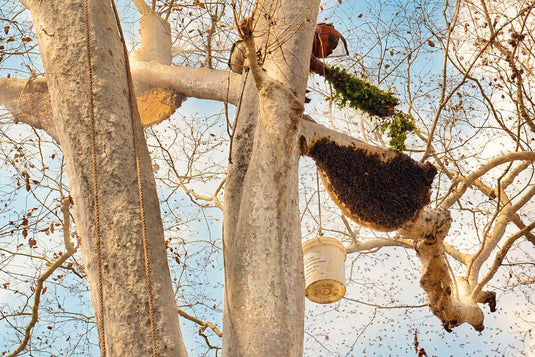
- Ecosystem Mechanics: Bengal is famous for its wild forest honey hunters, locally called Moulis, who navigate the dense mangrove swamps to harvest wild honey from Apis dorsata giant rock bee combs. This is balanced by structured, farm-based Apis mellifera apiaries in the northern districts.
- Commercial Profile: Wild Sundarban honey harvested from the Khalsi (Aegiceras corniculatum) mangrove flower is highly prized. It remains liquid for extended periods, features a dark, rich amber color, and carries a distinct salt-tinged flavor profile. This unique variety is targeted by gourmet organic labels for its high antioxidant and mineral metrics.
3. Punjab
Punjab represents the historical birthplace of structured, commercial apiculture in India. It was among the first states to successfully introduce and mass-breed Apis mellifera lines in the late 1960s through research led by Punjab Agricultural University (PAU).
- Primary Catchment Zones: Ludhiana, Jalandhar, Amritsar, Hoshiarpur, and Patiala.
- Beekeeping Infrastructure: Characterized by highly mechanized, tech-forward commercial apiaries. Punjab’s beekeepers apply advanced extraction lines, strict selective queen-rearing methods, and regular colony health tracking.
- Commercial Profile: The crop layout ensures a massive flush of high-purity mustard honey during winter. Because of its clean, rapid crystallization traits, Punjab's producers are leading innovators in the value-added "creamed honey" sector, creating natural spreads for premium urban markets.
4. Bihar
Bihar’s unique horticultural map makes it an exceptional hub for delicate, high-value, aromatic single-origin honeys, driven largely by its famous fruit orchards.
- Primary Catchment Zones: Muzaffarpur, Vaishali, Samastipur, Begusarai, and Sitamarhi.
- Ecosystem Mechanics: The dense canopy of Shahi Litchi orchards in North Bihar creates an ideal nectar environment in early spring. Apiaries are moved directly under the orchard trees during the brief 20-to-25 day blooming window.
- Commercial Profile: Pure litchi honey is translucent, exceptionally light in color, and features a bright, distinctly fruity aroma. Because it mirrors premium international clover honeys in clarity and taste, Bihar’s litchi honey commands an impressive price premium in global export markets.
5. Rajasthan
Rajasthan turns its challenging, semi-arid environment into an agricultural strength during the Rabi season, when massive regions transform into vast, yellow blooming fields.
- Primary Catchment Zones: Bharatpur, Alwar, Jaipur, Ganganagar, and Dholpur.
- Beekeeping Infrastructure: Bharatpur stands as the premier northern trading hub for raw, unpasteurized agricultural honey. It connects local beekeeping cooperatives directly with national shipping aggregators.
- Commercial Profile: Rajasthan's output is heavily dominated by pure mustard honey. This honey naturally contains higher levels of glucose relative to fructose, causing it to solidify into a smooth, buttery texture at room temperature. Clean-label brands market this unique characteristic as a clear proof of raw, unheated authenticity.
6. Madhya Pradesh
Madhya Pradesh offers an excellent balance between intensive agricultural valley farming and tribal forest harvesting programs.
- Primary Catchment Zones: Morena, Gwalior, Bhind, Sheopur, and the central Mahakoshal forest tracts.
- Ecosystem Mechanics: The northern Chambal belt features extensive cultivation of specialized seed crops like coriander, while the southern forest reserves support traditional wild honey harvesting.
- Commercial Profile: Monofloral coriander honey (Coriandrum sativum) sourced from MP features a sharp, distinct herbal aroma and a slightly cooling flavor note. This variety, along with wild forest neem honey, is highly valued by Ayurvedic wellness companies for its unique digestive and anti-inflammatory benefits.
7. Maharashtra
Maharashtra’s apiculture model is built around its protected bio-zones along the Western Ghats (Sahyadri Range) and its well-established agricultural cooperatives.
- Primary Catchment Zones: Mahabaleshwar, Pune, Nashik, Satara, and Gadchiroli.
- Ecosystem Mechanics: Mahabaleshwar houses historically significant "Honey Villages" supported by state initiatives. Here, bee colonies are placed deep within protected forest perimeters to forage on native wilderness trees.
- Commercial Profile: The standout variety here is authentic Jamun (Syzygium cumini) honey. This deep, dark variety carries a unique, mildly bitter finish. Because it features a lower glycemic index compared to typical commercial honeys, it is heavily marketed as a premium sweetener choice for health-conscious consumers.
8. Karnataka
Karnataka represents the southern anchor of premium single-origin honey sourcing, drawing its strength from extensive spice hills and sprawling coffee estates.
- Primary Catchment Zones: Coorg (Kodagu), Uttara Kannada, Dakshina Kannada, Hassan, and Chikmagalur.
- Beekeeping Infrastructure: The state blends modern hive boxes with traditional log and pot hives managed by eco-conscious estate owners and indigenous forest communities.
- Commercial Profile: During the brief coffee-flowering window, honeybees collect nectar exclusively from white coffee blossoms. The resulting honey is delicate, golden, and offers a warm flavor profile with faint hints of cocoa. This makes it an ideal fit for single-origin luxury gifting lines.
9. Himachal Pradesh
The high alpine environment of Himachal Pradesh provides an ideal habitat for producing completely residue-free, premium mountain honeys.
- Primary Catchment Zones: Kangra, Chamba, Kullu, Shimla, and Mandi.
- Ecosystem Mechanics: Himachal is home to both the native Apis cerana indica (Himalayan hive bee) and Apis mellifera. Beekeepers follow seasonal transhumance routes, moving hives up to pristine alpine pastures in summer and returning to lower valleys for the winter freeze.
- Commercial Profile: The most prized regional variety is wild Plectranthus (Plectranthus rugosus / Himalayan bush) honey. It is exceptionally clear, crisis-sharp, and slow to crystallize. Sourced from altitudes completely free from industrial pollution or chemical pesticides, it commands top-tier premium status in global luxury markets.
10. Assam
Assam rounds out the top ten, showcasing the incredible and largely untouched apicultural wealth of the Northeast rainforests and Brahmaputra valleys.
- Primary Catchment Zones: Baksa, Kokrajhar, Chirang, Udalguri, and Tamulpur within the Bodoland Territorial Region (BTR).
- Ecosystem Mechanics: Beekeeping is an integral part of traditional livelihoods for local tribal communities. The bees forage across pesticide-free jungle buffers, tea estate boundaries, and wild river plains.
- Commercial Profile: Backed by APEDA, Assam has successfully executed direct export shipments of One District One Product (ODOP) certified honey from regions like Baksa to high-end boutique distributors in the United States. Its intense, malt-like flavor notes and high organic purity profile make it an exceptionally strong choice for fair-trade positioning.
4. The 2025–26 Infrastructure & Regulatory Architecture
The biggest operational shift for apiculture in 2025–26 is the complete deployment of large-scale quality control and trace-back infrastructure funded under the National Beekeeping & Honey Mission (NBHM). Historically, smallholder farmers struggled to access high-end laboratory testing, which led to export challenges around chemical residues or syrup blending (C3/C4 sugars).
To solve these supply-chain vulnerabilities, the National Bee Board has deployed a decentralized quality and storage network directly across these top 10 producing states:
Beekeepers log their seasonal extraction batches directly onto the digital Madhukranti Portal. Over 24.52 Lakh bee colonies have been mapped under this system. This step assigns an immutable digital identity to each batch, recording the exact geographic source and the beekeeper's credentials.
Raw honey batches are routed to a network of 5 world-class regional testing laboratories and 25 mini honey testing laboratories placed right inside high-yield clusters (such as Bharatpur in Rajasthan and Morena in Madhya Pradesh). Hives are checked immediately for antibiotics, pesticides, and sugar syrup adulteration.
Approved batches move into over 40 specialized cold storage units and 25 processing centers sanctioned under the mission. Maintaining strict temperature control prevents heat-induced spoilage and keeps HMF (Hydroxymethylfurfural) levels well within strict international limits.
The fully tested, trace-certified honey is cleared for domestic distribution or international shipping. This end-to-end transparency helps premium brands showcase complete purity, protecting Indian honey shipments from international tariff penalties or import rejections.
5. Sourcing, Branding, and Visual Identity Guidelines for Premium Honey Marks
For premium natural food brands and agri-entrepreneurs, navigating India’s diverse apicultural map offers an incredible branding opportunity. Rather than blending distinct regional yields into a generic product, focusing on the specific stories of local terroirs creates a powerful connection with today’s conscious consumers.
                  PREMIUM BRAND SOURCING STRATEGY
 ┌───────────────────────┐       ┌───────────────────────┐
 │   TERROIR SELECTION   │ ───>  │ SUSTAINABLE PACKAGING │
 │ Single-Origin Origins │       │ Recycled Craft/Glass  │
 └───────────────────────┘       └───────────────────────┘
             │                               │
             ▼                               ▼
 ┌───────────────────────┐       ┌───────────────────────┐
 │ CONSUMER TRANSPARENCY │ ───>  │  AYURVEDIC POSITION   │
 │ Traceable Sourcing    │       │ Functional Wellness   │
 └───────────────────────┘       └───────────────────────┘
6. Comprehensive Summary
India's apicultural economy is experiencing a powerful transformation. Supported by the structural framework of the National Beekeeping & Honey Mission and tracked through the digital Madhukranti Portal, the industry is successfully moving away from unrefined bulk trading toward high-value, fully traceable, single-origin varieties.
Whether it is the vast winter mustard plains of Uttar Pradesh and Rajasthan or the isolated, high-altitude alpine zones of Himachal Pradesh, India's diverse geography offers an unmatched palette of natural honey profiles. For forward-thinking food brands, matching these incredible regional resources with transparent, sustainable supply chains is the ultimate key to capturing the rapidly growing global demand for authentic wellness products.
Looking for a Trusted Bulk Honey Supplier in India?
Royal Bee Brothers sources premium raw honey directly from India's leading honey-producing states including Uttar Pradesh, Bihar, Punjab, Rajasthan, Maharashtra, and the Western Ghats. We support wholesale honey supply, private label honey manufacturing, honey export services, and customized corporate gifting solutions with complete traceability and quality assurance.
7. In-Depth Technical & Sourcing FAQ
What exactly is India’s "Sweet Revolution" and how does it support local beekeepers?
The "Sweet Revolution" is a major national initiative launched by the Government of India to modernize, scale, and transform apiculture into a core income driver for smallholder farmers, landless rural laborers, and tribal communities. Administered under the National Beekeeping & Honey Mission (NBHM), it treats beekeeping not just as an isolated trade, but as a critical addition to forestry and agriculture that boosts crop pollination yields.
For local beekeepers, the program provides comprehensive structural support split across three specialized mini-missions. It supplies up to 80% funding subsidies for setting up modern apiaries, funds integrated breeding centers to cultivate resilient queen bee lines, and finances local processing plants to prevent low-price crop dumping. By linking local collection points directly to the central digital infrastructure, it gives small honey producers the scale needed to step past local middlemen and capture stable, fair-trade pricing.
How do single-origin monofloral honeys differ from standard multi-floral industrial blends?
The core difference comes down to floral purity, careful harvest timing, and geographic placement. Monofloral honeys are created by moving managed bee colonies directly into massive, single-crop farming zones or specific forest perimeters right as a chosen plant enters its brief blooming window. To be classified as true monofloral honey, laboratory pollen analysis must confirm that a single plant type dominates the trace profile (typically requiring a minimum 45% matching pollen count).
This strict single-source tracking preserves the distinct botanical traits of the plant, delivering completely unblended taste, color, and aroma profiles—such as the clear, light, fruity notes of Bihar's Shahi Litchi honey or the deep, herbal profile of Madhya Pradesh's coriander honey. Conversely, standard industrial multi-floral honeys are high-volume commercial blends. They combine different honeys gathered across multiple regions and seasons, pasteurizing and micro-filtering them into a uniform sweet profile that lacks individual floral identity.
Why does raw mustard honey turn solid and creamy, and is this an indicator of sugar syrup addition?
Natural crystallization is clear structural proof that honey is completely raw, unheated, and authentic—it is absolutely not a sign of adulteration or sugar syrup additions. Natural honey is a highly concentrated solution containing two primary plant sugars: glucose and fructose. Honey varieties derived from the vast winter mustard (Brassica) fields of Rajasthan, Punjab, and Uttar Pradesh naturally contain exceptionally high levels of glucose relative to fructose.
Because natural glucose separates from water much faster than fructose, it leaves its dissolved liquid state to form clean, solid crystals. When raw, unheated mustard honey is stored at cool temperatures (between 10°C and 21°C), it undergoes a uniform crystallization process, changing into a thick, smooth, spreadable, buttery texture. Industrial sugar syrup additives change these natural ratios, keeping fake mixtures unnaturally liquid and clear on store shelves indefinitely.
What structural role does the digital Madhukranti Portal play in checking honey purity and source tracking?
The Madhukranti Portal acts as the central digital traceability ledger for India's entire apiculture network, designed to protect market integrity and prevent food fraud. Developed as a collaborative effort between the National Bee Board and Indian financial institutions, this secure online database maps every step of the honey supply chain from the remote hive box all the way to final store packaging.
When a registered beekeeper extracts honey, the system logs the batch volume, the current floral source, and the precise GPS location of the apiary, generating a permanent digital passport tracking ID. As that batch moves along to collection agents, transit shippers, and regional testing labs, each transaction must be recorded against that unique identifier. This strict chain of custody stops unauthorized unverified batches from slipping into retail channels, allowing export authorities and end consumers to verify a honey's origin with total confidence.
How does wild mangrove honey from the Sundarbans compare to managed farm-apiary honey?
Wild Sundarban mangrove honey is fundamentally different from managed apiary honey across its harvesting methods, bee behavior, and chemical makeup. While farm honey is produced by docile, managed European honeybee (Apis mellifera) colonies kept in neat wooden boxes, Sundarban honey is wild-harvested from fierce, nomadic giant Asian rock bees (Apis dorsata) that build massive open-air combs high up in protected tidal forest canopies.
Traditional, licensed honey hunters called Moulis brave extreme physical risks, navigating dense, swampy mangrove preserves to hand-harvest these wild seasonal combs. Because the bees forage across native coastal trees like Khalsi, Garan, and Gewa, the honey takes on a rich, reddish-amber color, a thin viscosity, and a completely unique, natural salt-tinged flavor profile. Lab tests confirm it holds exceptionally high enzyme counts and rich mineral concentrations that act as a natural preservative, keeping it liquid for long periods.
What unique health benefits are tied to regional Indian honey varieties like Jamun or Neem?
True single-origin honeys inherit active bio-compounds and health properties directly from their parent nectar flowers. For example, authentic Jamun honey, sourced from the dense Mahabaleshwar forest canopy along the Western Ghats, is famous for its dark tint, low moisture levels, and unique mildly bitter finish. Because it carries a significantly lower Glycemic Index (GI) than normal table sugars and standard blends, it is widely valued as an ideal natural sweetener choice for health-conscious consumers.
Similarly, single-source Neem honey harvested from organic forest belts across Central India concentrates the bitter, deep properties of the neem tree. In traditional Ayurvedic wellness practices, raw neem honey is used as a potent natural antibacterial and anti-inflammatory agent to soothen throat infections and improve digestive wellness. By avoiding high-heat pasteurization, premium brands ensure these fragile, plant-derived compounds remain active for consumers.
How can new food brands utilize the "One District One Product" (ODOP) scheme for sourcing honey?
The Indian Government's One District One Product (ODOP) initiative offers a highly effective blueprint for young food brands to secure premium, verified supply chains with lower initial capital. The program explicitly designates high-yield agricultural districts—such as Baksa in Assam or Bharatpur in Rajasthan—as official specialized centers for honey production.
By focusing branding and sourcing efforts within an active ODOP honey cluster, new food ventures can tap into established infrastructure, including government-subsidized communal testing labs, shared clean-processing units, and temperature-controlled storage spaces. This allows startup brands to avoid the heavy costs of building private manufacturing facilities from scratch. Furthermore, products carrying official ODOP regional certifications receive priority access to APEDA export trade missions and national retail showcases, giving them an instant credibility edge.
What strict purity and chemical metrics are verified in regional testing laboratories?
To pass validation for high-end domestic retail and premium export channels, raw honey batches undergo strict screening across an advanced grid of metrics. The primary focus is identifying and blocking adulteration from engineered, cheap sugar inputs (such as high-fructose corn starch or specialized rice syrups). Labs utilize Stable Isotope Ratio Mass Spectrometry (SIRMS) testing to detect hidden C3 and C4 plant sugar additions even at trace levels.
Beyond sugar analysis, the honey is screened for trace chemical contamination. Gas and liquid chromatography scans ensure the honey is completely free from heavy metals, environmental chemical residues, and common bee antibiotics (like tetracyclines). Finally, technicians evaluate the honey's HMF (Hydroxymethylfurfural) index—a key indicator that rises if honey is old, degraded, or exposed to excessive heat, ensuring consumers receive a perfectly fresh, raw product.
Why is premium high-altitude alpine honey from Himachal Pradesh so clear and expensive?
Himachal Pradesh’s high alpine honey, particularly the prized variety drawn from wild Plectranthus (Himalayan bush) blooms, commands a premium price due to its complete environmental purity, complex seasonal migration, and limited supply. Beekeepers practice traditional transhumance, carrying hive boxes up steep mountain paths into pristine valleys located above 2,500 meters during the bright summer months.
In these isolated, clean valleys, the bees forage across wild flora completely untouched by commercial chemical pesticides, vehicle emissions, or industrial air pollution. The resulting honey is extraordinarily clear, water-white, and features a light, crisp, refreshing floral flavor profile. Because it contains high natural fructose levels, it remains in a crystal-clear liquid state for extended periods. The short harvesting window, combined with small seasonal yields, makes it a rare luxury product targeted by gourmet buyers worldwide.
What sustainable packaging choices best preserve the active qualities of raw honey?
Preserving the active properties of raw honey requires avoiding cheap, single-use plastics. Liquid honey is slightly acidic and can interact over time with low-grade plastics, while thin synthetic containers allow micro-exchanges of moisture and oxygen that slowly degrade delicate aromas and active pollen enzymes.
Premium brands rely on heavy, inert, food-grade glass jars—ideally utilizing amber or dark glass formulations that block harmful UV rays from breaking down therapeutic compounds. Sealing the jars with dense, natural cork or lined metal lids lock in natural aromatics. Completing the presentation with minimal labels and protective boxes made from recycled craft paper fulfills modern eco-friendly goals while reflecting an authentic, premium aesthetic.
Verifiable Institutional References & Government Data Sources:
- National Production Estimates & Scheme Outlays: Production parameters, state-wise yields, and infrastructure fund deployments are derived from the official database of the Parliament of India (Sansad Official Portal) via the Ministry of Agriculture and Farmers Welfare question registries.
- Export Volumes, Global Valuations, and Market Performance: Fiscal year volume trends, destinations, and value metrics are tracked via the APEDA Agri Exchange Portal and the Ministry of Commerce & Industry Trade Statistics.
- Digital Honey Traceability & API Mapping Infrastructure: National beekeeper registration tallies, lab mapping, and code allocation protocols are managed under the National Bee Board (NBB) E-platform ecosystem.
- Horticultural Production Baseline Tracking Data: Acreage bloom windows, fruit orchard data, and seasonal crop advance estimates are referenced via the National Horticulture Board (NHB).