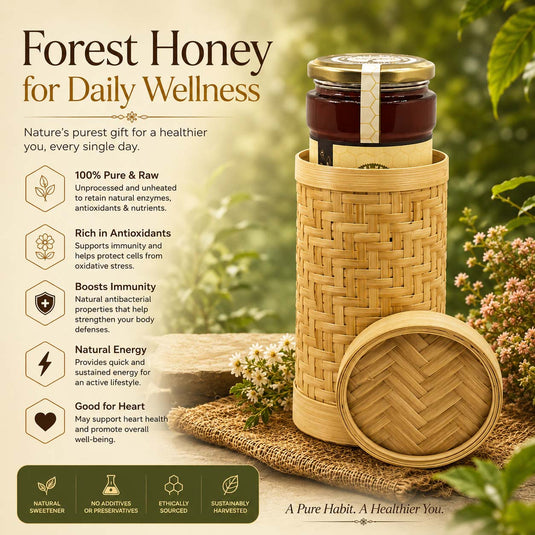
Shop Raw Forest Honey


Wild Forest Honey
Rs. 1,550.00


Raktbeej and Kashmir Forest Honey
Rs. 1,550.00

Exploring the Four Varieties of Wild Honey
Rs. 2,100.00

Raw and Unprocessed Forest Honey
Rs. 2,400.00


Rarest Forest Raw Honey Collection
Rs. 2,900.00

05 types of Forest Honey
Rs. 3,490.00

Organic Honey Combo Pack
Rs. 4,600.00
ROYAL BEE BROTHERS · RAW · WILD · FOREST HONEY
Raw Wild Forest Honey Collection from India
Discover distinctive raw and forest honeys shaped by India's forests, mountain landscapes, mangroves, flowering seasons and native bees. Explore honey by its origin, character and harvesting tradition.
From the forests of central India to the Himalayas, Western Ghats,
Sundarbans and Northeast India
,
Royal Bee Brothers brings together naturally distinctive honey sourced
from different landscapes. Each origin contributes its own combination
of floral character, aroma, colour, texture and taste.
Explore Pure Raw Honey by Origin
Honey is shaped by place. Bees forage according to the vegetation, flowering cycles, weather and habitat surrounding their colonies, which is why honey from different regions can have noticeably different sensory characteristics.
The Royal Bee Brothers collection brings this regional diversity together without treating every honey as the same. From the deep, darker character of Raktbeej from central Indian forests to the lighter floral profile of Kashmiri White Honey, each product offers a different way to experience Indian honey.
For customers searching for raw honey online in India, pure forest honey, wild honey or natural honey from India, the most useful place to begin is with the origin and product information rather than appearance alone.
Our detailed Forest Honey Guide explains how geography, flora, bees and traditional harvesting influence the character of wild honey.
Discover Royal Bee Brothers Honey
Explore distinctive honey origins, from tribal forest harvests and mangrove landscapes to Himalayan flora and stingless bee honey. Each product page provides the specific sourcing and product details relevant to that honey.
Black Forest Honey of Jharkhand & Chhattisgarh — Raktbeej
Raktbeej is a distinctive dark forest honey associated with the Abujhmarh forest landscape of Chhattisgarh and the wider forest regions of central India.
Its darker appearance and pronounced forest character make it particularly interesting for people who prefer a deeper, earthy honey profile. Seasonal flowering and natural forage can influence the aroma, colour and taste from harvest to harvest.
Explore Raktbeej Forest Honey →Mahuwa Flora Honey — Tribal Forest Honey of Kandhamal
Kandhamal forest honey is closely connected with Odisha's forest landscape and the traditional honey-harvesting knowledge of local communities, including Kondha honey hunters.
Its identity comes from the diversity of the surrounding forest rather than a standardized agricultural floral source. The Mahuwa connection adds an important layer to the story of this regional honey and its relationship with forest food traditions.
Explore Kandhamal Tribal Honey →Mangrove Forest Honey — Sundarbans Raw Forest Honey
Harvested from the extraordinary mangrove environment of the Sundarbans, this wild forest honey is associated with Apis dorsata colonies and the nectar of distinctive mangrove flora.
The ecological setting gives Sundarbans honey a story that goes beyond taste. It connects honey with tidal forests, seasonal flowering and the traditional honey-harvesting culture of one of India's most remarkable natural landscapes.
Explore Sundarbans Honey →Kashmiri White Honey — Sulai & Acacia Flora
Kashmiri White Honey offers a contrasting sensory experience within the collection. It is associated with Sulai and Acacia flora of the Kashmir Valley and is recognised for its lighter visual appearance and delicate floral character.
Its pale appearance is naturally distinctive, but colour should not be treated as a standalone measure of honey purity. Floral source, harvest conditions and storage all influence the way natural honey looks and behaves.
Explore Kashmiri White Honey →Stingless Bee Honey of Nagaland
Stingless Bee Honey is unlike conventional Apis honey because it is produced by bees belonging to the Meliponini group, commonly known as stingless or Dammer bees.
Royal Bee Brothers describes this honey as naturally thin, tangy and sour-sweet, with possible fermentation notes. The bees store their honey in small resinous or cerumen pots, contributing to its distinctive character.
Explore Stingless Bee Honey →Western Ghats Forest Honey — Ghat Honey
Ghat Forest Honey comes from the Sahyadri Hills of the Western Ghats, a landscape known for exceptional floral and ecological diversity.
Bees forage across diverse forest vegetation and seasonal blossoms, giving the honey a rich aroma, natural sweetness and layered earthy-floral character. The Western Ghats origin makes this a particularly interesting honey for customers exploring India's regional forest honeys.
Explore Western Ghats Honey →Himalayan Multi-Flora Honey
Himalayan Multi-Flora Honey reflects the floral diversity of the Himalayan foothills and Terai belt, where bees forage across a changing mixture of wild and cultivated blossoms.
Rather than being defined by one flower, this honey develops its character from multiple nectar sources. That diversity can create a rounded aroma, layered sweetness and natural variation between seasonal harvests.
Explore Himalayan Multi-Flora Honey →Organic Certified Wild Forest Honey
For customers specifically looking for certified organic honey in India, Royal Bee Brothers offers wild forest honey certified under the National Programme for Organic Production (NPOP), administered by APEDA.
The product is presented as raw, unprocessed and unheated, with product-level laboratory testing information available. This makes certification and documentation an important part of the buying decision rather than relying only on appearance.
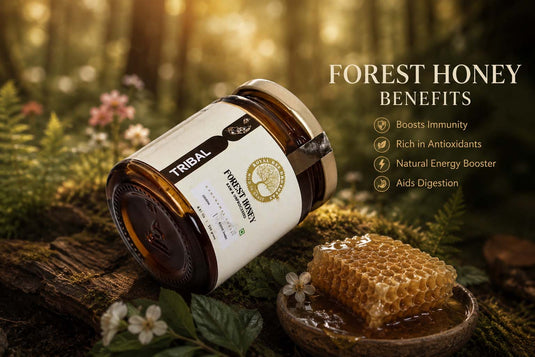
Explore Organic Certified Wild Honey →Raw Tribal Forest Honey
This raw forest honey represents the traditional wild-honey experience associated with Kandhamal's forest landscape and local honey-harvesting communities.
Its character is naturally influenced by the plants flowering around the colonies at the time of harvest. The result is a honey that can differ naturally in colour, aroma, viscosity and flavour without needing to conform to a standardized appearance.
Explore Raw Forest Honey →Honey Tells the Story of Where It Comes From
A forest honey from the Sundarbans cannot be expected to taste exactly like honey from the Western Ghats. Himalayan multi-flora honey develops in a different floral environment from Raktbeej, while Stingless Bee Honey is shaped by an entirely different bee species and storage behaviour.
This natural variation is one of the most interesting aspects of buying regional honey. Instead of looking for one standardized colour or consistency, explore the origin, floral environment, bee species and harvest story behind the jar.
A Journey Through India's Honey Landscapes
India's diverse geography creates equally diverse honey-producing environments. The Royal Bee Brothers collection connects different honey profiles with the landscapes in which bees forage.
Central Indian Forests
Raktbeej reflects the darker, deeper character associated with
forest flora across Jharkhand and Chhattisgarh.
Kandhamal, Odisha
Tribal forest honey connects seasonal forest flora with
traditional honey-harvesting knowledge.
Sundarbans
Mangrove forest honey carries the ecological character of
the tidal forests and their seasonal blossoms.
Kashmir Valley
Kashmiri White Honey is associated with Sulai and Acacia
floral sources and a lighter visual character.
Western Ghats
Ghat Forest Honey reflects the floral diversity of the
Sahyadri mountain ecosystem.
Himalayan Foothills
Multi-flora honey develops from multiple nectar sources
across the foothills and Terai belt.
Nagaland & Northeast India
Stingless Bee Honey is distinguished by the Meliponini bees
that produce and store it.
Certified Organic Forests
NPOP-APEDA certification provides a distinct certification
pathway for the certified organic wild forest honey product.
Raw Honey, Unprocessed Honey & Natural Variation
The terms raw, unprocessed, wild and organic describe different aspects of a honey and should not be used as though they mean exactly the same thing.
Raw or minimally processed honey refers primarily to how the honey is handled. Organic certification, on the other hand, relates to compliance with applicable organic production and certification requirements.
This distinction matters when shopping for raw forest honey online in India. A customer interested in certified organic honey should look for certification information, while someone interested in raw honey should examine the stated processing and handling information for the specific product.
Read our detailed Raw Honey vs Processed Honey Guide for a deeper explanation.
How to Buy Pure Honey Online with Greater Confidence
When buying honey online, colour and thickness can be useful sensory observations, but neither should be treated as a complete authenticity test. Natural honey can be pale, amber or dark; it can remain fluid or crystallize; and its aroma can range from delicate floral notes to pronounced forest character.
A more useful approach is to examine the product's origin, ingredients, processing information, certification, packaging details and available laboratory documentation.
Look beyond appearance.
When evaluating pure honey online, consider where the honey comes from, how it has been handled, whether the product carries a relevant certification and whether batch-level testing information is available.
When evaluating pure honey online, consider where the honey comes from, how it has been handled, whether the product carries a relevant certification and whether batch-level testing information is available.
Royal Bee Brothers provides product-specific information and, where available, laboratory documentation. The Royal Bee Brothers Purity Promise provides a broader look at the brand's approach to sourcing, traceability and product transparency.
For a detailed explanation of common home purity tests and their limitations, read How to Test Honey at Home: Viral Tests, Myths & Science .
Why Does Natural Honey Crystallize?
Crystallization is a natural process in which glucose in honey forms crystals. The speed at which it occurs varies according to floral source, sugar composition, temperature and storage conditions.
As a result, crystallization should not automatically be treated as a sign that honey has spoiled. Different honeys naturally behave differently, and some may remain liquid for longer while others become creamy or grainy sooner.
If you want to understand the science behind this natural process, explore our Honey Crystallization Guide .
Find a Honey by Origin and Character
| Honey | Region / Source | What Makes It Distinctive |
|---|---|---|
| Raktbeej Black Forest Honey | Jharkhand & Chhattisgarh | Dark forest character with a deeper earthy profile. |
| Mahuwa Flora / Tribal Forest Honey | Kandhamal, Odisha | Forest-origin honey connected with traditional tribal harvesting. |
| Sundarbans Mangrove Honey | Sundarbans | Wild honey shaped by a distinctive mangrove ecosystem. |
| Kashmiri White Honey | Kashmir Valley | Lighter appearance with a delicate floral character. |
| Stingless Bee Honey | Nagaland & Northeast India | Thin, tangy, sour-sweet honey produced by Meliponini bees. |
| Western Ghats Forest Honey | Sahyadri Hills, Western Ghats | Rich floral diversity with earthy and aromatic notes. |
| Himalayan Multi-Flora Honey | Himalayan foothills & Terai | Layered floral profile created by diverse nectar sources. |
| Organic Certified Wild Forest Honey | Certified organic forest honey | NPOP-APEDA organic certification with raw and unprocessed positioning. |
How to Choose the Right Raw Forest Honey
There is no need to choose honey solely by colour or thickness. Start with the experience you want and then look at the origin, floral environment and product-specific information.
Looking for a darker forest profile?
Explore Raktbeej Black Forest Honey and discover the deeper character associated with central Indian forest landscapes.
Interested in tribal forest honey?
Explore the Kandhamal collection and its connection with traditional honey harvesting in Odisha.
Want a distinctive ecological origin?
Explore Sundarbans Mangrove Honey and its connection with India's tidal mangrove forests.
Prefer a lighter-looking honey?
Kashmiri White Honey offers a visually lighter profile associated with Sulai and Acacia flora.
Curious about rare bee-produced honey?
Stingless Bee Honey offers a different experience because it is produced by Meliponini rather than conventional Apis bees.
Looking for certified organic honey?
Explore the NPOP-APEDA Organic Certified Wild Forest Honey product for certification-specific information.
From Forest to Jar: The Story Behind Wild Honey
Wild honey begins with the landscape. Bees forage among flowering trees, shrubs, herbs and wild plants, gathering nectar according to what is available during a particular season.
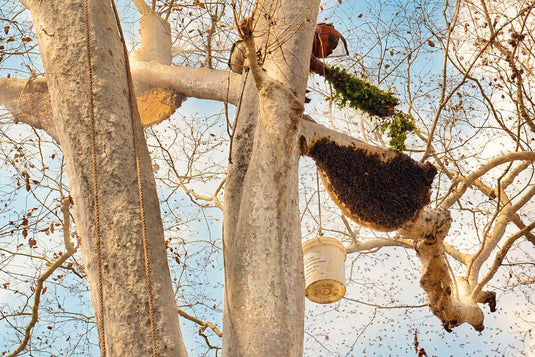
Traditional honey harvesting adds another layer to that story. Across different regions of India, local communities have developed knowledge of forest movement, bee behaviour, seasonal conditions and honey collection.
This relationship between forest, bee and community is particularly important to the identity of Royal Bee Brothers. The collection is designed not simply to sell honey, but to make the origin behind the product easier to understand.
Explore our complete guide to Indian forest honey for more on harvesting traditions, regional forests and the natural variation found in wild honey.
Why Stingless Bee Honey Is So Different
Stingless Bee Honey deserves a separate mention because its uniqueness starts with the bee itself. Meliponini, commonly known as stingless or Dammer bees, are smaller than many conventional honeybee species and have distinctive nesting and honey-storage behaviour.
Rather than storing honey in the familiar large wax combs associated with Apis honeybees, stingless bees can store honey in small resinous or cerumen pots. The honey itself may be naturally thinner and more tangy than conventional honey.
Royal Bee Brothers' Nagaland Stingless Bee Honey is presented as a raw, unprocessed specialty honey with a naturally sour-sweet and tangy profile. Batch characteristics can vary with season, region and floral availability.
Learn more through our dedicated Stingless Bee Honey from Nagaland guide .
Indian Forest Honey for Thoughtful Gifting
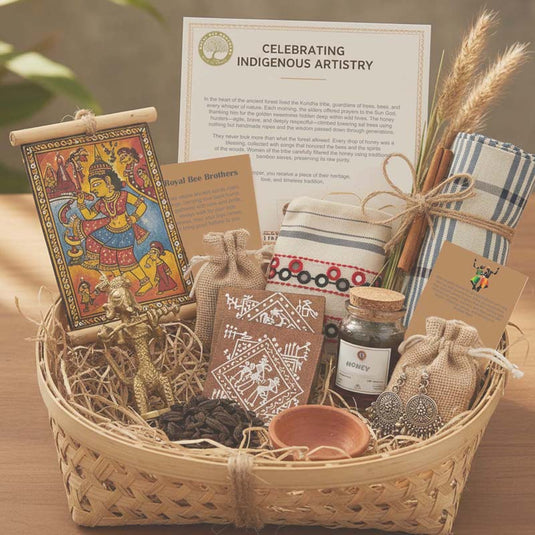
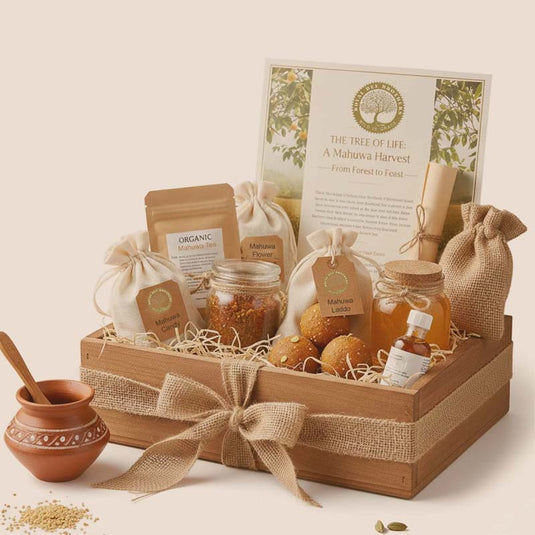
Distinctive honey origins can also make a memorable premium food gift. Royal Bee Brothers combines forest honey with regional ingredients, traditional products and nature-inspired presentation for festive, family and corporate gifting.
Explore our Premium Forest Honey Gift Hampers for curated gifting options built around the stories of Indian forests and traditional food culture.
Frequently Asked Questions About Raw Forest Honey
What is raw forest honey?
Raw forest honey generally refers to honey associated with bees foraging across natural forest vegetation and handled with limited processing. Its colour, aroma, flavour and texture can naturally vary by region, season and forage.
Which Royal Bee Brothers honey should I explore?
Start with origin and taste preference. Raktbeej offers a darker forest character, Kandhamal honey connects with Odisha's forest traditions, Sundarbans honey comes from a mangrove environment, Kashmiri White Honey has a lighter appearance, Western Ghats honey reflects Sahyadri flora, Himalayan Multi-Flora Honey offers diverse floral character, and Stingless Bee Honey has a distinctive tangy profile. The Organic Certified Wild Forest Honey is relevant for customers specifically seeking certified organic provenance.
Is raw honey the same as organic honey?
No. Raw describes handling or processing, while organic describes compliance with applicable organic production and certification standards. Royal Bee Brothers' NPOP-APEDA certified product has specific organic certification information.
Does pure honey have to be thick?
No. Honey viscosity varies naturally according to floral source, moisture, temperature, composition and storage. Appearance and thickness alone cannot establish authenticity.
Why can the colour of forest honey change?
Floral source, geography, season and the plants available to bees can influence the natural colour of honey. Different forest environments can therefore produce noticeably different shades.
Does natural honey crystallize?
Yes. Crystallization is a natural process influenced by glucose content, floral source, temperature and storage. It does not automatically mean that honey has spoiled.
What is Stingless Bee Honey?
Stingless Bee Honey is produced by bees belonging to the Meliponini group. It is typically different from conventional Apis honey in bee species, storage behaviour, texture and flavour, and can have a naturally tangy, sour-sweet profile.
Is Royal Bee Brothers Wild Forest Honey organic certified?
The specific Organic Certified Wild Forest Honey product is certified under NPOP through APEDA. Customers should distinguish that product-specific certification from general claims about every honey in the wider collection.
How can I check honey purity before buying?
Do not rely on colour, thickness or viral home tests alone. Examine the stated origin, ingredients, processing information, certification where applicable and available laboratory documentation. Product-specific information is more useful than appearance alone.
How should raw honey be stored?
Keep honey tightly closed in a clean, dry place away from excessive heat, moisture and direct sunlight. Natural changes in texture and crystallization may occur during storage.
Discover the Taste of India's Forests
Explore raw forest honey from distinctive Indian landscapes — central Indian forests, Kandhamal, the Sundarbans, Kashmir, the Western Ghats, the Himalayan foothills and Northeast India. Choose by origin, character and story, and discover honey beyond the ordinary jar.
Shop Raw Forest Honey
Heritage Forest Chronicles
Tales of the Forests
Step into India’s untouched wilderness where generations of traditional honey hunters move silently through ancient forests, harvesting wild forest honey with time-honored, sustainable methods. Each journey reflects resilience, heritage, and a profound harmony between humans and nature—preserving a craft that nature itself has perfected.
Royal Bee Brothers Journal
The Complete Guide to
The Complete Guide to
Premium Raw Forest Honey
Discover the origins, purity, harvesting traditions, health benefits, and natural richness of authentic wild forest honey sourced from India’s untouched landscapes.