Honey Purity Guide: Real vs Fake Honey, Home Tests & Lab Testing
In today’s market, honey has become one of the most misunderstood foods in the world.
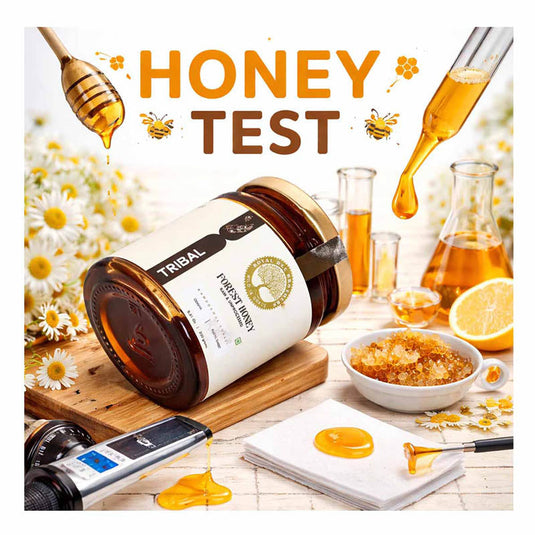
People want raw honey, pure honey, unprocessed honey, and real forest honey — but what they often get is something very different. For real vs fake honey India, many consumers rely on viral “home tests” to check honey purity. You’ve probably seen them too:
- The water test
- The thumb test
- The flame test
- The paper test
- The crystallization test
These methods are everywhere.
But here is the uncomfortable truth: A honey can pass home tests and still be adulterated. Conversely, a genuine raw honey can fail a home test and still be completely authentic.
This is a deep, science-backed, easy-to-understand guide that explains:
- What pure honey actually means
- Which home honey tests are useful (and which are misleading)
- Why pure honey can behave differently depending on floral source, moisture, season, and storage
- Why advanced fake honey can mimic “real” honey surprisingly well
- Why lab testing is the only reliable proof of authenticity
Real vs Fake Honey in India: How to Identify Pure Honey
In India, distinguishing real vs fake honey is challenging due to widespread adulteration and misleading labeling. Consumers should rely on lab-tested honey rather than viral home tests to verify authenticity.
Why Testing Honey Matters More Than Ever
Honey is one of the most frequently adulterated foods in the global market. Across different countries, investigations and food authenticity studies have repeatedly shown that many retail honeys may be:
- Diluted with sugar syrup, rice syrup, or corn syrup
- Altered with hidden invert sugar
- Overheated to unnaturally improve shelf appearance
- Ultra-filtered to strip out natural components like pollen
- Standardized to look uniform, clear, and perfectly fluid
That means even if a honey looks pure, tastes sweet, or passes a viral home test, it may still be manipulated. Consumers need more than folklore—they need trust backed by evidence.
What Does “Pure Honey” Actually Mean?
The word "pure" is used everywhere in the honey industry — but not always honestly. A retail label may say “pure honey,” yet that does not automatically guarantee that it remains raw, unheated, unfiltered, and full of natural health properties.
True pure honey should ideally be:
- Raw: Minimally handled and not aggressively heated past natural hive thresholds.
- Unprocessed: Free from excessive industrial refining or synthetic standardization.
- Clean Matrix: Completely free from added sugars, corn blends, or hidden syrups.
- Nutritionally Intact: Rich in native structural enzymes and natural micronutrients.
The Natural Composition of Real Honey
One reason honey is so difficult to judge at home is because real honey is naturally complex. This complexity means that no single “quick test” can accurately confirm authenticity. Honey gathered from distinct environments will display unique baseline physical traits:
- Wild Forest Flora: Often yields multi-floral varieties with distinct deep, earthy properties.
- Monofloral Blossoms: Dictates specific consistency and aroma behaviors based on a single plant type.
- Humid Regions & Mountain Ecosystems: Naturally alters moisture percentages, altering physical viscosity.
Because of these factors, unmanipulated raw batches will naturally behave differently from commercial, standardized supermarket honey formulas.
10 Popular Home Tests for Honey Evaluated
1) The Water Test
Method: Add a spoon of honey into a glass of ambient water.
The Reality: While pure honey tends to sink and fake honey often dissolves quickly, this is simply a rough observation of density and moisture content—not definitive proof of authenticity.
2) The Paper Test
Method: Drop a small amount of honey onto a sheet of paper.
The Reality: This evaluates basic moisture absorption rates. It does not identify sophisticated laboratory syrups designed to match honey density.
3) The Flame Test
Method: Dipping a matchstick in honey and striking it.
The Reality: This test depends entirely on the batch's moisture percentage. It is an unscientific myth that fails to reveal chemical adulteration.
4) The Thumb Test
Method: Placing a drop of honey on your thumb to see if it spreads.
The Reality: This merely checks fluid thickness and viscosity. Thick corn or rice syrups pass this check seamlessly.
5) The Vinegar Test
Method: Mixing honey with water and a few drops of vinegar.
The Reality: Highly limited. It fails to detect modern industrial adulterants or added inverted sugar blends.
6) The Crystallization Test
Method: Checking if honey naturally solidifies over time.
The Reality: Crystallization is a natural process caused by glucose separation. It does not definitively prove or deny purity on its own.
7) The Heat Test
Method: Heating honey to watch how it caramelizes.
The Reality: Heating alters honey's chemical matrix and destroys nutrients. It is not recommended as a purity diagnostic.
8) Taste & Smell
Method: Assessing flavor complexity and floral notes.
The Reality: Can indicate raw quality traits, but is not scientific proof against engineered syrups.
9) The Bread Test
Method: Spreading honey on a slice of fresh bread to see if it hardens.
The Reality: This checks moisture levels, but remains highly unreliable for detecting industrial syrup dilution.
10) Laboratory Testing — The Only Real Proof
If you truly want to know whether your honey is authentic, laboratory testing is the gold standard. Advanced diagnostic testing evaluates parameters home tests cannot see:
- Sugar profile, moisture levels, and total acidity
- Enzyme activity and Hydroxymethylfurfural (HMF) build-up
- Pollen footprint, geographic markers, and trace contamination risks
Advanced laboratory methods include:
- NMR-based screening (Nuclear Magnetic Resonance)
- Physicochemical profiling and microscopy evaluation
- Targeted adulteration pattern recognition
The Verdict: Home tests are clues. Lab tests are evidence.
At-a-Glance: Purity Testing Effectiveness Comparison
To summarize how standard observational diagnostic checks compare to clinical evaluations, review the analysis matrix below:
| Home Test | Useful? | Reliable? |
|---|---|---|
| Water Test | Yes | No |
| Thumb Test | Yes | No |
| Flame Test | Limited | No |
| Crystallization | Useful | No |
| Lab Testing | Yes | Yes |
The Big Truth Most Honey Blogs Don’t Tell You
Truth #1: Fake Honey Can Pass Home Tests
Sophisticated adulterated syrups are engineered to perfectly imitate the density, color, viscosity, surface texture, and sweetness profile of genuine honey. A fake honey can sink in water, feel thick on your thumb, and look golden—which is why viral shortcuts can be misleading.
Truth #2: Pure Honey Can Fail Home Tests
Genuine raw honey can vary across batches due to natural moisture differences, seasonal changes, wild floral diversity, and storage temperatures. This is especially true for wild-harvested forest honey, which doesn't follow a rigid industrial formula.
Truth #3: Honey Is One of the Most Faked Foods in the World
Globally, honey is highly vulnerable to adulteration due to its market value, how easily it can be diluted, and how difficult it is for consumers to verify without lab equipment.
Truth #4: Even Taste Alone Is Not Enough
Modern adulterated honey blends can closely mimic the sweetness, thickness, and mouthfeel of real honey, meaning even experienced consumers can be misled by taste alone.
What Beekeepers & Experienced Buyers Say
Relying on home tests alone is not enough to guarantee true authenticity. Experienced buyers follow a clear rule of thumb: use home tests as minor indicators, use common sense as protection, and use independent laboratory validation reports to guide your purchasing decisions.
The Royal Bee Brothers Promise
What We Stand For
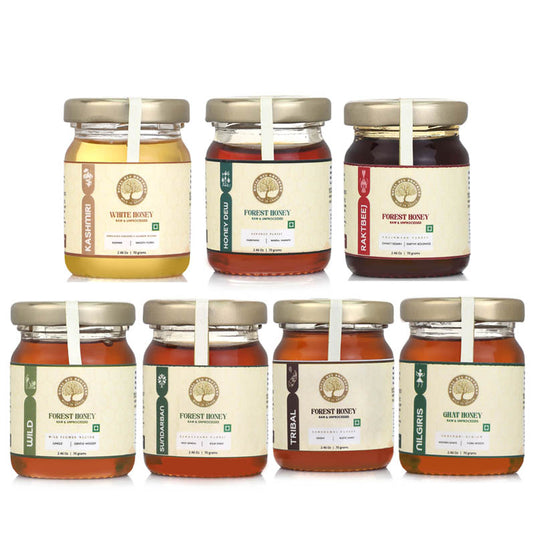
- 100% Raw Honey: Kept exactly as the hive intended without high-heat processing.
- No Overheating: Handled carefully to preserve biological activity.
- No Artificial Standardization: Every single harvest reflects its natural season.
- Unfiltered & Rich: Retains its native pollen structure and raw characteristics.
Zero Adulteration Commitment
- No added sugar syrup, rice syrup, or corn syrup
- No hidden invert syrup blending or artificial sweeteners
Forest-Sourced Authenticity
Our honey is harvested directly from wild ecosystems, ensuring a raw profile that reflects genuine seasonal and regional variation.
Transparency Over Hype
We do not ask customers to blindly believe structural claims. We provide clear, verifiable validation proof for every bottle.
Lab Testing in NABL Certified Labs
Testing ensures quality through validated systems and laboratory standards.
Parameters Tested
- Fiehe’s Test & Invert Sugar Test
- Added Sugar Check (Sucrose, Rice, Corn Syrups)
- Ash Content, Acidity, and pH Value
- Diastase Activity & HMF Levels
- Bacterial Count & Microbial Contamination Safeties
- Tested extensively in fully standardized laboratory environments.
Why These Tests Matter
They clearly identify adulteration, verify enzyme health, ensure food safety, and validate absolute origin authenticity. To ensure total transparency, our latest lab reports are always available on our website and included with every single bottle.
Why Our Honey Tastes Different
It reflects real forests, real flowers, and real ecosystems. It carries complex notes of wild blossoms and landscapes that still remember how to be wild.
How to Choose Better Honey (Expert Buying Advice)
Instead of relying only on viral tests, use a smarter evaluation checklist.
1) Read the Label Carefully
Verify that the ingredients list shows zero added sugars, glucose syrups, corn syrups, rice syrups, or artificial flavorings.
2) Choose Brands That Show Evidence
A trustworthy honey brand should be completely transparent about its batch records, harvest origins, and independent lab testing details.
3) Understand Crystallization Properly
Crystallization is a natural characteristic of raw honey. Liquid honey isn't automatically fake, and crystallized honey isn't automatically pure—context and floral source matter.
4) Pay Attention to Aroma and Taste
Real honey has a distinct character—ranging from floral and herbal to woody and earthy. If a product offers nothing but plain sweetness, it's worth asking questions.
5) Be Cautious of Ultra-Cheap Honey
Authentic honey involves careful foraging, seasonal variability, and quality testing. If the price feels too good to be true, it likely is.
Can You Test Honey at Home?
Yes — but only to a point. Home tests can help you observe basic thickness and aroma, but they cannot reliably identify advanced syrup adulteration or enzyme degradation. The final answer is simple: Home tests are helpful indicators, but lab testing is the only reliable proof.
Royal Bee Brothers Promise of Purity
Raw. Unfiltered. Tested. Transparent.
- 100% raw honey with zero added sugars or processing syrups.
- NABL certified lab tested for Fiehe’s, HMF, and Diastase values.
- Full transparency reports are available online and included with every purchase.
Scientific Reference Links
- Honey Adulteration Review: Read scientific review
- Honey Composition & Authenticity: Read composition & authenticity paper
- Advanced Honey Authentication Methods: Read advanced honey authenticity review
- HMF + Diastase Study: Read HMF and diastase study
Explore Our Knowledge Base
Read our related educational guides to deepen your understanding of honey purity and natural wellness: