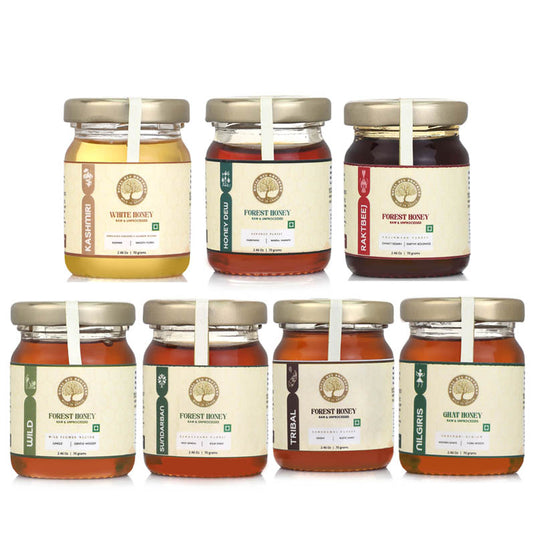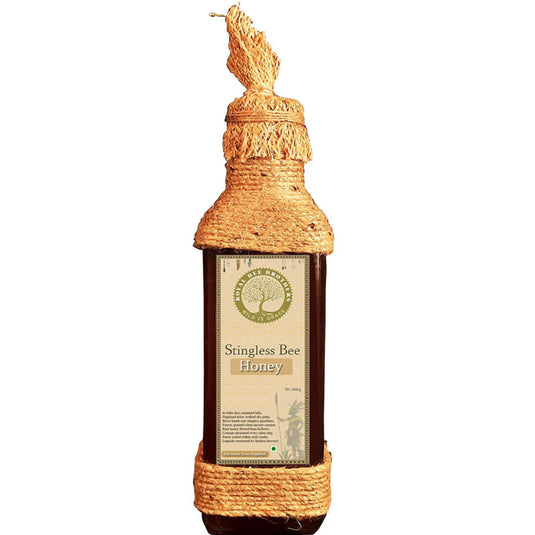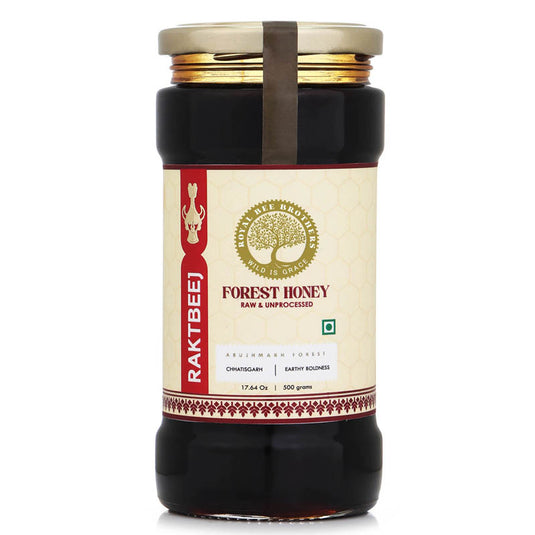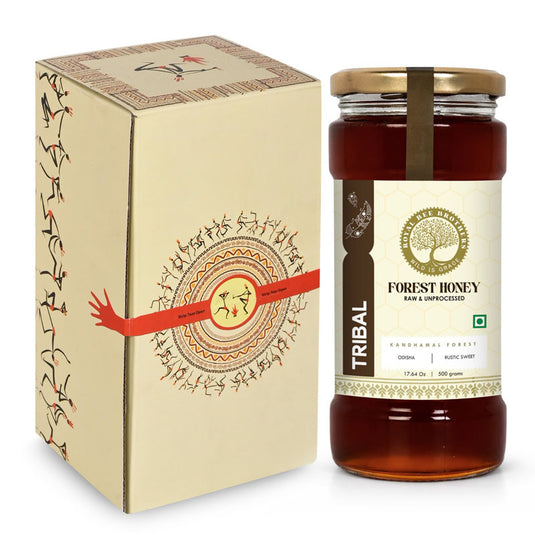
At Royal Bee Brothers, we believe honey should never be seen as just another sweetener.
Real honey is not made in a factory.
It is not a flat, uniform syrup designed to taste exactly the same in every jar.
It is not something that machines “create.”
Real honey is a living natural food.
It is shaped by:
· Flowers
· Forests
· Seasons
· Geography
· Climate
· Bee species
· Honeycomb structure
And above all, the extraordinary life and labor of honeybees
Behind every spoon of authentic raw honey is a hidden world most people never truly see.
A single jar of genuine honey is the result of:
· Thousands of worker bee flights
· Millions of flowers visited
· Careful nectar collection
· Enzymatic transformation inside the hive
· Precise moisture reduction
· Honeycomb storage
· Wax capping
And one of the most intelligent natural systems on Earth
When customers taste honey from Royal Bee Brothers, many of them notice something important immediately:
Not all real honey tastes the same.

That is not inconsistency.
That is the beauty of real honey.
And to truly understand why honey tastes different, looks different, and behaves differently, you must first understand the makers of honey — the bees themselves.
In this complete guide, we will explore:
· The honeybee life cycle
· Why worker bees deserve special respect
· The main types of bees in India
· The most important types of honey in India
· Why honey taste, color, aroma, and texture naturally change
· The brilliance of honeycomb structure
· Amazing honeybee facts
· The truth behind the “honey is bee spit” myth
A detailed step-by-step explanation of how real honey is made
If you love raw honey, forest honey, wild honey, monofloral honey, or simply want to understand what makes authentic honey so special, this is one of the most important honey guides you can read.
Why Understanding Honeybees Matters Before You Buy Honey
At Royal Bee Brothers, we often say:
If you understand the bee, you understand the honey.
Many people buy honey based only on:
Color, Price, Sweetness, Thickness, Packaging
But those are only surface-level details.
The real story of honey begins much earlier — inside the life of the colony.
A honeybee colony is not just a random cluster of insects. It is a highly organized, deeply intelligent, self-regulating biological society.
In fact, many scientists describe a bee colony as a superorganism because thousands of individual bees work so precisely together that the colony behaves almost like one living being.
Inside a healthy colony, there are three main types of bees:
· Queen bee
· Worker bees
· Drone bees
Each has a role. But if there is one truth every honey lover should remember, it is this:
Worker bees are the real soul of honey.
The Honeybee Colony: A Perfect Natural System
Before we understand the honeybee life cycle, it helps to understand the colony itself.
1) The Queen Bee
The queen bee is the reproductive center of the hive.
Her primary role is to:
· Lay eggs
· Maintain colony continuity
· Release pheromones that regulate colony behavior
· Help keep the social structure stable
A strong queen can lay a remarkable number of eggs during peak season.
She is the mother of the colony.
But one thing many people misunderstand is this:
The queen does not make honey.
2) Worker Bees
Worker bees are female bees, and they do almost everything.

At Royal Bee Brothers, when we talk about respecting honey, we are really talking about respecting the invisible labor of worker bees.
Because without worker bees:
· There is no hive hygiene
· There is no brood care
· There is no comb building
· There is no nectar collection
· There is no honey ripening
· There is no capped honey
· There is no real honey
3) Drone Bees
Drone bees are male bees.
Their main purpose is reproduction — mating with a queen.
They do not:
· Forage for nectar
· Build comb
· Process honey
· Perform nursing work
· Guard the hive like workers do
That is why, when we talk about how honey is made, the spotlight always returns to the same heroes:
The worker bees.
Honeybee Life Cycle Explained: From Egg to Adult Bee
Understanding the honeybee life cycle is essential if you want to understand how honey truly begins.
Honeybees undergo complete metamorphosis, which means they pass through four major stages:
· Egg
· Larva
· Pupa
· Adult bee
This transformation is one of the most beautiful biological processes in the insect world.
Stage 1: Egg Stage
The queen lays one egg in each wax cell of the honeycomb.
This is where life begins.
There are two key biological possibilities:
· Fertilized eggs become female bees (worker bees or a future queen)
· Unfertilized eggs become male bees (drones)
This is one of the most fascinating systems in nature.
The queen can control whether an egg is fertilized, which helps the colony regulate future population balance.
How long does the egg stage last?
Usually around 3 days.
At first, the egg stands upright in the cell, then gradually tilts before hatching.
Stage 2: Larva Stage
After the egg hatches, a tiny white larva emerges.
It looks like a small, curved grub and stays inside the cell.
This is the intense feeding stage.
What do bee larvae eat?
All larvae are initially fed royal jelly, a nutrient-rich secretion produced by young worker bees.
Then the diet changes:
- Future queen larvae continue receiving royal jelly
- Future worker and drone larvae shift to brood food associated with pollen and nectar-based nutrition This reveals one of the most extraordinary truths in bee biology:
A queen bee and a worker bee can begin from very similar fertilized eggs — but nutrition changes destiny.
That means feeding determines whether one female becomes:
A powerful, egg-laying queen
Or a hardworking worker bee
This is why nurse bees (who are themselves worker bees) are so important.
They are not just caretakers.
In a very real sense, they help shape the future of the colony.
Stage 3: Pupa Stage
Once the larva has been fully fed, worker bees cap the brood cell with wax.
Inside that sealed cell, the larva transforms into a pupa.
This is the stage where the bee begins taking its final form.
During the pupal stage, it develops:
· Wings
· Legs
· Eyes
· Mouthparts
· Hair
· Internal body systems
· Final adult structure
· The transformation is dramatic.
A soft, helpless larva becomes a fully formed honeybee.
Stage 4: Adult Bee Emerges
Once development is complete, the adult bee chews through the wax cap and emerges into the hive.
Now the next phase begins:
Service to the colony.
Development time from egg to adult
- Queen bee: about 16 days
- Worker bee: about 21 days
- Drone bee: about 24 daysThis timing matters deeply in beekeeping because it helps indicate:
- Colony rhythm
- Brood health
- Queen performance
- Population strengthBut at Royal Bee Brothers, it also means something more meaningful:
Every worker bee that helps create honey has already passed through a complex, carefully protected life cycle before she ever touches a flower.
Special Respect to Worker Bees: The Real Makers of Honey
If there is one section of this guide that deserves to be remembered, it is this:
Worker bees are the true makers of honey.
The queen may create the next generation.
But worker bees create the world inside the hive.
They are not just insects.
They are:
· Builders
· Nurses
· Cleaners
· Guards
· Ventilation experts
· Climate managers
· Wax engineers
· Nectar processors
· Food preservers
· Foragers
· Defenders
And the real creators of honey
At Royal Bee Brothers, we believe worker bees deserve far more recognition than they usually receive.
Because every drop of real honey is their life’s work.
What Makes Worker Bees So Special?
Worker bees are sterile female bees.
Unlike the queen, they do not normally reproduce.
Their entire life is built around service to the colony.
And their lives are often short.
During active honey flow seasons, many worker bees may live only a few weeks.
In that short time, they may:
· Clean cells
· Feed larvae
· Build comb
· Receive nectar
· Process honey
· Fan the hive
· Guard the entrance
· Fly from flower to flower until exhaustion
That is why honey should always be consumed with gratitude.
The Life of a Worker Bee: Age-Based Duties Inside the Hive
One of the most amazing facts about worker bees is that they do not do the same job for life.
Their role changes as they age.
This is one of nature’s most elegant labor systems.
1 to 3 Days Old: Cleaner Bees
A newly emerged worker bee starts as a cleaner.
She:
· Cleans empty brood cells
· Removes debris
· Prepares cells for new eggs
· Maintains hygiene
This may seem simple, but it is one of the foundations of colony health.
· A clean cell means the queen can lay again.
A dirty cell means disruption.
3 to 10 Days Old: Nurse Bees
Now the worker becomes a nurse bee.
She:
· Feeds young larvae
· Produces brood food
· Supports developing bees
· Attends the queen
· Helps raise the next generation
· Without nurse bees, there is no future colony.
And remember:
It is worker bees themselves who determine, through feeding, whether a female larva becomes a queen or a worker.
That means worker bees are not just caretakers.
They are, in a sense, shapers of destiny inside the hive.
10 to 16 Days Old: Wax Builders and Honey Processors
This is where the hive becomes visible architecture.
At this stage, worker bees:
· Produce beeswax from abdominal wax glands
· Build honeycomb
· Repair damaged comb
· Shape wax cells
· Receive nectar from foragers
· Process nectar inside the hive
· Pack pollen into cells
· Begin converting nectar toward honey
At Royal Bee Brothers, we often say:
· Honey does not begin in the jar. It begins in wax.
· Before there is stored honey, there must be comb.
· And before there is comb, there must be worker bees.
16 to 20 Days Old: Guards and Ventilation Experts
As they mature, worker bees take on defense and environmental control.
They:
· Guard the hive entrance
· Identify threats
· Challenge intruders
· Help regulate airflow
· Fan wings to reduce moisture
· Maintain temperature and humidity balance
This is extremely important in honey making.
Why?
Because fresh nectar is too watery to become stable honey.
Worker bees create airflow and ventilation so nectar can lose moisture and thicken properly.
That means bees are not just honey makers.
They are natural climate engineers.
20+ Days Old: Forager Bees
This is the final and most dangerous phase in the life of many worker bees.
Now they leave the hive.
They collect:
· Nectar
· Pollen
· Water
· Propolis (plant resins)
These are the bees you see visiting flowers.
They are also the bees most exposed to:
· Heat
· Wind
· Rain
· Predators
· Pesticides
· Navigation risk
· Physical exhaustion
Many worker bees die in this stage.
That is why every spoon of honey should be respected.
Because it represents not just sweetness — but sacrifice.
Types of Bees in India: Major Honey Bee Species Found in India
India is one of the richest honey landscapes in the world.
Our country has:
· Forests
· Plains
· Orchards
· Tribal belts
· Mountain ecosystems
· Dry zones
· River valleys
· Himalayan regions
· High floral diversity
Because of this, India is home to multiple important bee species.
If you want to understand the types of bees in India, these are the most important.
1) Apis dorsata (Rock Bee / Giant Honey Bee)
One of the most iconic wild honeybees in India
Key traits
· Large and powerful
· Wild species
· Builds a single large exposed comb
· Often nests on tall trees, cliffs, buildings, or forest structures
· Strongly defensive
· Closely associated with wild forest honey traditions
Why it matters
Honey linked with this bee is often associated with:
· Wild floral diversity
· Forest ecosystems
· Stronger flavor
· Darker or deeper profiles
· Resinous, woody, or layered notes
For many people, when they imagine traditional wild honey collection, this is the bee they are indirectly thinking about.
2) Apis cerana indica (Indian Hive Bee)
This is the traditional Indian honeybee.
Key traits
· Smaller than Apis mellifera
· Builds multiple combs inside cavities
· Better adapted to many Indian conditions
· Important in traditional and small-scale beekeeping
Why it matters
This species reflects India’s own beekeeping heritage and regional honey traditions.
3) Apis mellifera (Western / European Honeybee)
This is the most common bee used in large-scale commercial beekeeping.
Key traits
· High productivity
· Common in migratory apiary systems
· Widely used for pollination and organized honey production
Why it matters
A large share of structured market honey often comes from this species.
4) Apis florea (Little Bee / Dwarf Honey Bee)
A smaller wild bee found in many parts of India.
Key traits
· Small body size
· Builds small exposed combs
· Often nests on bushes or small branches
· Produces limited honey
Why it matters
Commercially small, ecologically important.
5) Stingless Bees (Tetragonula species and related groups)
Tiny bees that produce very small amounts of honey.
Key traits
· Very small body size
· No typical sting like common honeybees
· Rare and low-yield honey
· Traditional value in some regions
Why it matters
Stingless bee honey is often considered rare, traditional, and highly special.
6) Apis laboriosa (Himalayan Giant Honey Bee)
A remarkable high-altitude bee associated with Himalayan regions.
Key traits
· Cliff nesting
· Mountain ecology
· Rare and dramatic honey collection traditions
· Deeply connected with Himalayan honey narratives
Why it matters
This species represents one of the most culturally fascinating and visually dramatic honey traditions in the world.
Types of Honey in India: Why Indian Honey Is So Diverse
At Royal Bee Brothers, one of the most important things we teach our customers is this:
India is not a one-honey country. India is a vast honey universe.
Because of its floral diversity, climate range, and geography, India produces an extraordinary range of honeys.
Understanding the types of honey in India is essential if you want to buy real honey with awareness.
1) Mustard Honey
Common in North India.
Typical profile:
· Light golden to amber
· Mild floral sweetness
· Familiar taste
· Easy everyday use
2) Litchi Honey
A beloved monofloral honey.
Typical profile:
· Light color
· Fruity aroma
· Delicate sweetness
· Smooth and beginner-friendly
3) Eucalyptus Honey
A more character-driven honey.
Typical profile:
· Medium to dark amber
· Woody-herbal aroma
· Slightly medicinal complexity
· Stronger finish
4) Jamun Honey
One of the more premium-feeling Indian honey styles.
Typical profile:
· Darker color
· Richer body
· Fruity-malty depth
· Slightly earthy or tannic edge
5) Acacia Honey
Refined and elegant.
Typical profile:
· Very light color
· Clean sweetness
· Gentle aroma
· Soft finish
6) Ajwain Honey
Distinctive and bold.
Typical profile:
· Herbal-spiced aroma
· Stronger flavor
· Functional, medicinal-style impression
· Highly memorable
7) Sunflower Honey
Bright and cheerful.
Typical profile:
· Golden color
· Clean sweetness
· Pleasant floral brightness
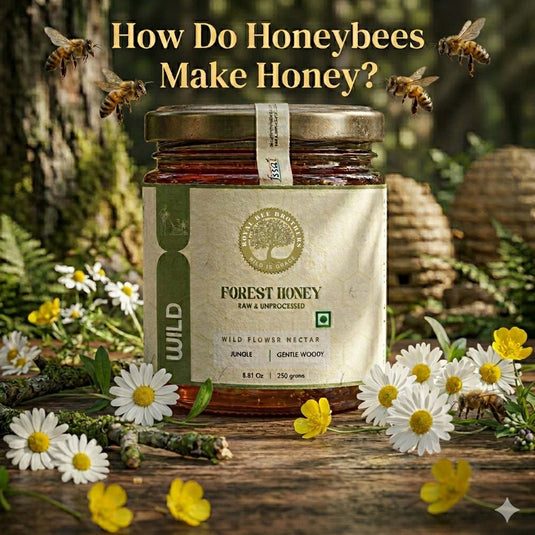
8) Wild Forest Honey
This is where honey becomes truly exciting.
Typical profile:
· Amber to very dark
· Floral + woody + herbal + resinous
· Sometimes slightly bitter-edged
· Highly seasonal
· More layered and less predictable
At Royal Bee Brothers, this is often where honey becomes unforgettable.
Because forest honey doesn’t just taste sweet. It tastes like place.
9) Multi-Flora Honey
Made naturally from many flowers in a region.
Typical profile:
· Seasonal variation
· Balanced complexity
· Can change batch to batch
· Reflects local biodiversity
10) Himalayan Multi-Flora Honey
One of the most expressive regional categories.
Typical profile:
· Floral complexity
· Fresh, elegant aroma
· Strong regional identity
· Reflects altitude and bloom diversity
Why Honey Taste, Color, and Aroma Naturally Change?
This is one of the most important truths every honey buyer should understand:
Real honey should not always taste the same.
At Royal Bee Brothers, we see this all the time.
Some people expect every jar of honey to be identical. But true honey doesn’t work like factory syrup.
Natural honey changes because nature changes.
That variation is not a flaw.
It is authenticity.
1) Floral Source Changes Honey Flavor
The biggest factor is the flower.
Different flowers produce different nectar chemistry, which changes:
· Sweetness profile
· Aroma
· Body
· Aftertaste
· Color tendency
· Depth
· Complexity
Examples:
· Litchi honey = fruity, soft, delicate
· Mustard honey = floral and familiar
· Eucalyptus honey = woody, herbal, stronger
· Jamun honey = deeper, darker, richer
· Forest honey = layered, wild, resinous, sometimes slightly bitter
2) Geography Changes Honey Character
Even the same floral source can taste different in different regions.
Why?
Because geography changes:
· Soil minerals
· Rainfall
· Humidity
· Temperature
· Altitude
· Bloom timing
· Companion flora
· Nectar concentration
This is what many people call honey terroir.
Just like tea, coffee, cacao, and wine — honey reflects the land.
3) Season Changes Honey Profile
Honey harvested early in a bloom may taste different from honey harvested later.
Season can affect:
Color depth, aroma intensity, thickness, floral brightness, complexity, and finish.
This is especially true in:
· Forest honey
· Multi-flora honey
· Wild honey
4) Processing Changes the Final Experience
At Royal Bee Brothers, this matters a lot.
Raw or minimally processed honey generally retains more of its original character.
Heavy processing can flatten:
· Aroma
· Natural complexity
· Floral identity
· Fine texture
· Sensory depth
That is why serious honey lovers increasingly prefer:
· Raw honey
· Unheated honey
· Minimally filtered honey
· Single-origin honey
· Forest honey
Honeycomb Structure: Nature’s Most Brilliant Storage Design
If honey is the treasure, honeycomb is the vault.
And it is one of the most extraordinary structures in nature.
Why Is Honeycomb Hexagonal?
Honeybees build hexagonal cells because the hexagon is incredibly efficient.
It helps bees:
· Use less wax
· Store more honey
· Build stronger structure
· Avoid wasted gaps
· Pack cells tightly and beautifully
This is not random.
It is one of the most elegant examples of natural engineering.
What Is Honeycomb Made Of?
Honeycomb is made from beeswax.
Worker bees produce tiny wax scales from wax glands on the underside of their abdomen.
Then they:
· Remove the wax
· Chew and soften it
· Shape it
· Build cells
· Repair structure
· Expand the hive
Once again, we return to the same truth:
Worker bees build the architecture that makes honey possible.
Different Sections of a Honeycomb
A healthy hive often contains organized areas within the comb:
Brood cells – where eggs, larvae, and pupae develop
Pollen cells – protein reserve for brood
Honey cells – nectar and ripened honey storage
Drone cells – slightly larger cells for males
Queen cells – special hanging cells for raising a new queen
A hive is not chaotic.
It is a living city.
Amazing Honeybee Facts That Make You Respect Honey More
These are the kinds of facts that completely change how people see honey.
1) Most of the bees doing the real work are female
Worker bees — the cleaners, nurses, builders, and foragers — are female.
2) Honey is made for bees, not for humans
Honey is the colony’s stored food reserve. Humans are only the beneficiaries of that labor.
3) Worker bees change jobs as they age
They move from cleaner to nurse to builder to guard to forager.
4) Bees regulate hive climate
They control airflow, temperature, and humidity — all critical for ripening honey.
5) Honeycomb is a masterpiece of engineering
Hexagonal cells are one of the most efficient storage systems in nature.
6) Honey can carry the signature of a landscape
A skilled taster can sense floral, fruity, woody, herbal, resinous, or forest-heavy notes.
7) Wild forest honey is often more complex
It can be darker, bolder, and more layered than standard farm honey because floral diversity is broader.
8) A bee colony behaves like one organism
Thousands of individuals coordinate with astonishing precision.
Is Honeybee Spit? The Truth About Honey “Chewing” and “Spit”
This is one of the most common and most poorly explained questions online.
No — real honey is not simply “bee spit.”
That phrase is:
· Oversimplified
· Scientifically misleading
· Disrespectful to the actual process
At Royal Bee Brothers, we prefer to explain it properly.
What actually happens?
When a worker bee visits a flower:
· She collects nectar
· She stores it in a special honey stomach (also called the crop)
· This is different from her main digestive stomach
· She returns to the hive
· She transfers the nectar to house bees
· Enzymes are added
· The nectar is processed repeatedly
· Moisture is reduced
· It ripens inside honeycomb cells
This transfer is sometimes casually described as “regurgitation,” but that is not the same thing as ordinary saliva spit the way people imagine it.
The respectful and accurate explanation is this:
Honey is flower nectar that is collected, enzymatically transformed, transferred between worker bees, dehydrated, and matured in honeycomb cells.
That is the scientifically correct way to explain real honey
How Real Honey Is Made: A Detailed Step-by-Step Guide
Now we come to the heart of the matter:
How do bees make honey?
At Royal Bee Brothers, this is one of our favorite things to explain, because once people understand the process, they never look at honey the same way again.
Step 1: Worker Bees Visit Flowers
Forager bees search for nectar-rich flowers such as:
· Mustard
· Litchi
· Eucalyptus
· Jamun
· Acacia
· Ajwain
· Sunflower
· Wild forest flora
· Himalayan multi-flora blooms
This is where the future flavor of honey begins.
Step 2: Nectar Is Collected
Using a tongue-like structure called the proboscis, the bee draws nectar from the flower.
At this stage, it is still nectar, not honey.
Fresh nectar is:
· Thin
· Watery
· Perishable
· Sugar-rich but unstable
Step 3: Nectar Is Stored in the Honey Stomach
The nectar is stored in a special organ called the honey stomach or crop.
This is different from the bee’s main digestive stomach.
That allows the bee to transport nectar without digesting it as ordinary food.
Step 4: Enzymes Begin the Transformation
Inside the honey stomach and during later transfer, enzymes begin working on the nectar.
These enzymes help:
· Break down complex sugars
· Shift nectar chemistry
· Prepare it for preservation
· Move it toward becoming honey
This is why honey is not just concentrated flower juice.
It is a biologically transformed food.
Step 5: Nectar Is Passed to House Bees
The forager returns to the hive and transfers nectar to house bees.
This repeated exchange helps:
· Mix enzymes
· Expose nectar to air
· Continue biochemical transformation
· Begin moisture reduction
Step 6: Nectar Is Deposited Into Wax Cells
The partially processed nectar is placed into honeycomb cells.
At this stage:
· It is still too watery
· It is not yet mature honey
· More drying is required
Step 7: Worker Bees Reduce Moisture
This is one of the most important stages in the honey making process.
Fresh nectar contains too much water. If stored like that, it could ferment.
So worker bees solve this by:
· Spreading nectar across cell surfaces
· Moving nectar between cells
· Increasing surface area
· Fanning their wings
· Creating airflow through the hive
This reduces moisture and thickens the liquid.
At Royal Bee Brothers, we often say:
Before honey becomes sweet and stable, it must first survive the science of the hive.
Step 8: Honey Ripens
As moisture drops and enzymatic changes continue:
· Nectar becomes thicker
· Sugars stabilize
· Aroma intensifies
· Shelf stability improves
It turns into mature honey
This is where the magic becomes visible.
Step 9: Bees Cap the Honey
Once the honey is properly ripened, worker bees seal the cell with a thin wax layer.
This is called capped honey.
Capped honey is usually a strong sign that:
· Moisture has been sufficiently reduced
· The honey is mature
· It is ready for long-term storage
Step 10: Honey Is Harvested
Now the honey can be harvested.
A) Managed Apiary Harvest
· Frames are removed
· Wax cappings are opened
· Honey is extracted
· Then filtered and packed
B) Traditional or Forest Honey Harvest
· Comb may be cut
· Honey may drip naturally or be pressed
· Flavor can be more intense, raw, and variable
This is one reason why wild and forest honeys often have a stronger identity.
Step 11: Minimal Processing Matters
At Royal Bee Brothers, this step matters deeply.
How honey is handled after harvest affects the final experience.
The goal should be to preserve:
· Floral identity
· Natural aroma
· Texture
· Color integrity
· Raw character
That is why premium honey lovers increasingly seek:
· Raw honey
· Unheated honey
· Minimally filtered honey
· Single-origin honey
· Wild forest honey
Because once honey is over-processed, part of its natural story can be muted.
Why Real Honey Is Never “Just Sweet”
This is something we strongly believe at Royal Bee Brothers:
Real honey is a tasting experience, not just a sweetener.
A good honey can show notes of:
Notes of flowers, fruit, herbs, wood, resin, earth, warm spice, caramel, minerals, slight bitterness, a lingering floral lift, and a distinct seasonal character.
That is why one honey can feel:
· Bright and delicate
· While another feels:
· Dark, wild, deep, and almost mysterious
This is exactly why we encourage people to taste honey slowly — almost like tea, coffee, or fine chocolate.
Why Honey Education Matters in India
India has one of the most extraordinary honey landscapes in the world.
From:
From tribal forest honey traditions and Himalayan nectar zones to mustard belts, litchi orchards, eucalyptus regions, jamun-rich landscapes, and wild multi-flora ecosystems.
…India offers remarkable honey diversity.
But for Indian honey to be truly valued, consumers need education.
· They need to understand:
· Not all honey should taste the same
· Dark honey is not automatically bad
· Forest honey can be naturally bold and complex
· Crystallization can be normal in real raw honey
· Color changes can reflect flora and season
· Aroma can reveal authenticity and origin
Different regions naturally produce different honey personalities
At Royal Bee Brothers, this is one of our missions:
To help people move from simply consuming honey to truly understanding honey.
Because once a customer understands honey, they stop asking only:
“Is it sweet?”
They begin asking better questions:
· What flowers did it come from?
· Why is this batch darker?
· Why does this forest honey taste woody?
· Why does this honey smell herbal?
· Why does this one crystallize faster?
· Why does this region taste different?
That is where real appreciation begins.
The Royal Bee Brothers Philosophy: Respect the Bee, Respect the Honey
For us, honey is not just a product category.
It is a living natural food that deserves honesty.
At Royal Bee Brothers, we believe real honey should be respected for what it truly is:
· A reflection of flowers
· A reflection of geography
· A reflection of season
· A reflection of the hive
· A reflection of worker bee labor
That means we do not expect every batch to be identical like factory-made syrup.
In fact, natural variation is part of the truth of honey.
A lighter honey may feel:
Delicate, Floral, Clean
A darker honey may feel:
Richer, More resinous, More intense
A forest honey may feel:
Wilder, More layered, More alive
That is not a flaw.
That is exactly what makes real honey worth seeking.
Every Drop of Honey Is the Life Work of Worker Bees
If there is one truth we want every reader to remember from this guide, it is this:
Every drop of real honey is the life work of worker bees.
They:
· Clean the nursery
· Raise the next generation
· Build the wax city
· Guard the entrance
· Control the climate
· Visit the flowers
· Gather the nectar
· Process the liquid
· Ripen the honey
· Seal it for the colony’s future
· So whether you are tasting:
· Mustard honey
· Litchi honey
· Jamun honey
· Eucalyptus honey
· Himalayan multi-flora honey
· Wild forest honey
…remember that you are tasting far more than sweetness.
You are tasting:
· Flower diversity
· Landscape identity
· Seasonal rhythm
· Bee intelligence
· Natural chemistry
And the quiet, extraordinary devotion of thousands of worker bees
At Royal Bee Brothers, that is exactly why we believe:
Real honey should be understood, respected, and tasted with awareness.
Because once you truly understand honey, you never look at a jar the same way again.
Honeybee Life Cycle, Worker Bees, Types of Honey in India & How Honey Is Made
1) What is the life cycle of a honeybee?
The honeybee life cycle has four stages: egg, larva, pupa, and adult bee. A queen develops in about 16 days, a worker bee in about 21 days, and a drone in about 24 days.
2) Why are worker bees important in honey production?
Worker bees do almost all the work in the hive, including cleaning cells, feeding larvae, building honeycomb, collecting nectar, processing nectar, reducing moisture, ripening honey, and capping mature honey.
3) What are the main types of bees in India?
The main honey bee species in India include Apis dorsata, Apis cerana indica, Apis mellifera, Apis florea, stingless bees, and Apis laboriosa in Himalayan regions.
4) What are the common types of honey in India?
Common types of honey in India include mustard honey, litchi honey, eucalyptus honey, jamun honey, acacia honey, ajwain honey, sunflower honey, wild forest honey, multi-flora honey, and Himalayan multi-flora honey.
5) Why does honey taste different in different regions?
Honey taste changes because of floral source, geography, altitude, climate, soil, season, and processing method. Real honey naturally varies in flavor, aroma, color, and texture.
6) Why is some honey darker than others?
Honey color depends on flowers visited by bees, plant compounds, mineral content, geography, season, and nectar composition. Darker honey often has a stronger, richer, or more complex flavor profile.
7) How do bees make honey step by step?
Bees collect nectar from flowers, store it in the honey stomach, transfer it to house bees, add enzymes, place it in comb cells, reduce moisture by fanning, ripen it into honey, and seal it with wax caps.
8) Is honey made from bee spit?
No. Honey is not simply bee spit. It is flower nectar that is collected, enzymatically transformed, transferred between worker bees, dehydrated, and matured in honeycomb cells.
9) What is honeycomb made of?
Honeycomb is made of beeswax, which worker bees produce from wax glands on their abdomen and shape into hexagonal cells.
10) Why is honeycomb hexagonal?
Hexagonal honeycomb cells are strong, efficient, and space-saving. They allow bees to use less wax while storing more honey with minimal wasted space.
Experience Honey the Way Nature Intended
At Royal Bee Brothers, we believe real honey should reflect:
· The flowers
· The forest
· The season
· The region
And the bees that made it
If you want to taste honey with real character — not just sweetness — explore the world of raw honey, wild honey, monofloral honey, and forest honey, and discover how different real honey can truly be.
Scientific Reference Links
1) Worker bees + honeybee biology / lifespan
Senescence in the Worker Honeybee (Apis mellifera) – PMC
This is a solid scientific paper for supporting the importance, biology, and aging of worker bees.
Link: Open study
Why useful: Explains worker bee lifespan and physiology, which helps support your worker bee respect / role in colony section.
2) Types of bees in India (direct India relevance)
Foraging Niche Overlap Among Exotic Honeybees and Native Honeybees in West Bengal, India
This study directly mentions key Indian honeybee species such as Apis cerana, Apis dorsata, Apis florea, and Apis mellifera.
Link: Open study
Why useful: Excellent support for your “types of bees in India” section.
3) How floral source changes honey taste, aroma, and character
Impact of Floral Sources and Processing on the Antimicrobial Activities of Different Unifloral Honeys – PMC
This paper clearly supports the point that flower source affects honey composition, which directly influences flavor profile, aroma, and biological activity.
Link: Open study
Why useful: Great for your section on why mustard, litchi, eucalyptus, jamun, and multiflora honeys taste different.
You can also explore