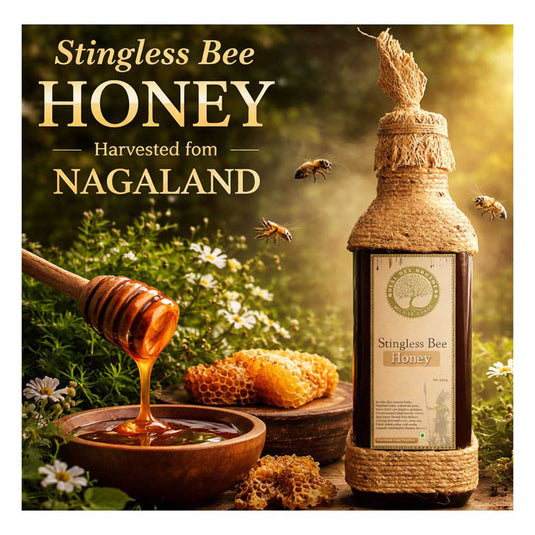
Stingless Bee Honey from Nagaland: A Rare Sweet-Sour Forest Treasure
Deep in the misty hills of Nagaland, where bamboo groves, wild herbs, forest blossoms, and traditional village life exist in harmony, tiny native bees quietly produce one of India’s rarest natural treasures—Stingless Bee Honey.
Unlike common honey bees, stingless bees are smaller, gentler, and produce honey in very limited quantities. Their honey is naturally different from regular honey in taste, texture, aroma, and rarity. It is known for its sweet-sour profile, thin consistency, and wild floral complexity, making it one of the most premium and unique honeys available in India.
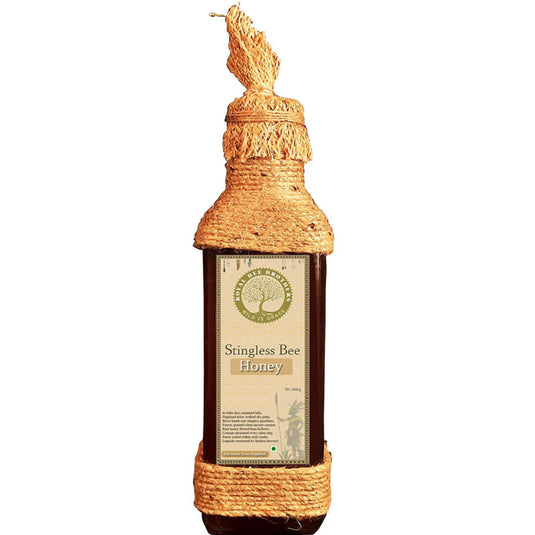
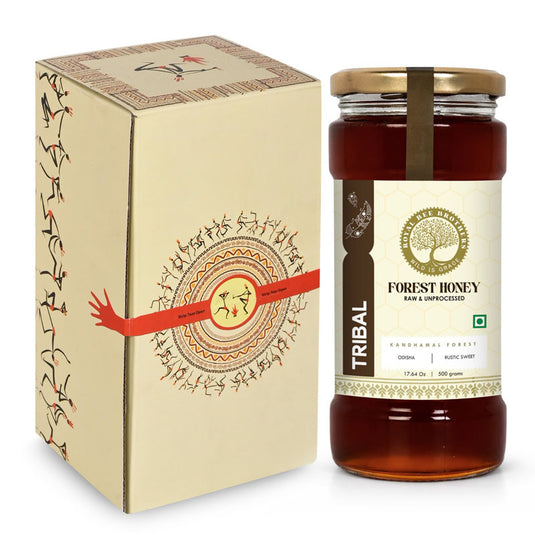
Stingless bees are also popularly known as Dammer Bees or Indian Dammer Bees, and their honey is often referred to as Dammer Bee Honey. At Royal Bee Brothers, we believe honey should never be ordinary. That is why our Stingless Bee Honey from Nagaland is more than a premium honey—it is a rare regional forest treasure, beautifully packed in a handcrafted glass bottle with jute, inspired by the earthy spirit of Nagaland and perfect for gifting.
What Is Stingless Bee Honey?
Stingless Bee Honey is a rare honey produced by tiny native bees belonging to the Meliponini tribe. These bees are commonly called stingless bees, and in India they are also popularly known as Dammer Bees or Indian Dammer Bees.
Unlike regular honeybees, stingless bees have a highly reduced stinger and are known for their gentle nature. They create their nests in:
- ✦Tree hollows
- ✦Bamboo cavities
- ✦Wooden crevices
- ✦Wall gaps
- ✦Natural Forest cavities
- ✦Traditional hive spaces
Because they are tiny and produce only a small amount of honey, their honey is naturally scarce, making it one of the most exclusive and premium forest honeys.

Why Is Stingless Bee Honey from Nagaland So Special?
Nagaland’s biodiversity makes it a naturally suitable region for stingless bees. The landscape offers:
- ✦Forested hills
- ✦Bamboo-rich habitats
- ✦Wild flowering shrubs
- ✦Village orchards
- ✦Native medicinal plants
- ✦Seasonal forest blooms
- ✦Clean, natural forage zones
These diverse ecosystems help stingless bees collect nectar and plant resins from a wide variety of floral sources, giving the honey its layered taste and regional identity. Stingless bee honey in Nagaland is often associated with biodiverse and traditional hill landscapes such as Kohima, Phek, Zunieboto, Mokokchung, and Eastern Nagaland. These regions are known for their forest-edge communities, traditional ecological knowledge, and natural floral diversity, all of which contribute to the character of Nagaland stingless honey.

The Keepers of the Whispering Pots: A Story from the Hills of Nagaland
The morning mist in the Naga hills does not lift all at once; it rolls lazily through the valleys of Kohima, clinging to the tops of giant bamboo groves like white cotton thread. In one of these hillside villages, ten-year-old Ketho scrambled down the wooden steps of his family’s stilt home, his bare feet meeting the cold, dew-kissed earth. Beside him was his younger sister, Nzan, cradling an empty clay container.
Today was harvest day, but not just any harvest. Today, they were visiting the "Whispering Pots."
While most children grew up watching out for the fierce, loud buzz of regular honeybees, Ketho and Nzan had a very different relationship with the insects of their forest. Under the wide eaves of their home, nestled quietly inside hollowed-out bamboo logs and seasoned clay pots, lived the *Kelphi*—the tiny, stingless Dammer bees. Smaller than a mosquito and completely gentle, these dark little protectors had been part of their family for generations.
"Listen closely," their grandfather, Atsü, would always whisper, leaning his weathered ear against the bamboo hive. "They do not roar like the mountain bees. They hum a quiet song, sealing the forest's secrets into tiny pots of gold."
Atsü stepped out onto the porch, his face lined with the wisdom of the hills, carrying a small bamboo straw. The children trailed eagerly behind him as they approached a hollow log hive that had remained undisturbed for a full year.
Unlike ordinary bees that build massive, hanging wax combs, the stingless bees are architectural artists of a different kind. When Atsü gently opened the side of the hive, Ketho and Nzan gasped, leaning in. Inside, there were no rows of hexagonal cells. Instead, the tiny bees had constructed an intricate, dark cluster of organic pots made from a mixture of wild beeswax and forest plant resins—known as propolis.
These tiny, amber-colored resin pots looked like miniature jars, holding the most precious liquid in the forest. Because the bees store their honey in these protective resin chambers, the honey absorbs the properties of the medicinal plants, wild herbs, and forest blooms surrounding the village.
With absolute patience, Atsü used the straw to gently draw out the fluid from a few chosen resin pots, leaving the rest so the hive would thrive through the coming monsoon. It took nearly twenty minutes of delicate work to gather just a small cup of the amber liquid.
"Taste," Nzan pleaded, holding out her finger.
Atsü smiled, dropping a tiny bead of the fresh, runny honey onto the children's tongues. Ketho closed his eyes. It was an explosion of flavor completely unlike any standard sweetness. First came a bright, fruity bloom, followed immediately by a sharp, refreshing sourness that made his mouth water, ending with a deep, earthy hint of forest resin. It tasted like the wild hills themselves—tangy, untamed, and pure.
For centuries, families in Nagaland kept these small pots not for trade, but as a treasured wellness remedy passed down to soothe throats, build vitality, and honor special guests. But because a single hive yields less than a few hundred grams a year, this regional treasure rarely made it past the borders of the hills.
Bridging the Naga Hills to Your Home
This is where the journey of the Royal Bee Brothers began. Recognizing that this rare, ancient heritage was fading as youth migrated away from traditional practices, we partnered with forest-edge communities and indigenous keepers like Atsü. By creating a sustainable path for their rare harvest, we ensure that families in Nagaland can preserve their traditional ecological knowledge while gaining a sustainable livelihood.
Every single drop of our Stingless Bee Honey is gathered with the same ancestral care that Ketho and his grandfather practiced under the eaves of their home. We do not alter, blend, or over-process this liquid gold; we preserve its natural, fluid texture and legendary sweet-sour complexity exactly as the Dammer bees intended.
When you hold a bottle of Royal Bee Brothers Stingless Bee Honey—encased in clear glass and lovingly wrapped in handcrafted jute—you are not just holding a premium wellness product. You are holding a piece of the misty Naga hills, the ancient whispers of the forest resin pots, and the proud heritage of a family that lives in perfect rhythm with nature.

What Does Stingless Bee Honey from Nagaland Taste Like?
One of the most surprising and memorable things about Stingless Bee Honey from Nagaland is its taste.
Unlike regular honey, which is mostly sweet, stingless bee honey is often described as:
- ✦Sweet at first
- ✦Lightly tangy
- ✦Slightly sour
- ✦Fruity and bright
- ✦Mildly herbal
- ✦Occasionally resinous or earthy
This unique profile is one of the reasons why Dammer Bee Honey is so prized.
Why Is Stingless Bee Honey Slightly Sour?
The slight sourness is considered a natural characteristic and may be linked to:
- ✦Higher natural moisture content
- ✦A different acidity profile than regular honey
- ✦Diverse wild floral sources
- ✦Resin-rich storage inside the nest
- ✦Natural fermentation-like flavor complexity (not necessarily spoilage)
This sweet-sour character is not a defect. In fact, it is one of the strongest signs that the honey is truly stingless bee honey and not ordinary commercial honey.
Stingless Bee Honey vs Regular Honey
| Feature | Stingless Bee Honey / Dammer Bee Honey | Regular Honey |
|---|---|---|
| Bee Type | Made by tiny stingless bees (Dammer bees) | Made by common honey bees |
| Taste | Sweet-sour, tangy, fruity, herbal | Mostly sweet and floral |
| Texture | Thin, fluid, runny | Thicker and denser |
| Storage in Hive | Stored in small resin-rich pots/cavities | Stored in wax comb cells |
| Yield | Very low and limited | Higher and more common |
| Best Use | Wellness, tasting, gifting | Daily use, cooking, sweetening |

Why Stingless Bee Honey Is Considered Premium
- 1. Extremely rare natural yield – Stingless bees produce only a small quantity of honey, making each bottle naturally limited and valuable.
- 2. Difficult and delicate harvesting – Harvesting requires patience, traditional knowledge, and care.
- 3. Distinctive sweet-sour flavor – Its naturally tangy profile makes it unlike regular honey.
- 4. Strong regional identity – Nagaland’s wild floral landscape and cultural connection add authenticity.
- 5. Research-backed curiosity – Growing scientific interest increases trust and uniqueness.
- 6. Limited-batch character – Natural variation in aroma, taste, and texture reflects authenticity.
Stingless Bee Honey Price in India
Stingless bee honey in India typically ranges from ₹1,200 to ₹2,000 per kg, reflecting its rare production and limited harvest. Known as Dammer honey, its unique sweet-sour taste, forest origin, and premium quality make it a high-value choice for wellness, gifting, and authentic raw honey enthusiasts.
Royal Bee Brothers: A Rare Honey Presented as a Premium Gift
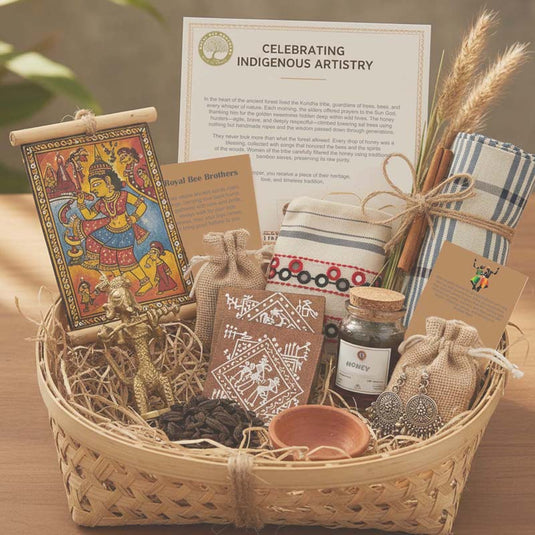
At Royal Bee Brothers, we believe that a rare honey should be presented in a way that reflects its story. That is why our Stingless Bee Honey from Nagaland is offered in a premium glass bottle, chosen to preserve purity while giving the honey a refined, elegant presentation. Each bottle is further enhanced with handcrafted jute detailing, giving it a rustic, earthy, and artisanal finish inspired by the natural and cultural spirit of Nagaland.
The combination of clear glass, handcrafted jute wrapping, premium small-batch honey, and rare Nagaland origin creates a product that feels less like a standard grocery honey and more like a rare handcrafted gift from the hills of Northeast India.
A Perfect Gift for Anyone:
- ✦Rare origin
- ✦Distinctive sweet-sour taste
- ✦Research-backed uniqueness
- ✦Premium regional story
- ✦Handcrafted glass bottle
- ✦Jute-based artisanal presentation
Frequently Asked Questions (FAQs)
1. What is Stingless Bee Honey?
Stingless Bee Honey is a rare honey produced by tiny native bees from the Meliponini tribe. These bees are also popularly known as Dammer Bees in India and produce small quantities of premium honey with a naturally sweet-sour taste.
2. Is Stingless Bee Honey the same as Dammer Bee Honey?
Yes. In India, Stingless Bee Honey is commonly referred to as Dammer Bee Honey or Indian Dammer Bee Honey. Both names are used to describe honey made by tiny native stingless bees.
3. Why does Stingless Bee Honey taste slightly sour?
Stingless Bee Honey naturally has a sweet-sour taste because of its higher natural moisture, different acidity profile, wild floral sources, and resin-rich storage inside the nest. This slight tang is a natural characteristic and not a defect.
4. Why is Stingless Bee Honey from Nagaland so special?
Nagaland offers rich biodiversity, bamboo habitats, forest blooms, and traditional ecological knowledge that support stingless bees. This gives the honey a unique regional identity, layered taste, and strong premium value.
5. Is Stingless Bee Honey thicker or thinner than regular honey?
Stingless Bee Honey is usually thinner, more fluid, and more runny than regular honey. This is one of its natural characteristics and helps distinguish it from common honey varieties.
6. Why is Stingless Bee Honey considered premium?
Stingless Bee Honey is considered premium because it is naturally rare, produced in very small quantities, difficult to harvest, region-specific, and highly distinctive in taste. Its research-backed uniqueness and traditional value also increase its premium appeal.
7. Is Royal Bee Brothers Stingless Bee Honey good for gifting?
Yes. Royal Bee Brothers Stingless Bee Honey from Nagaland is an excellent gift because it comes in a premium glass bottle handcrafted with jute, inspired by the earthy beauty of Nagaland. Its rare origin and artisanal presentation make it a memorable and meaningful gift.
8. How should I consume Stingless Bee Honey?
The best way to enjoy Stingless Bee Honey is in small amounts—such as 1 teaspoon in the morning, directly on the tongue, or mixed with lukewarm water. Avoid boiling or adding it to very hot beverages to preserve its natural character.
Expand Your Honey Knowledge
Explore deep dives, scientific research, and daily wellness guides curated by the Royal Bee Brothers.
🐝 Stingless Bee Mastery
-
Meliponiculture in India
A complete guide to sustainable stingless bee farming management.
-
Stingless Bee vs. Raw Honey
Comparing the differences in taste, nutrition, and medicinal properties.
-
Peer-Reviewed Scientific Research
Explore validated scientific studies on stingless bee honey.
-
The Rarity of Nagaland Honey
Why this specific honey is so rare, along with its benefits and uses.
🍯 Wellness & Honey Blends
-
Forest Honey vs. Regular Honey
What makes wild forest-sourced honey completely different?
-
Raw Honey & Warm Water Habits
A baseline guide to a simple, incredibly impactful daily wellness habit.
-
Moringa with Forest Honey
Discover the best times and methods to take this nutritional powerhouse.
💡 Honey Guides & Education
-
How Pure Honey is Made
Understanding the honeybee life cycle and types of bees in India.
-
How to Test Honey at Home
Simple, actionable tests to verify pure honey right in your kitchen.
-
The Science of Crystallization
Why high-quality, pure raw honey naturally turns solid over time.
-
The Ultimate Honeycomb Guide
A breakdown of honeycomb benefits, premium preparation, and uses.
Ready to make a choice?
Read our comprehensive, up-to-date handbook before purchasing raw honey.

1 comment
I have purchased once and found benefit for my cough and cold।