Forest Honey vs Regular Honey: Benefits, Differences & How to Choose
Discover the difference between forest honey and regular honey through their sourcing environments, floral diversity, flavour, processing, laboratory testing, traceability and natural characteristics.
Forest Honey vs Regular Honey: At a Glance
The difference between forest honey vs regular honey is not simply a matter of colour, sweetness or appearance. Honey can vary according to floral source, bee species, geography, season, harvesting practices, filtration, heating, storage and laboratory-tested quality.
Forest honey is generally associated with bees foraging across diverse natural vegetation in forest ecosystems. Regular honey may come from managed apiaries, agricultural crops, particular floral sources or blended batches. Neither category automatically guarantees superior quality.
The most reliable way to evaluate honey is to consider its source, traceability, processing history and appropriate laboratory testing.
Typically associated with diverse natural vegetation and, in some regions, wild bee populations. Its colour, aroma, flavour and composition can vary according to geography, season and botanical availability.
May originate from managed apiaries, agricultural crops, specific floral sources or blended batches. Processing, filtration, heating and testing practices vary between producers.
Important: The words “forest,” “natural,” “raw” or “pure” should not be treated as laboratory proof of authenticity. Product claims should be evaluated alongside sourcing information, processing details and appropriate quality testing.
The Hum Beneath the Canopy
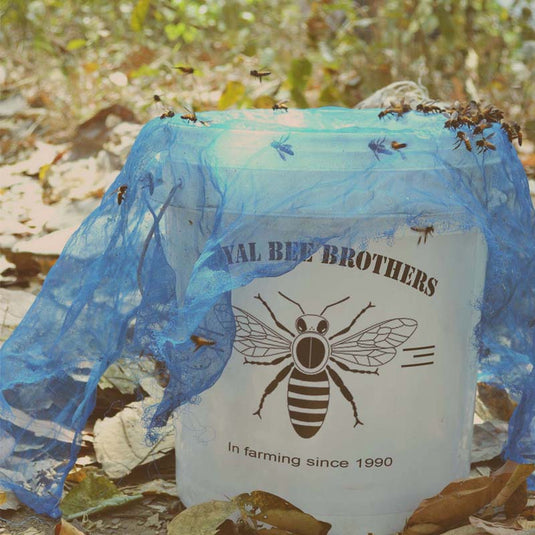
Deep within the forests of India, an ancient rhythm awakens with the changing seasons. Countless bees move through ecosystems shaped by trees, flowers, rainfall and geography. In several Indian forest landscapes, wild colonies of giant honey bees such as Apis dorsata establish colonies in their natural habitats.
Unlike honey produced from a deliberately selected flowering crop, honey collected from biodiverse landscapes can reflect the changing botanical environment. Bees may visit different flowers as seasons progress, resulting in natural differences in colour, aroma, viscosity and flavour between regions and harvests.
This is one reason raw forest honey is increasingly interesting to consumers who want to understand where their food comes from. Its identity can be connected to geography, biodiversity, traditional harvesting practices and seasonal variation.
At Royal Bee Brothers, our forest honey philosophy centres on the relationship between bees, forests, traditional knowledge and responsible sourcing.
Explore our raw honey and forest stories or discover our forest honey collection.
Forest Honey and Regular Honey: Where Do They Come From?
To understand the difference between forest honey and regular honey, it is useful to begin with the environment in which bees forage.
Commercial honey production can involve managed colonies placed near agricultural fields, orchards or particular flowering crops. Depending on the producer, beekeepers may manage hive placement, colony health, harvesting and post-harvest processing.
Forest honey originates from a different ecological setting. In regions such as the Katarniyaghat forests of Uttar Pradesh, wild bees forage across naturally occurring vegetation rather than a single deliberately cultivated crop.
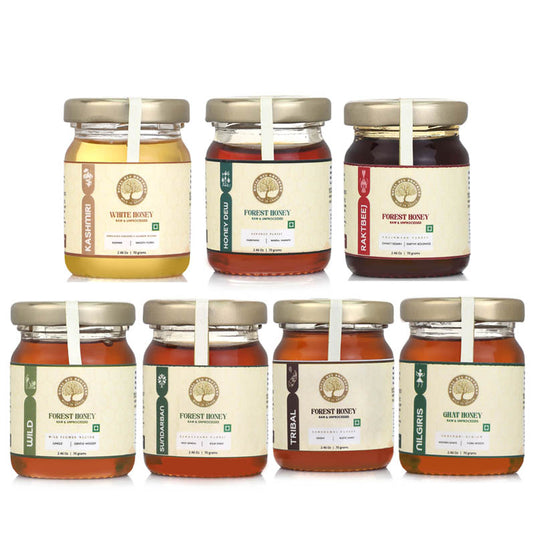
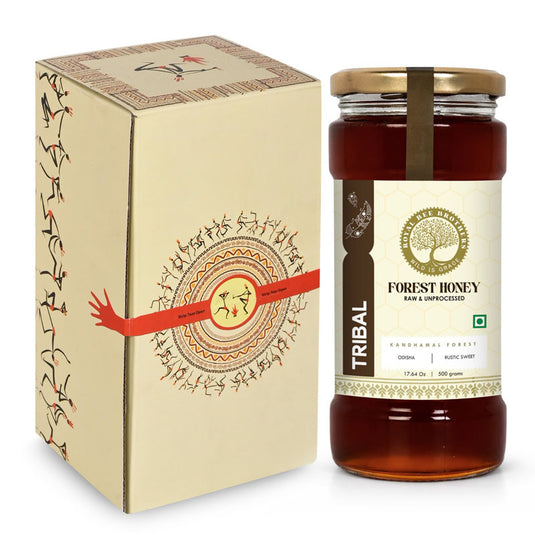
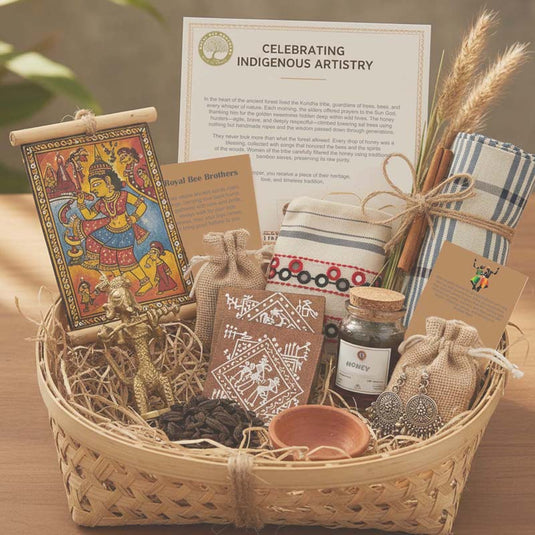
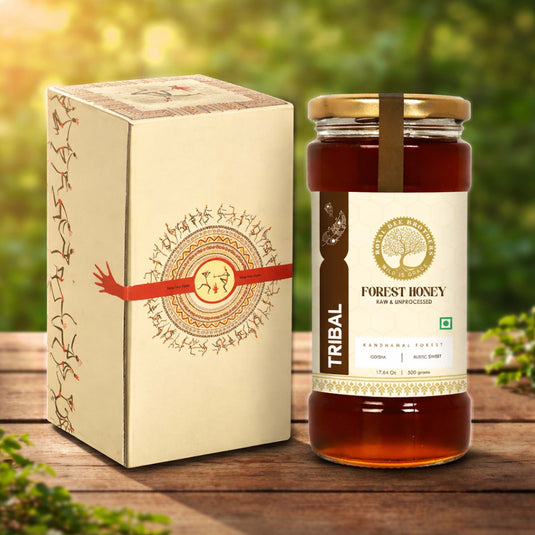
Royal Bee Brothers also sources honey from forest landscapes including the Abujhmarh forests of Chhattisgarh and forested regions of Kandhamal in Odisha.
The botanical composition of these environments can influence the sensory and physicochemical characteristics of honey. However, the exact composition of any batch depends on its specific floral origin, season, geography and harvesting conditions.
For regional honey varieties, explore Kashmiri White Honey, tribal forest honey from Kandhamal and Sundarban mangrove honey.
Learn more about our sourcing philosophy and community relationships on our About Us page.
Produced by bees foraging across diverse natural vegetation. Its character can vary according to forest ecology, season, geography and floral availability.
Produced by managed colonies whose forage sources, colony management, harvesting and processing practices can differ considerably between producers.
Taste, Texture, Aroma and Colour: How Honey Can Differ
One of the most noticeable differences consumers may experience when comparing forest honey vs normal honey is sensory character.
Honey from a specific agricultural or floral source can have a recognizable flavour profile. Blended commercial honey may also be produced or processed to achieve greater consistency in appearance and taste.
Forest honey can behave differently. When bees forage across multiple wild plant species, its aroma and flavour may change with geography, season and botanical availability.
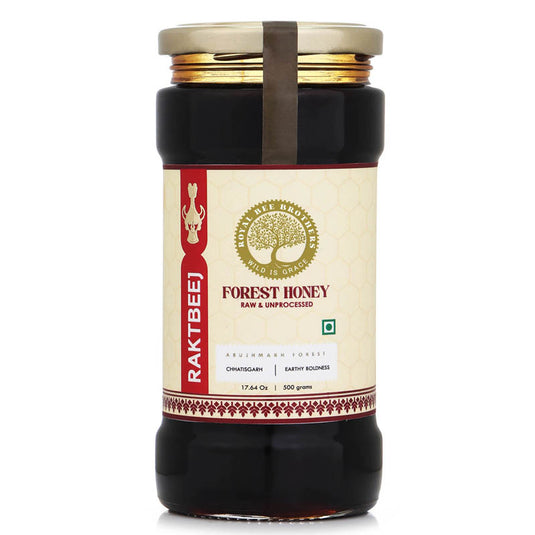
For example, our Raktbeej Black Forest Honey can display deep, earthy and robust sensory characteristics associated with its forest origin.
Natural variation is not necessarily a defect. For many honey enthusiasts, regional and seasonal variation is part of the appeal of wild forest honey.
Explore complementary products inspired by Indian food traditions through our A2 Bilona Ghee collection and Gulkand collection.
The Science of Honey: Quality, Purity and Laboratory Testing
A comparison between forest honey and regular honey should not rely solely on appearance, storytelling or taste. Laboratory analysis provides a more objective way to evaluate selected aspects of honey quality and authenticity.
Depending on the testing objective, laboratories may examine moisture, hydroxymethylfurfural (HMF), diastase activity, sugars, electrical conductivity, pollen and other physicochemical parameters. Advanced authenticity testing may also use stable isotope analysis or other validated analytical techniques.
- Moisture content: Moisture is an important quality parameter because excessive moisture can increase the risk of fermentation and affect storage stability.
- HMF: Hydroxymethylfurfural is commonly evaluated in honey quality assessment. Heating and prolonged storage can influence HMF levels.
- Diastase activity: Diastase is a naturally occurring enzyme in honey. Its activity can be affected by heating and storage.
- Sugar profile: Analysis of glucose, fructose, sucrose and other carbohydrate parameters helps establish the physicochemical profile of honey.
- C3 and C4 sugar screening: Stable isotope ratio analysis and related validated methods can help investigate certain forms of exogenous sugar addition.
- Electrical conductivity: Electrical conductivity can vary with botanical origin and is useful as a characteristic parameter for differentiating some honey types.
- Pollen analysis: Pollen can provide useful information about botanical and geographical origin, although filtration and processing can affect the pollen profile.
For a deeper understanding of authenticity testing, read our guide on how to identify pure honey at home vs laboratory tests.
Royal Bee Brothers also provides access to relevant NABL laboratory test reports to provide greater transparency around selected product quality parameters.
Forest Honey vs Regular Honey: Complete Comparison
| Feature | Forest Honey | Regular Honey |
|---|---|---|
| Nectar source | Diverse natural or forest flora, depending on region and season. | May come from specific crops, floral sources, managed apiaries or blends. |
| Floral diversity | Can be high in biodiverse forest environments. | Depends on the botanical source and production system. |
| Processing | Varies according to producer and product. | Varies considerably according to producer and product. |
| Flavour | Often complex and region-specific. | Can range from floral and mild to robust or blended. |
| Colour | Can range from light amber to very dark shades. | Can range widely according to floral source. |
| Pollen | Depends on harvesting and filtration. | Depends on harvesting and filtration. |
| Laboratory testing | Depends on the producer and testing programme. | Depends on the producer and testing programme. |
| Authenticity assessment | Should be evaluated using appropriate quality and authenticity testing. | Should be evaluated using appropriate quality and authenticity testing. |
| Traceability | Depends on the producer and sourcing model. | Depends on the producer and sourcing model. |
10 Distinctive Characteristics of Wild Forest Honey
Rather than assuming that every forest honey is automatically superior to every other honey, it is more accurate to understand the characteristics that can make well-sourced forest honey distinctive.
1. Greater Botanical Diversity
Bees foraging across diverse forest vegetation may collect nectar from numerous flowering plants. This can contribute to a more complex sensory and physicochemical profile than honey associated predominantly with a single floral source.
2. Naturally Occurring Phenolic Compounds
Honey contains naturally occurring phenolic compounds and flavonoids. Their concentrations can vary considerably according to floral origin, colour and geographical region.
3. Naturally Antimicrobial Characteristics
Honey naturally has characteristics such as acidity and low water activity that contribute to its ability to inhibit the growth of many microorganisms. These properties form part of honey's natural preservation system.
4. Natural Sensory Variation
Forest honey may retain greater variation in colour, aroma, texture and flavour because it reflects its botanical and geographical environment.
5. Authenticity Can Be Evaluated Through Testing
No geographical label or marketing description alone can prove honey authenticity. Appropriate laboratory testing provides stronger evidence than appearance alone.
6. Naturally Occurring Enzymes
Honey contains naturally occurring enzymes, including diastase. Enzyme activity can be affected by heating and storage and can therefore be useful in quality assessment.
7. Variable Mineral and Conductivity Profile
Honey's mineral content and electrical conductivity can vary according to botanical and geographical origin. These characteristics should be evaluated analytically rather than assumed from colour alone.
8. A Natural Source of Carbohydrates
Honey is primarily composed of naturally occurring sugars, including fructose and glucose, making it a concentrated source of carbohydrates. It should be consumed in moderation as part of an overall balanced diet.
9. Connection With Forest Livelihoods
Responsible wild honey sourcing can create economic opportunities for indigenous and forest-dependent communities. Sustainable harvesting can connect livelihoods with the continued value of healthy forest ecosystems.
10. A Connection Between Honey and Forest Conservation
Responsible forest-based enterprises can create economic incentives for protecting natural landscapes. Sustainable honey harvesting, when combined with sound conservation practices, can contribute to the broader relationship between communities, biodiversity and forests.
The Human Story Behind Forest Honey
Laboratory reports, sensory descriptions and nutritional information tell only part of the forest honey story. Another part belongs to the people who understand these landscapes through generations of experience.
Traditional harvesting from wild Apis dorsata colonies can require knowledge of bee behaviour, forest ecology, weather, climbing techniques and seasonal patterns. In some communities, this knowledge has been passed from one generation to the next.
Responsible harvesting aims to collect mature honey while minimizing unnecessary damage to bee colonies and surrounding ecosystems. Exact practices vary according to region, community and local conditions.
For Royal Bee Brothers, the relationship between forest, bee, honey and community is central to the identity of our forest honey products.
To explore more stories from the landscapes and communities behind our products, visit the Royal Bee Brothers Journal or contact us through our Contact Us page.
How to Choose Genuine Forest Honey
If you are comparing forest honey vs regular honey, the most important question is not which one looks darker or tastes stronger. Instead, evaluate the product based on source, traceability, processing and evidence of quality.
- Check the source: Look for information about the geographical region and, where available, the botanical origin.
- Look for traceability: A transparent producer should be able to explain where and how the honey is sourced.
- Understand processing: Check whether the honey is raw, strained, filtered, heated or otherwise processed.
- Look for laboratory testing: Appropriate laboratory reports provide stronger evidence of selected quality and authenticity parameters than appearance alone.
- Do not judge purity by colour: Light, amber and dark honey can all be genuine. Colour is not a reliable standalone test of purity.
- Do not rely on home purity tests alone: Water tests, flame tests and thumb tests cannot conclusively establish honey authenticity.
- Expect natural variation: Genuine honey can vary between batches because of floral source, season, geography and storage conditions.
Forest Honey Benefits: What Does the Evidence Tell Us?
Searches for forest honey benefits often focus on antioxidant activity, traditional use and natural antimicrobial characteristics. However, it is important to distinguish between properties observed in honey research and claims about treating or preventing specific diseases.
Honey contains naturally occurring compounds whose concentrations can vary according to floral source, processing and geography. Forest honey may therefore display a distinctive chemical and sensory profile, but its composition should not be assumed solely from its label.
For consumers, the most useful approach is to choose honey with transparent sourcing, appropriate quality controls and clear product information rather than relying on exaggerated health claims.
Forest Honey vs Regular Honey: Which Should You Choose?
So, which is better: forest honey or regular honey? There is no universal answer. The right choice depends on what matters most to you—flavour, floral character, sourcing story, processing, traceability, testing and personal preference.
Forest honey can be especially appealing to consumers who value naturally variable regional flavours, diverse botanical environments and traditional forest sourcing. Regular honey can also be a high-quality product when its source, processing and quality controls are transparent.
The most important lesson is simple: do not judge honey by its name, colour or marketing story alone. Look at where it comes from, how it has been handled, how it has been tested and whether the producer provides meaningful information about the product.
For those who want to explore the character of Indian forest honey, Royal Bee Brothers offers region-specific honey sourced from diverse forest landscapes with an emphasis on traceability and transparent quality information.
Frequently Asked Questions About Forest Honey vs Regular Honey
Forest honey can offer distinctive botanical, sensory and geographical characteristics, particularly when sourced responsibly and processed appropriately. However, not every forest honey is automatically superior to every regular honey. Quality depends on source, processing, storage and appropriate testing.
The main difference is generally the sourcing environment. Forest honey is associated with bees foraging across natural forest vegetation, while regular honey may come from managed apiaries, specific crops, floral sources or blends. Processing and quality can vary in both categories.
Not necessarily. The term raw can be used differently by different producers. Consumers should check how the honey was harvested, strained, filtered, heated and stored rather than relying solely on the word “raw.”
Home tests cannot conclusively establish honey purity. Laboratory analysis is a more reliable approach for assessing relevant quality and authenticity parameters. Look for transparent producers that provide appropriate laboratory documentation.
Honey crystallization is a natural process influenced by factors such as glucose concentration, floral origin, temperature and storage. Crystallization does not automatically mean that honey is adulterated or spoiled.
Honey colour depends on botanical source and other factors. Some forest honeys are darker because of the plants from which bees collect nectar. Dark colour alone does not prove superior quality or purity.
Laboratory testing can provide objective information about selected quality and authenticity parameters. Consumers should examine the actual test parameters and report details rather than treating a laboratory reference as a blanket guarantee of every characteristic.
Editorial note: This article is intended for educational purposes and discusses general honey characteristics, sourcing and quality considerations. Honey composition can vary by botanical origin, geography, season, processing and storage. Product-specific laboratory reports should be used when evaluating individual batches.
Explore the Character of Indian Forest Honey
Discover region-specific forest honey from diverse Indian landscapes, with traditional sourcing stories and transparent quality information from Royal Bee Brothers.
EXPLORE FOREST HONEY COLLECTION