``` ```
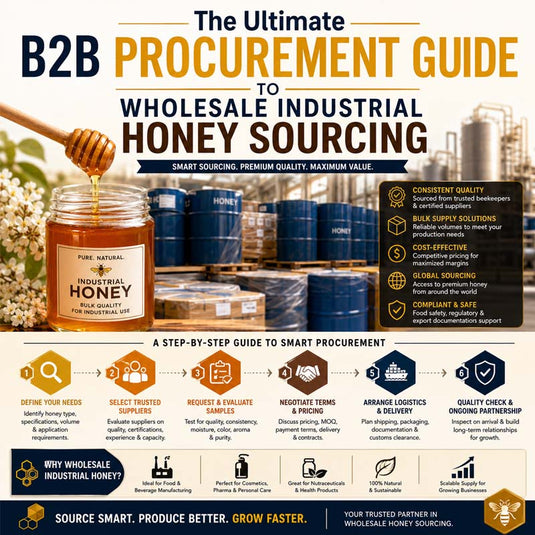
The Definitive B2B Procurement Guide to Wholesale Forest Honey Sourcing
For corporate food scientists, large-scale wellness brands, pharmaceutical procurement heads, and international food distributors, sourcing raw materials at scale is an exercise in risk mitigation and quality defense. Unlike mono-floral agricultural honeys, which are harvested from uniform commercial crops, authentic wild forest honey is a complex, bio-diverse resource. Its unique value proposition lies in its rich, multi-floral complexity, high mineral density, and organic purity.
However, scaling a premium product line requires a manufacturing partner who can bridge the gap between nomadic, ethical forest harvesting and rigid, automated, globally certified industrial processing. This comprehensive enterprise guide breaks down the structural, logistical, and scientific parameters required to secure a reliable, high-volume pipeline from an established forest honey bulk supplier and forest honey manufacturer.
---
1. The Complexities of Industrial Forest Honey Sourcing
Sourcing agricultural honey from a single crop field is mathematically simple. Bees forage on a single floral variety within a fixed geographic radius, yielding highly predictable moisture, color, and sugar ratios. Sourcing true wild forest honey introduces a high degree of natural variation that must be managed through sophisticated industrial standardizations.
Botanical and Geographical Heterogeneity
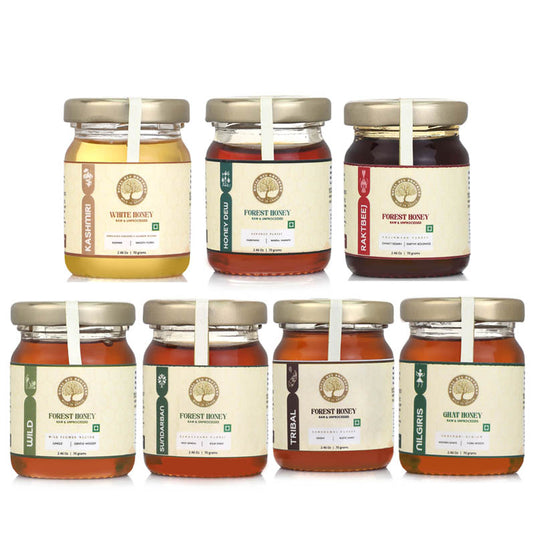
True forest honey is naturally polyfloral, derived from hundreds of deep-forest wild blooms, medicinal herbs, and untamed tree canopies. Royal Bee Brothers actively maps and manages this complexity by tracking the precise seasonal blooms of distinct wild medicinal flora across India’s protected wilderness frameworks:
- Mahuwa (Madhuca longifolia): Harvested during intense spring cycles, contributing a deep, musky sweetness and exceptional mineral density.
- Wild Jamun (Syzygium cumini): Collected from untamed forest floors and riverbanks, introducing a characteristic low-glycemic property, sharp herbal undertones, and dark, rich hues.
- Karanj (Millettia pinnata): A deeply therapeutic wild flora that yields a robust flavor profile highly prized in functional food formulations.
- Neem (Azadirachta indica): Foraged from old-growth wild forest reserves, bringing an intensely bitter-sweet, highly therapeutic bioactive profile.
- Palash (Butea monosperma): Known as the "Flame of the Forest," its vibrant spring blossoms infuse the honey with a distinct amber clarity and unique floral aromatics.
- Sheesham (Dalbergia sissoo): Wild rosewood blooms that lend a smooth, light texture and delicate woody notes to balance heavier forest blends.
- Ber (Ziziphus mauritiana): Wild desert-forest blossoms that offer a dense, buttery consistency and a rich caramel flavor profile.
- Khair (Senegalia catechu): A deep-forest astringent flora that naturally enhances the total antioxidant and polyphenol counts of the final harvest.
Because this floral mix shifts with changing weather patterns and micro-climates, different batches naturally exhibit variations in color (ranging from dark amber to near-black) and distinct flavor profiles. Enterprise procurement teams must partner with a supplier capable of carefully pooling and grading these incoming lots to maintain product consistency for automated retail bottling lines.
Protecting the Supply Chain Against Environmental Toxins
The primary value proposition of forest honey is its chemical-free purity. However, true purity requires that the honey be harvested from deep, protected forest reserves completely isolated from commercial agricultural zones. If hives sit too close to industrial farms, the bees will forage on crops treated with synthetic pesticides, chemical fertilizers, and heavy antibiotics. Bulk buyers must demand rigorous, traceably documented chemical testing grids to confirm that every shipment is entirely free from glyphosate, neonicotinoids, and veterinary residues down to parts-per-billion limits.
Ethical Sourcing Ecosystems
Authentic forest honey cannot be farmed in standard box hives; it must be sustainably harvested from natural wild hives built by indigenous wild honeybees (Apis dorsata) in deep forest canopies. This requires an extensive, highly organized network of traditional forest harvesting communities. A resilient B2B supply chain depends heavily on maintaining fair-trade, ethically managed relationships with these native groups. Ensuring safe harvesting conditions and fair compensation structures guarantees a stable, year-over-year harvest volume that protects your production lines from sudden, unexpected raw material shortages.
---
2. Technical Standardizations for Wholesale Procurement
When importing or manufacturing food products at an institutional scale, relying on generic product descriptions is completely unacceptable. Quality assurance teams must evaluate potential raw material inputs against precise physical and chemical parameters:
Absolute Moisture Optimization
Raw forest honey pulled from deep, humid wilderness canopies frequently exhibits a natural moisture level floating between 21% and 24%. At this concentration, the honey faces a severe risk of activating natural wild yeasts, leading to rapid fermentation and spoilage inside bulk shipping containers.
- The Industrial Fix: The contract manufacturer must utilize specialized vacuum evaporation technology to gently lower ambient moisture to a stable, shelf-ready window of 17% to 19%.
- Thermal Protection: This process must be executed at low temperatures (below 40°C) to protect the honey's natural therapeutic enzymes and volatile aromatic notes from heat damage.
Maintaining Diastase and Limiting HMF
- Diastase Activity: Diastase is a natural enzyme added by honeybees that serves as a direct indicator of raw, unpasteurized quality. Institutional buyers should require a minimum enzyme count of 8 Schade units per batch.
- Hydroxymethylfurfural (HMF): HMF tracks the chemical breakdown of sugars caused by heating or aging. To pass international regulatory checks, bulk forest honey must maintain an HMF level strictly below 40 mg/kg, proving that the honey has not been overheated during filtration or degraded by poor warehouse storage.
Micro-Filtration and Particle Management
Bulk honey must be thoroughly filtered to remove hive debris, wax particles, and foreign matter without stripping out its defining biological elements. Enterprise processors utilize multi-stage, temperature-controlled stainless steel mesh filtration systems to clean the raw material while keeping its natural micro-pollen footprint intact. This ensures the honey passes strict clarity checks for retail displays while retaining the botanical particles needed to confirm its geographical origin.
---3. The Core Scientific Premise: Carbon Fixation Pathways
To understand how industrial food fraudsters manipulate sugars, we must first look at plant biology. All plants synthesize glucose and fructose from carbon dioxide and water through photosynthesis. However, depending on the plant’s evolutionary adaptation, they utilize different enzymatic mechanisms to capture carbon atoms from the atmosphere. These mechanisms are classified into distinct carbon fixation pathways.
The two primary pathways that dominate agricultural sugar production are the Calvin-Benson (C3) pathway and the Hatch-Slack (C4) pathway.
The C3 Carbon Pathway
Plants that employ the C3 pathway utilize an enzyme called Rubisco to catalyze the initial step of carbon fixation. This chemical reaction creates a 3-carbon molecular structure (3-phosphoglycerate) as its baseline building block.
- Botanical Examples: The vast majority of honey-producing trees, wild shrubs, and agricultural flower blooms belong to the C3 category.
- Commercial Sugar Counterparts: Sugar beets, rice, wheat, and cassava are all C3 plants.
The C4 Carbon Pathway
Plants utilizing the C4 pathway rely on the enzyme PEP carboxylase to capture carbon dioxide. This mechanism is an evolutionary adaptation designed to optimize water efficiency in hot, arid conditions. It produces a 4-carbon compound (oxaloacetate) before channeling it into standard sugar processing loops.
- Botanical Examples: Tropical grasses and heavy agricultural monoculture grains. Honeybees do not naturally target these crops for nectar collection.
- Commercial Sugar Counterparts: Sugar cane, corn, sorghum, and millet are prominent C4 plants.
The Isotope Signature: δ13C Values Explained
Because the enzymes in C3 and C4 pathways process carbon isotopes at slightly different speeds, they take in different ratios of stable carbon isotopes from the air. Specifically, they alter the ratio between Carbon-12 (12C, the dominant stable isotope) and Carbon-13 (13C, a rarer stable isotope).
When measuring these elements via stable isotope ratio mass spectrometry (IRMS), scientists use parts-per-thousand (per mil, or ‰) differences relative to an international standard. This value is written as δ13C.
- Natural C3 Plant Profiles: Because honeybees gather nectar from C3 trees and wild floral blossoms, authentic natural honey carries a distinct C3 isotopic signature. The typical δ13C values for pure honey fall into a precise range of -22‰ to -33‰.
- Industrial C4 Sugar Profiles: Crops like corn and sugar cane are heavily processed into cheap high-fructose syrups. Because of their distinct C4 pathway enzyme structure, their processed sugars yield a much heavier δ13C reading, tracking tightly between -10‰ and -20‰.
4. The Evolution of Adulteration: C4 vs. C3 Syndicates
During the early waves of industrial honey adulteration, suppliers realized they could drastically cut their manufacturing costs by mixing raw honey with High-Fructose Corn Syrup (HFCS) or liquid cane sugar invert syrups. These C4 plant derivatives matched honey’s fluid profile, texture, and sweetness perfectly at a fraction of the cost.
To stop this economic fraud, international regulatory bodies established the AOAC 998.12 official method. This protocol utilizes Stable Isotope Ratio Analysis (SIRA) to run a comparative carbon isotope check on a single sample:
- The lab measures the δ13C value of the whole honey sample.
- The lab extracts the internal protein fractions from that same sample and measures its specific isotope score. Honey’s natural protein matrix comes directly from the bee and the target pollen, meaning it holds an immutable, pure C3 signature that cannot be replicated by added factory sugars.
- The calculation looks at the mathematical difference between the two values:
If the added sugar syrup comes from a C4 plant (corn or cane), it pulls the whole honey value closer to the -10‰ range, while the isolated protein value stays safely in the C3 range. If the difference (Δδ13C) exceeds a critical parameter threshold of 1.0‰, the batch is flagged as adulterated. This analytical protocol effectively shut down crude, unchecked C4 corn and cane syrup fraud across major global ports.
The Rise of C3 Sugar Fraud
As C4 tracking systems became standard procedure at international customs terminals, industrial sugar adulterators evolved. They realized that if they utilized sugar sources that shared the exact same C3 carbon fixation pathway as natural honey flowers, the resulting factory syrups would match the honey's δ13C value exactly.
This realization led to the development of highly processed, clarified syrups derived from rice, wheat, sugar beets, and starch-rich cassava.
Because these industrial C3 syrups sit perfectly within the same -22‰ to -33‰ range as pure honey, traditional SIRA and AOAC protein comparison checks show a difference of zero. To a basic carbon isotope mass spectrometer, an intentional 40% blend of clarified rice syrup looks identical to pure wild honey.
Furthermore, industrial processors advanced their techniques to eliminate residual complex starches, adjust carbohydrate ratios to mimic natural fructose-to-glucose parameters, and neutralize trace minerals. This modern strategy produces an almost invisible adulterant that can easily bypass standard laboratory checks unless advanced multi-dimensional screening is deployed.
---5. Advanced Testing: Closing the Regulatory Gaps
To protect your brand equity from modern C3 and C4 fraud patterns, your quality control protocols must look past basic mass spectrometry. Today’s industrial standard demands a multi-tiered laboratory defense system utilizing specialized analytical equipment.
Nuclear Magnetic Resonance (NMR) Honey Testing
NMR spectroscopy is the single most powerful tool for capturing sophisticated food fraud. Instead of testing isolated elements sequentially, high-resolution NMR non-destructively screens the entire molecular matrix of the honey sample simultaneously.
- Advanced Pattern Recognition: The resulting NMR spectrum maps hundreds of internal components, including organic acids, amino acids, and minor sugar fractions. This spectrum is compared against a comprehensive database of verified authentic global honeys via advanced pattern recognition algorithms.
- Syrup Adulteration Markers: NMR instantly isolates specific foreign metabolic processing markers (such as 2-acetylfuran-3-glucopyranoside found in industrial rice syrups) that are completely absent in pure, bee-processed nectar. It catches both C3 and C4 syrup modifications down to low blending percentages while simultaneously validating the batch's stated botanical and geographical origin.
Liquid Chromatography-Isotope Ratio Mass Spectrometry (LC-IRMS)
While traditional SIRA measures the total bulk carbon mix, LC-IRMS couples a high-performance liquid chromatography separation system directly with an isotope mass spectrometer.
- Monosaccharide Tracking: This setup physically separates individual sugar molecules (fructose, glucose, sucrose, and maltose) before measuring the specific carbon isotope ratio of each component independently.
- Invert Sugar Signals: If a supplier attempts to introduce chemically split invert beet sugar or highly refined C3 corn starches, the isotope ratios between the individual isolated sugars will diverge noticeably, exposing the addition.
High-Performance Anion-Exchange Chromatography (HPAEC-PAD)
Industrial starch hydrolysis processes (like turning rice or corn starch into liquid sugar) always leave behind trace quantities of complex sugars called oligosaccharides. HPAEC-PAD screens specifically for these foreign oligosaccharide profiles and thermal markers. The presence of specific carbohydrate peaks (like maltotriose or higher maltodextrins) confirms that the sample has been blended with industrially modified starch syrups, even if the bulk properties appear clean.
---6. The Technical Quality Defense Matrix
To provide procurement managers and quality assurance teams with a clear, actionable guide for evaluating laboratory data, this technical matrix summarizes how different adulterants respond to modern laboratory tests:
| Analytical Parameter Evaluation | Target Adulterant Matrix | Primary Test Method | Detection Target / Technical Marker | Risk Mitigation Level |
|---|---|---|---|---|
| C4 Carbon Sugar Influx | High-Fructose Corn Syrup (HFCS), Sugarcane Invert Syrups | EA-IRMS / SIRA (AOAC 998.12) | Mathematical difference between whole honey and internal protein (Δδ13C > 1.0‰) | 🟢 Complete Defense (Legacy Standard) |
| C3 Carbon Sugar Influx | Clarified Rice Syrup, Wheat Syrup, Cassava Starch Derivatives | NMR-Based Screening / HPAEC-PAD | Specific foreign metabolic markers, trace industrial processing residues, and foreign oligosaccharide carbohydrate peaks | 🟢 Complete Defense (Modern Standard) |
| Invert Sugar Alterations | Acid-Hydrolyzed Beet Sugar, Chemically Split Sucrose | LC-IRMS / LC-MS/MS | Carbon isotope ratio variances between independent separated monosaccharides (Fructose vs. Glucose) | 🟡 High-Efficiency Defense |
| Exogenous Enzyme Activity | Added Industrial Invertase, Amylases, or Foreign Beta-Glucosidases | Targeted Enzyme Profiling | Excessive, unnatural enzyme balances or presence of heat-stable industrial enzymes used during factory syrup processing | 🟡 High-Efficiency Defense |
| Thermal Degradation / Alteration | Overheating, Flash-Pasteurization, Long-Term Poor Warehousing | Physicochemical Profiling (COA Audits) | Hydroxymethylfurfural (HMF) levels exceeding 40 mg/kg paired with a significant drop in natural diastase enzyme activity | 🟢 Complete Defense |
7. Why Partner with Royal Bee Brothers?
Sourcing your inventory from a disorganized middleman exposes your brand to high price volatility, inconsistent quality, and severe regulatory risks. Building a scalable product line requires partnering directly with an integrated asset owner who controls the supply chain from the forest canopy straight to the shipping container.
Royal Bee Brothers serves as an elite institutional anchor, providing the technical scale, testing accuracy, and processing transparency required by the world's most demanding food and wellness brands.
Years in Operation
Backed by generations of deep apiculture experience, Royal Bee Brothers has spent years formalizing, scaling, and validating sustainable wild harvesting practices across India's premier forest networks. We have successfully evolved traditional, unmapped forest foraging into a traceably documented industrial supply network.
Production Capacity & Annual Tonnage
Our state-of-the-art processing facility is engineered for high-volume enterprise execution, maintaining an active daily processing capability of 60 Metric Tons (MT). This robust infrastructure enables us to deliver massive annual volumes of conventional, monofloral, and certified organic wild forest honey, providing our global B2B partners with a dependable, year-round inventory buffer regardless of seasonal crop shifts.
Certified Harvesting Regions & Ecosystems
We actively manage and monitor five legendary, protected ecological forest reserves across India to secure our wild harvests:
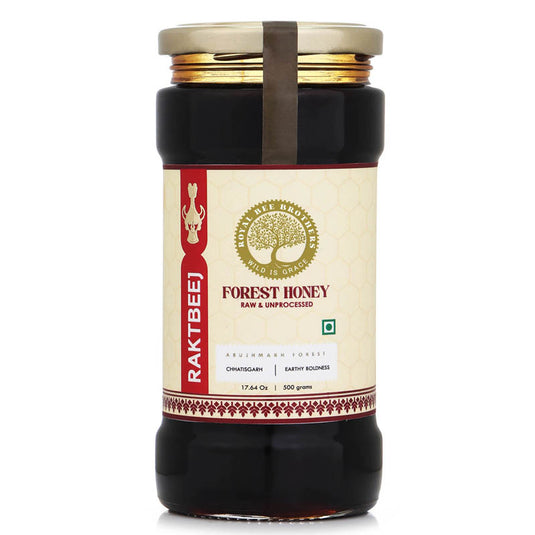
- Aabujhmarh (Chhattisgarh): A dense, isolated tribal reserve spanning thousands of square kilometers of isolated wilderness. The honey harvested here by our native partners remains completely untouched by modern agricultural runoff or industrial pollutants.
- Saranda Forest (Jharkhand): Renowned as the largest contiguous Sal (Shorea robusta) forest canopy in Asia. This dense wild canopy creates an optimal environment for wild honey bees (Apis dorsata), yielding a thick, mineral-dense honey with strong woody profiles.
- Katarniyaghat Wildlife Sanctuary (Uttar Pradesh): Situated along the pristine Indo-Nepal Terai behavioral belt. This humid, sub-tropical sanctuary provides an abundance of wild riverine flora, producing an exceptionally smooth, diverse polyfloral matrix.
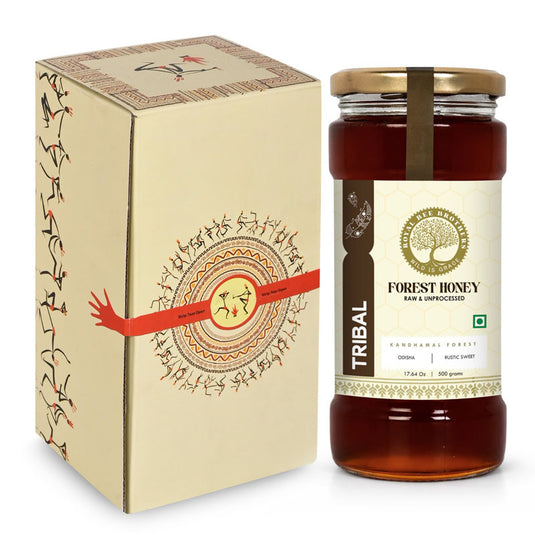
- Kandhamal (Odisha): A high-altitude, mountainous tribal valley celebrated for its organic soil structures. The honey sourced from this reserve carries a unique concentration of wild turmeric and medicinal forest herb pollen.
- Sunderbans (West Bengal): The world’s largest mangrove delta ecosystem. Our daring, highly coordinated seasonal harvests in this UNESCO World Heritage site yield legendary mangrove honey, highly sought after worldwide for its distinct light salinity and powerful enzymatic activity.
International Export Destinations
We are an established cross-border sourcing partner, regularly exporting multi-container bulk orders to highly regulated global consumer markets, including:
- The United States: Fully meeting and validating strict US FDA import standards and customs layouts.
- The European Union: Compliant with the most rigorous chemical residue, trace pesticide, and tracking directives.
- The Middle East & GCC Regions: Conforming seamlessly to specialized regional import frameworks and custom certification protocols.
Global Institutional Certifications
Our production facility operates under strict global food safety management frameworks, ensuring that every batch processed is fully audit-ready for international compliance:
- US FDA Registered Facility
- BRCGS (Brand Reputation through Compliance Global Standard)
- ISO 22000 / FSSC 22000 (Food Safety System Certification)
- HACCP (Hazard Analysis Critical Control Point Compliance)
- APEDA RMP Approved (Export Inspection Council Infrastructure)
- Halal & Kosher Certified
Rigorous Laboratory Testing Process
Every single inventory lot undergoes an exhaustive quality evaluation before leaving our facility. We back every bulk container with a comprehensive, batch-serialized Certificate of Analysis (COA) issued by internationally accredited independent laboratories (such as Eurofins or Intertek). Our standard verification portfolio includes high-resolution NMR screening, SIRA testing, multi-residue pesticide evaluations, and full microbiological safety audits.
End-to-End OEM and Private Label Capabilities
We offer completely turn-key production solutions for retail brands, corporate health labels, and direct-to-consumer enterprises. Our services span from bulk raw material supplies to complete retail-ready product manufacturing:
- Custom Brand Formulation: Developing unique polyfloral profiles or specialized wellness blends.
- Automated Packaging Lines: High-speed filling into custom or stock glass jars, wide-mouth containers, and modern squeeze bottles.
- Serialization & Labeling: Applying batch-coded, serialized retail labeling and assembling protective master-pack boxes ready for immediate distribution or third-party logistics (3PL) onboarding.
8. Operational Logistics, Packaging, and Onboarding
To provide your procurement and logistics teams with a seamless onboarding experience, we maintain a highly standardized, transparent ordering framework:
Available Wholesale Packaging Configurations
We ship our premium forest honey in high-grade, food-safe industrial containers designed to preserve product purity during long ocean transit windows:
| Container Type | Net Weight Capacity | Ideal Use Case |
|---|---|---|
| Industrial Totes | 1,000 kg - 1,400 kg (IBC) | High-Volume Re-packers & Industrial Food Formulators |
| Steel Drums | 300 kg (Epoxy-Lined) | Global Sea Freight, Long-Distance Export, & Mass Storage |
| HDPE Pails | 25 kg - 50 kg | Food Service, Commercial Bakeries, & Boutique Cosmetic Labs |
Minimum Order Quantity (MOQ) Information
To maintain maximum processing efficiency and support elite testing rigor, our bulk sourcing structures are organized across two delivery formats:
- Full Container Load (FCL): 20 Metric Tons (approx. 80 steel drums), optimized for international sea freight distribution, contract distribution networks, and large-scale manufacturing facilities.
- Less than Container Load (LCL) Pilot Runs: For specialized health brands, regional boutique chains, or initial product validation runs, we offer smaller pilot programs. These custom rollouts give emerging brands a low-investment entry point to access our globally certified, NMR-tested forest honey pipelines without tying up excessive initial capital.
How to Request Wholesale Honey Samples
We understand that corporate quality control boards and product developers must physically validate raw inputs before committing to wholesale agreements. We provide a streamlined, transparent sample evaluation protocol:
- Submit Sourcing Parameters: Contact our industrial procurement desk via our official email at info@royalbeebrothers.com. Provide your estimated annual volume requirements, target packaging formats, and any specific regulatory certifications needed for your market.
- Sample Kit Dispatch: Our logistics division will compile a tailored honey evaluation kit containing physical samples from our latest authenticated batches, housed in secure, airtight testing containers.
- Documentation Inclusions: Every sampling kit is accompanied by its corresponding independent laboratory COA, detailed carbohydrate breakdown profile, and trace chemical testing documentation, allowing your laboratory team to run an immediate internal validation audit.
Partner with the Trusted Industry Leader
In a global marketplace where supply chain transparency, strict laboratory validation, and consistent processing scale are non-negotiable requirements, Royal Bee Brothers stands as an uncompromised anchor for your brand. By removing volatile middlemen and controlling the entire supply chain from pristine forest canopies to globally compliant shipping containers, we ensure your business receives safe, authentic, and traceably documented wild forest honey.
Let our dedicated OEM, Private Label, and Industrial Contract Manufacturing Division handle your production heavy lifting, leaving your team completely free to scale market share and delight your global consumers.
Contact our international business development and procurement desk today to secure your inventory allocation, request an audit-ready evaluation sample kit, or arrange a detailed technical consultation with our engineering team.
📧 Official Corporate Email: info@royalbeebrothers.com
🏢 Corporate Sourcing Desk: Royal Bee Brothers Industrial Procurement & Compliance Division
Technical Appendix: Related Sourcing Resources
To learn more about setting up an efficient, low-overhead direct-to-consumer infrastructure, managing minimum order thresholds, and selecting optimized container styles for specialized retail deployment, read our foundational industry guide to private label honey manufacturing.