Using Raw Honey for Acne and Breakouts: A Simple Guide for Acne-Prone Skin
If your skin is prone to occasional breakouts, excess oil or a rough, congested feeling, you may have come across raw honey for acne-prone skin as a traditional natural skincare ingredient. Honey has been used in personal care for generations but using it on blemish-prone skin requires a thoughtful approach.
This guide explains how raw honey can be used as an occasional skincare ingredient, what it may offer, how to use it carefully and where its limitations lie. It does not present honey as an acne cure or replacement for clinically established acne treatments.
Can Raw Honey Be Used on Acne-Prone Skin?
Yes, raw honey can be incorporated into a simple skincare routine if your skin tolerates it. Honey is naturally humectant, meaning it can help attract and retain moisture at the skin surface. This can be useful when blemish-prone skin also feels dry or tight after cleansing.
The important distinction is between supporting the skin's surface moisture and treating acne. Acne can have several contributing factors, including excess sebum, clogged pores, inflammation and hormonal changes. A kitchen ingredient cannot address every cause of acne.
Our Approach to Honey and Skincare
At Royal Bee Brothers, our work begins with understanding honey as a natural product shaped by its floral source, geography, season and processing. We work with different Indian honey varieties and focus on explaining their characteristics rather than treating every honey as identical.
When we discuss honey in skincare, we distinguish between traditional and cosmetic uses and claims that would require medical evidence. Raw honey can be used as a humectant-rich ingredient in simple skincare routines, but we do not position it as a cure for acne, a substitute for dermatological treatment or a guaranteed solution for breakouts.
Our broader approach to honey sourcing and product quality is explained in our Purity Promise. You can also explore our complete guide to honey to understand how floral source, geography and processing can influence different varieties of honey.
Why Is Raw Honey Popular in Natural Skincare?
Honey has a long history in traditional beauty practices across different cultures. In modern natural skincare, it is particularly valued for its moisture-attracting properties and naturally occurring texture.
For people with blemish-prone skin, maintaining a comfortable skin barrier can be important alongside managing excess oil. Over-cleansing, harsh scrubs and frequent use of drying products may leave skin feeling irritated and uncomfortable.
This is one reason some people choose a gentle honey-based face mask as an occasional addition to their routine rather than using honey as an everyday acne treatment.
If you want to understand more about honey and breakouts, explore our guide to honey for acne and breakouts .
Raw Honey for Acne-Prone Skin: What It May Offer
1. Helps support surface hydration
Honey is a natural humectant. It can attract water and help the skin feel softer and more comfortable when used appropriately in a rinse-off routine. This makes honey particularly interesting for people whose skin feels dry after cleansing.
2. Provides an alternative to abrasive scrubs
Physical exfoliation can sometimes be too aggressive for blemish-prone skin. Instead of rubbing the face with coarse ingredients such as sugar or salt, a simple honey mask provides a non-abrasive skincare experience.
3. Fits into a minimalist skincare routine
Some skincare routines become complicated very quickly. A simple rinse-off honey mask can be an occasional addition for people who prefer fewer ingredients and a more traditional approach to personal care.
4. Complements a skin-barrier-focused routine
Acne-prone skin does not necessarily mean skin should always be dried out. Gentle cleansing, appropriate moisturisation and avoiding unnecessary irritation can all be part of a balanced skincare routine.
Important: Honey should not be presented as a clinically established cure for acne. If you have persistent, painful, severe or scarring acne, consult a qualified dermatologist rather than relying on home skincare remedies.
How to Use Raw Honey as a Face Mask
If you want to try raw honey for acne-prone skin, keep the routine simple. There is no need to combine honey with lemon juice, baking soda, toothpaste or strong essential oils. These combinations may be unnecessarily irritating, particularly for sensitive skin.
- Cleanse gently: Wash your face with a mild cleanser and pat dry.
- Patch test first: Apply a small amount of honey to a limited area of skin and observe how your skin reacts.
- Apply a thin layer: Use clean fingers to spread a small amount of raw honey over clean skin, avoiding the eye area.
- Keep it simple: Leave it on briefly rather than treating it as an overnight mask.
- Rinse thoroughly: Use lukewarm water and gently remove the honey without scrubbing.
- Moisturise: Finish with a lightweight moisturiser suitable for your skin type.
You can also explore our guide to honey skincare and natural skin hydration for ideas beyond acne-prone skin.
Choosing the Right Honey for Skincare
Not every honey product is identical. Honey can vary significantly depending on floral source, geography, season and processing. Raw and minimally processed honey is often preferred by people looking for a more traditional honey experience.
At Royal Bee Brothers, we focus on the diversity of Indian honey rather than treating all honey as the same. Our Purity Promise explains our approach to sourcing, product quality and transparency.
You can also learn more through our complete guide to honey , which explores honey varieties, sourcing, processing and what makes different honeys distinct.
Raw Honey, Forest Honey and Skincare
Indian honey comes from remarkably different landscapes, from forests and mountain regions to agricultural areas. These different floral environments influence the colour, aroma, flavour and texture of honey.
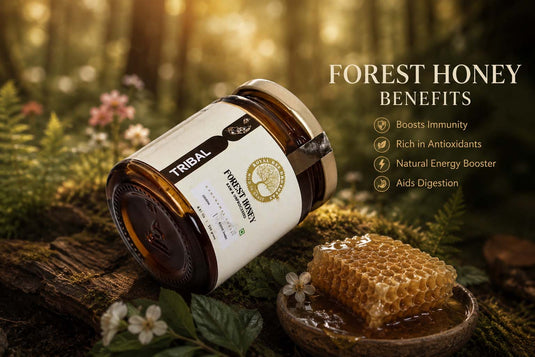
Wild forest honey is particularly interesting from a sourcing and cultural perspective because it connects honey with forest ecosystems, traditional harvesting knowledge and the communities working around these landscapes.
For skincare, however, the most important point is not simply whether honey is called “forest”, “wild” or “raw”. What matters is choosing a product suitable for its intended use, understanding its ingredients and observing how your own skin responds.
What About Honey for Oily or Blemish-Prone Skin?
Oily skin can still become dehydrated. Repeatedly trying to remove every trace of oil can leave the skin feeling dry and uncomfortable. This is why a balanced skincare routine can be preferable to constantly using drying ingredients.
A honey mask may work as an occasional hydrating step for some people, but it should not replace products specifically formulated for acne management. If your skin regularly develops clogged pores or inflammatory breakouts, consider discussing your routine with a qualified dermatologist.
For a broader look at natural approaches to personal care, visit our wellness collection , where we explore traditional ingredients and everyday ways to incorporate them into a modern lifestyle.
What You Should Avoid Mixing With Honey
Natural does not automatically mean suitable for every face. Avoid experimenting with harsh combinations simply because they are popular online.
In particular, be cautious with lemon juice, baking soda, undiluted essential oils, coarse sugar scrubs and other ingredients that can cause irritation. A simple honey-only rinse-off mask is easier to understand and easier to stop if your skin does not respond well.
How Often Should You Use Honey on Acne-Prone Skin?
There is no universal frequency that works for everyone. If your skin tolerates honey well, occasional use is a reasonable starting point. You do not need to apply a honey mask every day to benefit from a simple skincare ritual.
Start conservatively and pay attention to your skin. If you notice redness, itching, burning, swelling or worsening irritation, rinse it off and discontinue use. People with known allergies to honey, bee products or pollen should take particular care and may prefer to avoid topical experimentation altogether.
Raw Honey for Acne: Natural Skincare With Realistic Expectations
The appeal of raw honey for acne-prone skin lies in its simplicity. Honey can help support surface moisture and fits naturally into traditional skincare rituals. But good skincare is not about finding one magical ingredient.
For blemish-prone skin, a consistent routine can include gentle cleansing, appropriate moisturisation, avoiding unnecessary irritation, sun protection and evidence-based acne products when needed.
Honey can have a place within that routine as a simple, occasional skincare ingredient. The goal is not to promise instant results, but to use a traditional ingredient thoughtfully while understanding its limitations.
If you are interested in the wider world of Indian honey, you can also discover Stingless Bee Honey from Nagaland and explore how honey from different landscapes can vary in colour, aroma, texture and taste.
Frequently Asked Questions
Is raw honey good for acne-prone skin?
Raw honey can be used as an occasional skincare ingredient by some people with acne-prone skin. Its humectant properties may help support surface hydration, but honey should not be considered a cure or replacement for proven acne treatments.
Can I apply raw honey directly to my face?
Some people use a thin layer of honey as a short rinse-off mask. Patch testing first is recommended, particularly if you have sensitive skin or a history of reactions to bee products.
Can honey remove acne?
Honey should not be presented as an acne cure. Persistent or severe acne can require dermatological treatment, and the appropriate approach depends on the type and severity of the condition.
Can honey be used on oily skin?
Honey can be used as an occasional rinse-off skincare ingredient by some people with oily skin. Because oily skin can also become dehydrated, a balanced routine is preferable to aggressively stripping the skin.
Should I leave honey on my face overnight?
There is no need to leave honey on overnight. A short, rinse-off application is a simpler approach and makes it easier to monitor how your skin responds.
Can sensitive skin use honey?
Sensitive skin may react to any natural ingredient. Always patch test first and discontinue use if you experience itching, burning, redness or swelling.
Explore the World of Indian Honey
From forest honey to distinctive regional varieties, every honey tells a story of its floral source, landscape and people. Discover the collection from Royal Bee Brothers.
Explore Royal Bee Brothers HoneyDisclaimer: This article is for general skincare information and is not medical advice. Honey is not a substitute for diagnosis or treatment by a qualified dermatologist. If you have persistent, painful, severe or scarring acne, seek professional medical advice.