What Is Forest Honey? Understanding Nature's Purest Honey
Table of Contents
- 1. Introduction
- 2. What Is Forest Honey?
- 3. Why Is It Called Forest Honey?
- 4. How Forest Honey Is Produced
- 5. Forest Honey vs Regular Honey (Detailed Comparison Table)
- 6. Characteristics of Authentic Forest Honey
- 7. Nutritional Profile of Forest Honey
- 8. Why Forest Honey Is Considered Premium
- 9. Forest Honey in India
- 10. Is Forest Honey Raw Honey?
- 11. Common Uses of Forest Honey
- 12. How to Choose Genuine Forest Honey
- 13. Sustainability and Forest Honey
- 14. Frequently Asked Questions (FAQs)
- 15. Scientific & Institutional References
Introduction
Honey has been treasured by global civilizations for thousands of years, valued not only as an exquisite, natural sweetener but also as a cornerstone of traditional wellness and holistic health systems. Yet, in modern marketplaces, a significant paradox exists: not all honey is created equal, and much of what lines supermarket shelves bears little resemblance to the substance gathered by ancient ancestors. Among the vast arrays of varieties available today, forest honey stands apart as one of the most uniquely complex, biologically diverse, and inherently pure forms of sweet sustenance found on Earth.
Many contemporary consumers frequently encounter an array of industry terms such as raw honey, organic honey, wild honey, tribal honey, and forest honey without fully grasping the critical distinctions between them. This semantic overlap often leads to mass confusion regarding what authentic forest honey actually represents, the specific geographical territories it emerges from, and why it commands a distinctly premium value compared to conventional commercial honey options.
True forest honey is far more than a simple, sweet golden liquid designed to complement a meal. It is an unadulterated, direct liquid expression of a complex ecosystem, carrying the wild nectar, untamed pollen grains, micro-minerals, and rich aromatic compounds of countless indigenous plants growing naturally within native forest reserves. Every single jar reflects the expansive biodiversity of the pristine regions where wild bees forage, transforming forest honey into one of nature's last truly authentic, unaltered superfoods.
Read the Ultimate Guide to Forest Honey in India →This comprehensive guide is designed to clarify the exact nature of forest honey, systematically breaking down how it fundamentally differs from standard regular honey, exploring the dangerous and intricate harvesting rituals practiced by indigenous tribes, evaluating its superior nutritional properties, and establishing why it has earned its place as an essential, high-value asset for health-conscious individuals across the globe.
Experience the Purity of Untamed Ecosystems
Bring home 100% organic, raw forest honey directly sourced from protected biosphere reserves.
Shop Raw Forest Honey Now
What Is Forest Honey?
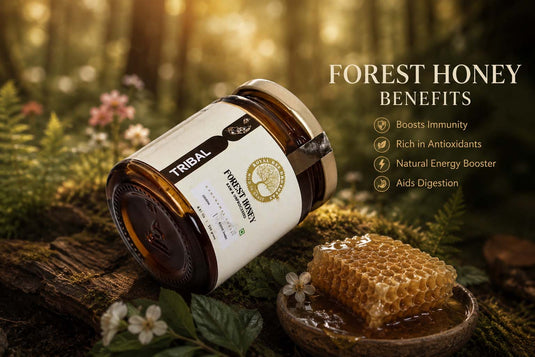
Forest honey represents a specific category of raw honey that is collected by bee colonies foraging primarily within deep, uncultivated woodland ecosystems. The bees gather nectar from wild flowering trees, ancient forest shrubs, rare mountain herbs, and untamed medicinal flora that carpet the understories of protected nature reserves and dense jungles.
This stands in sharp contrast to conventional agricultural honey, which is generated by placing commercial bee boxes adjacent to massive, human-cultivated crop monocultures. In agricultural apiaries, bees are heavily restricted to a single seasonal crop, such as mustard fields, commercial sunflower farms, industrial eucalyptus groves, or commercial lychee orchards, which are often treated with chemical fertilizers and artificial sprays.
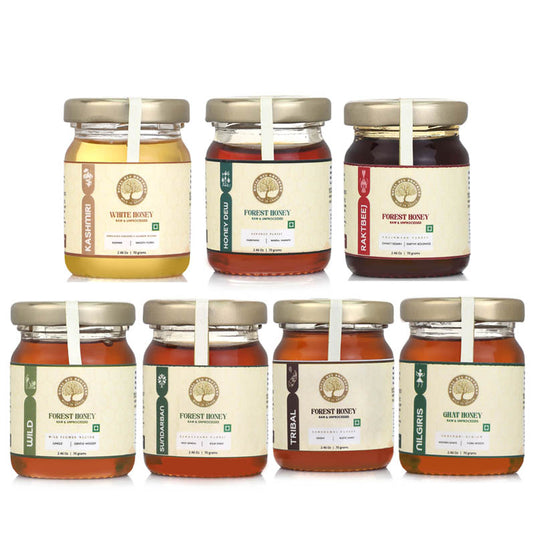
Because wild forest bees freely traverse vast distances and visit an incredibly diverse range of plant species throughout the changing vernal and autumnal flowering cycles, forest honey is almost universally categorized as a polyfloral honey. This means its structural composition contains the complex nectars and active chemical enzymes of dozens, or even hundreds, of distinct botanical sources, rather than being dominated by the genetic footprint of a single cultivated plant variety.
Authentic forest honey is exclusively harvested from a selection of the world's most pristine environments, including:
- Wild, High-Altitude Bee Colonies: Wild swarms that establish massive, unprotected hives suspended naturally from tall forest canopies and steep rock cliff formations.
- Traditional Tribal Collection Frontiers: Fragile forest zones managed by generational tribal groups who possess deep, ancestral knowledge regarding wild hive navigation.
- Protected Biosphere Reserves: Intact wilderness parks where industrial human encroachment, heavy motorized transport, and synthetic agricultural practices are strictly prohibited by environmental law.
- Ancient Mangrove Ecosystems: Coastal forest networks where the unique blend of saline waters and specialized intertidal flora yields intensely aromatic honey profiles.
The resulting liquid yields a profound density of flavor, deep coloration, complex herbal fragrances, and an elevated nutritional matrix that directly encapsulates the wild, complex biodiversity of the surrounding native woodland biosphere.
Why Is It Called Forest Honey?

The designation "forest honey" serves as a direct indicator of the ecological origin and geographic terroir of the botanical nectar harvested by the bees. It acts as an absolute guarantee that the honey was produced without human interference or managed agricultural cultivation, arising purely from wild, self-sustaining forest botanical cycles.
When wild bees map out a forest ecosystem, they balance their nutritional intake by drawing raw material from a diverse, multi-tiered botanical framework. They pull rich juices from seasonal wild blossoms, absorb resinous secretions from ancient tree trunks, collect nectar from forest floor mosses, and draw active compounds from medicinal woodland weeds. Because these diverse plants extract their nutrients from ancient, unplowed forest soils rich in organic matter, the honey inherits a superior profile of micro-elements and organic compounds.
Just as premium wine connoisseurs examine the concept of "terroir"—the environmental factors like soil type, altitude, climate, and topography that give a wine its unique identity—forest honey also presents a clear ecological terroir. The specific combination of native tree species, annual rainfall metrics, regional altitude variations, and local microbial health impacts the final color hue, absolute viscosity, scent, and medicinal potency of the honey batch.
This explain exactly why a jar of wild forest honey harvested from the ancient, mineral-dense soils of the state of Odisha will display an entirely unique sensory and chemical identity compared to a batch of forest honey gathered from the high-altitude, humid alpine conditions of Nagaland, the tropical ranges of the Western Ghats, or the specialized saline mangrove swamps of the Sundarbans.
How Forest Honey Is Produced
The creation of premium forest honey is an intricate, multi-layered biological phenomenon that relies entirely on the delicate, unforced harmony between native honeybee populations and untamed botanical life cycles. This natural transformation requires immense physical labor from the bee colony and follows a strict, time-tested chronological sequence.
Step 1: Expansive Wilderness Nectar Collection
The process begins with senior worker scout bees charting flight paths across miles of rough forest territory. Once rich clusters of wild blooms or blooming tree canopies are located, thousands of worker bees follow to extract raw, watery botanical nectar. To gather enough raw fluid to fill their honey stomachs, individual bees must meticulously visit hundreds of unique forest flowers during a single foraging flight, collecting a complex mixture of plant juices and wild pollen grains.
Step 2: Complex Enzymatic Transmutation
While the worker bee journeys back to the wild colony, the raw nectar undergoes an internal chemical revolution inside the specialized honey stomach. Here, the bee introduces critical, living glandular enzymes such as invertase, diastase, and glucose oxidase. This natural interaction breaks down the complex, heavy sucrose molecules found in raw plant juice, transforming them into easily digestible, highly stable simple sugars, primarily fructose and glucose, while generating natural antimicrobial compounds.
Step 3: Intra-Hive Storage and Processing
Upon arriving at the hive, the foraging bees pass the modified nectar fluid directly to indoor processor bees via mouth-to-mouth regurgitation. This process further concentrates the fluid and adds more beneficial enzymes. The liquid is then carefully deposited into the clean, hexagonal wax chambers of the honeycomb, which are built by the colony using pure secreted beeswax.
Step 4: Moisture Evaporation and Ripening
Freshly stored nectar contains high moisture levels (often exceeding 60-80%), making it prone to quick fermentation if left unmanaged. To cure the liquid into stable honey, hundreds of specialized worker bees line up inside the hive and fan their wings at high speeds. This collective ventilation generates continuous airflow across the exposed combs, driving down moisture levels to a precise range (typically between 17% and 20%). Once this optimal thickness is achieved, the bees apply a protective seal over each cell using fresh beeswax caps.
Step 5: Indigenous Tribal Extraction
In the final phase, traditional tribal honey collectors venture into the deep forest to harvest mature sections of the wild hives. Operating with high respect for the colonies, they use mild herbal smoke to temporarily calm the bees before extracting the outer honey-rich combs. The harvested combs are cold-pressed and gently filtered through natural cotton meshes to remove larger debris while retaining the microscopic wild pollen, living enzymes, and antioxidants that define raw forest honey.
Curious about true, unfiltered flavor profiles?
Explore Our Ethically Sourced Wild Honey Collections →Forest Honey vs Regular Honey

To help clarify why forest honey commands a distinct status and pricing premium compared to conventional choices, it is helpful to look at a direct, parameter-by-parameter structural breakdown. The following detailed comparison table highlights the fundamental differences in sourcing, processing, and nutritional value between raw forest honey and standard regular commercial honey.
| Comparison Parameter | Authentic Raw Forest Honey | Standard Regular Commercial Honey |
|---|---|---|
| Primary Nectar Source | Sourced entirely from wild, uncultivated woodland ecosystems, including wildflowers, ancient canopy trees, mountain shrubs, and native medicinal herbs. | Derived predominantly from human-managed, single-crop agricultural monocultures (such as industrial mustard, eucalyptus, sunflower, or clover fields). |
| Floral Diversity | Naturally polyfloral; combines the complex biological footprints and nutrients of dozens of coexisting wild plant species blooming simultaneously. | Monofloral or highly limited diversity; reflects the genetic profile of a single target agricultural crop where the bee boxes are placed. |
| Processing & Heat Exposure | Sold raw, unpasteurized, and unheated. Undergoes minimal gravity straining through fine cloth meshes to protect delicate living enzymes and antioxidants. | Subjected to high-heat pasteurization (often exceeding 160°F) to prevent natural crystallization, alongside industrial ultra-filtration methods. |
| Chemical & Pesticide Risk | Extremely low to nonexistent risk; harvested deep within protected biosphere reserves far removed from industrial farms and chemical spraying. | Higher risk profile; commercial bees forage on farmlands frequently treated with chemical pesticides, synthetic fertilizers, and crop sprays. |
| Flavor, Scent, & Terroir | Deep, robust, and layered flavor with notable woody, smoky, or herbal undertones; exhibits a complex scent that shifts with every seasonal harvest. | Mild, uniform, and intensely sweet profile with little structural complexity; standard flavor profile across batches due to industrial blending. |
| Natural Mineral Content | Rich in essential trace minerals (iron, potassium, magnesium, calcium, copper) absorbed directly from unplowed, deep forest topsoils. | Contains minimal mineral density; often stripped during aggressive refinement, filtration, and processing stages. |
| Crystallization Tendency | High and completely natural tendency; solidifies over time into a creamy texture due to the presence of real wild pollen grains and natural glucose ratios. | Remains liquid for unusually long periods; ultra-filtration removes pollen nuclei, and high heat alters the sugar structures to delay crystallization. |
| Presence of Additives | Guaranteed 100% pure; completely free from artificial corn syrups, added sucrose, inverted sugars, rice syrups, or synthetic preservatives. | Frequent vulnerability to adulteration; mass-market brands may sometimes incorporate hidden high-fructose corn syrup or C3/C4 rice syrups to cut production costs. |
| Harvesting Availability | Highly seasonal and limited supply; contingent upon delicate wild weather patterns, natural bloom durations, and challenging tribal access. | Mass-produced year-round; relies on heavily managed migratory apiaries moved continually across industrial farming zones. |
Characteristics of Authentic Forest Honey
Identifying genuine forest honey in a marketplace crowded with blended options requires an understanding of its physical and sensory properties. True forest honey is characterized by several distinct qualities that reflect its raw, uncultivated origins.
Rich, Multi-Layered Aroma
Unlike regular commercial honey, which often yields a flat, simple, sugar-like fragrance, genuine forest honey presents a strong, complex aromatic profile. When you open a jar of authentic forest honey, it should release a deep scent reminiscent of a damp woodland after summer rainfall. You can clearly detect woody bark notes, sharp resinous pine tones, earthy undertones, and subtle hints of dried wild herbs—an olfactory profile directly tied to the complex vegetation where the bees foraged.
Deep, Variable Coloration
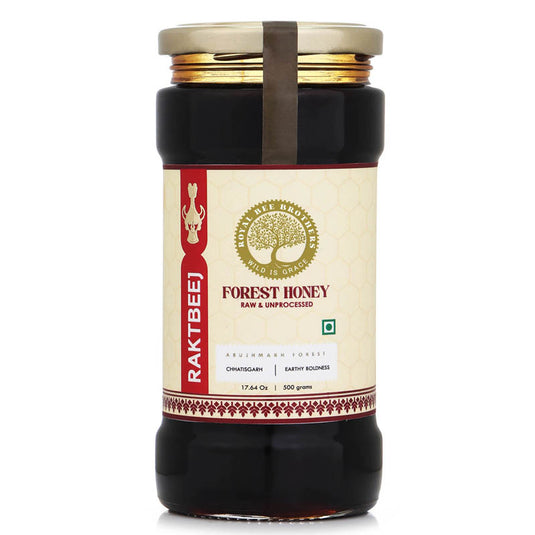
While industrial honey is often blended to achieve a uniform golden tone, authentic forest honey displays natural color variations across batches. It ranges from a medium-dark amber and glowing copper tone to a deep, dark reddish-black hue. This intense coloration is a visual indicator of high levels of plant-derived polyphenols, organic compounds, and essential minerals absorbed naturally from native woodland soils.
Complex, Sophisticated Flavor Profile
The taste profile of real forest honey evolves as you consume it. It begins with a deep, natural sweetness that is quickly followed by a variety of flavor notes. Depending on the harvest season, you may experience a mild balsamic crispness, warm molasses undertones, a subtle caramel-like richness, or even a pleasant touch of bitterness from medicinal wild plants. This complex flavor profile is a key characteristic of unblended polyfloral honey.
Natural Crystallization Tendency
A key indicator of pure, unheated forest honey is its natural tendency to crystallize over time. Because it is kept raw and free from ultra-filtration, the honey retains microscopic wild pollen grains and fine beeswax particles. These elements serve as natural binding points for the raw glucose molecules, causing the honey to gradually solidify into a thick, spreadable, opaque cream. This natural physical transition confirms the honey is raw and has not been altered by high-heat pasteurization.
Dynamic Seasonal Variation
Authentic forest honey resists standardization. A batch harvested during early spring may display a lighter amber hue and prominent floral notes, whereas honey gathered from the exact same forest zone during late autumn may present a dark, dense liquid with deep woody characteristics. This natural variation is a clear sign of an unblended product that changes in alignment with wild weather patterns and seasonal forest blooms.
Nutritional Profile of Forest Honey
From a scientific and biological perspective, forest honey is far more than a simple carbohydrate source. It contains a complex array of micronutrients, organic compounds, and active components that contribute to its nutritional profile.
Balanced Simple Carbohydrates
The primary components of forest honey are natural simple sugars, with fructose generally present in a higher ratio than glucose, along with trace amounts of sucrose and maltose. This natural sugar balance provides a sustained release of energy without causing the rapid spikes and subsequent drops in blood glucose levels often associated with highly processed white table sugar or industrial high-fructose corn syrups.
Active Biogenic Enzymes
When kept completely raw and unheated, forest honey preserves an array of active, living proteins and biogenic enzymes introduced naturally by the bee colony. Key enzymes include invertase, which breaks down complex sugars; diastase, which processes starches; and glucose oxidase. Glucose oxidase plays a particularly important role, as it reacts naturally with moisture to produce mild, microscopic amounts of hydrogen peroxide, which serves as a natural antimicrobial defense mechanism.
Essential Free Amino Acids
Forest honey contains measurable trace levels of essential and non-essential free amino acids, with a prominent concentration of proline. Proline levels are frequently used in analytical laboratories as a direct benchmark indicator to verify the technical maturity, quality, and raw authenticity of honey samples, confirming that the product has not been diluted or artificially extended.
Complex Plant-Derived Polyphenols and Antioxidants
Due to the diverse botanical varieties visited by wild bees, forest honey features an elevated concentration of plant-derived phytochemicals, phenolic acids, and flavonoids (such as quercetin, kaempferol, chrysin, and galangin). These organic compounds help neutralize free radicals, reduce oxidative stress at a cellular level, and support overall systemic wellness when consumed as part of a balanced diet.
Elevated Trace Mineral Density
Because deep forest trees extend their root networks deep into unplowed subsoil structures, they absorb a rich selection of earth-bound micro-elements. These minerals are passed directly into the nectar fluid and retained within the honey. Laboratory testing confirms that raw dark forest honey variants hold notably higher parts-per-million counts of essential trace elements—including potassium, calcium, magnesium, iron, zinc, copper, and selenium—than standard, farm-derived regular white honeys.
Taste the Regional Terroir of India's Most Biodiverse Biospheres
Our forest honey batches are independently tested for enzymatic purity and chemical-free composition.
Secure Your Certified Batch
Forest Honey in India
Due to its diverse geographical terrains and rich climatic zones, India serves as one of the world's premier regions for premium wild forest honey production. The country's unique forest ecosystems yield distinct varieties of honey, each with its own sensory and nutritional characteristics.
Odisha Tribal Forest Honey
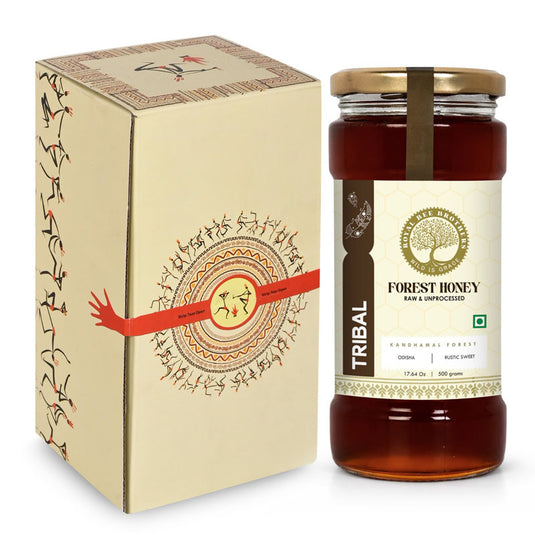
The dense deciduous forests of Odisha, including regions like the Similipal Biosphere Reserve, produce deeply complex forest honeys. Here, wild giant rock bees (Apis dorsata) gather nectar from native trees such as Sal (Shorea robusta), Arjun (Terminalia arjuna), Mahua (Madhuca longifolia), and numerous wild medicinal herbs. The resulting honey is dark, thick, and characterized by a bold, earthy flavor profile with notable herbal undertones.
Nagaland Mountain Forest Honey
Located in the pristine, high-altitude hills of Northeast India, Nagaland's untouched rainforests offer a different honey profile. Bees in this region forage across wild orchids, mountain rhododendrons, and rare sub-alpine medicinal shrubs. Nagaland forest honey is celebrated for its delicate, bright amber coloration, smooth floral fragrance, and crisp flavor profile, making it highly sought after by honey enthusiasts.
Sundarbans Mangrove Forest Honey
The Sundarbans, the world's largest contiguous mangrove forest, provides a highly specialized environment for honey production. Local honey collectors, known traditionally as Mouli, venture into the intertidal channels to harvest honey from wild hives. The bees forage on mangrove species such as Khalisha, Bani, and Guran. Sundarbans honey features a distinct light golden hue, a thin viscosity due to natural moisture levels, and a unique sweet-tart flavor profile with woody characteristics.
Western Ghats Rainforest Honey
Spanning across a UNESCO World Heritage biodiversity hotspot, the Western Ghats mountain range features an exceptionally diverse array of endemic flowering plants. The honey harvested from these dense tropical evergreen forests is rich in botanical compounds, offering a deeply layered flavor profile with subtle warm spice notes and high antioxidant levels.
Is Forest Honey Raw Honey?
A point of frequent confusion for consumers is whether the terms "forest honey" and "raw honey" mean the same thing. While they are closely related in premium products, they describe two fundamentally different aspects of the honey's identity and should be evaluated individually.
The term "Forest Honey" specifies the exact geographic and ecological origin of the nectar collected by the bees. It indicates that the honey was gathered from wild, uncultivated plants within a forest environment, rather than from agricultural crops or managed farmlands.
Conversely, the term "Raw Honey" refers strictly to the method of post-harvest processing. It serves as a verification that the honey has not been subjected to high-heat pasteurization, industrial ultra-filtration, or blending with artificial sweeteners, thereby preserving its natural enzymes, pollen content, and nutritional profile.
Therefore, it is entirely possible for a product to be forest honey by origin, but then be subjected to commercial pasteurization and ultra-filtration, stripping away its raw qualities. However, reputable brands committed to quality almost always offer forest honey in its raw, unaltered form. For the best nutritional value, consumers should look for products explicitly labeled as both raw and wild forest honey.
Common Uses of Forest Honey
Thanks to its complex flavor profile and nutritional density, authentic forest honey can be integrated into various aspects of daily life, from culinary applications to traditional wellness routines.
Premium Natural Sweetener
Forest honey serves as an excellent alternative to refined white table sugar or artificial sweeteners. Its deep, rich sweetness pairs well with warm beverages like herbal teas, specialty green teas, and artisanal coffees, adding subtle earthy notes. It can also be drizzled over breakfast bowls, oatmeal, Greek yogurt, or whole-grain pancakes to add a natural flavor dimension.
Elevated Culinary Applications
In the culinary arts, the complex, polyfloral profile of forest honey makes it a valuable ingredient for balancing flavors. Chefs use it to create savory marinades for proteins, construct complex salad dressings when mixed with cold-pressed oils and citrus, glaze roasted root vegetables, and add depth to artisanal baked goods and desserts.
Traditional Wellness Routines
Across many traditional cultures, raw honey has long been valued in home wellness practices. It is commonly mixed with warm water, fresh ginger, or lemon to soothe throat irritation, or consumed in small amounts in the morning to support digestive health and general vitality.
Natural Skincare and Hydration
Raw forest honey is also utilized in natural skincare routines. Due to its properties as a natural humectant, it helps draw and lock moisture into the skin barrier. It can be applied directly as a simple face mask, mixed into gentle exfoliating scrubs, or incorporated into home-made moisturizers to help soothe the skin and maintain a balanced complexion.
How to Choose Genuine Forest Honey
As the demand for premium, natural superfoods increases, the marketplace has seen a rise in blended or mislabeled products. To ensure you are investing in genuine, high-quality forest honey, consider the following key evaluation factors:
Demand Full Sourcing Transparency
Reputable honey brands provide clear information regarding the origins of their products. Look for labels and companies that openly specify the exact forest reserves, geographical regions, or mountain ranges where the honey was collected, as well as details about their partnerships with traditional tribal harvesting communities.
Verify Independent Laboratory Purity Reports
High-quality producers regularly test their honey batches through independent, accredited laboratories. Trustworthy brands often make these chemical analysis reports accessible to consumers, verifying that the honey has optimal sucrose and moisture levels, high proline counts, and is completely free from common industrial adulterants like C3/C4 sugars, rice syrups, corn syrups, and synthetic pesticide residues.
Download Lab Test Report
Look for Explicit 'Raw' and 'Unheated' Labeling
To ensure you get the full nutritional benefits of the honey, look for products that explicitly state they are raw, unheated, and minimally filtered. Avoid honeys that appear perfectly clear, thin, or completely uniform, as these properties often indicate aggressive industrial processing, heating, or ultra-filtration that removes beneficial pollen and enzymes.
Appreciate Natural Texture and Color Imperfections
Remember that authentic, unpasteurized forest honey is a dynamic natural product. The presence of fine crystallization, slight cloudiness, minor variations in color depth, or a small layer of natural micro-foam at the top of the jar are positive indicators. These natural variations confirm that the honey remains raw, vital, and unaltered by industrial standardization.

Sustainability and Forest Honey
The harvesting of wild forest honey is deeply connected to environmental conservation and social sustainability. When managed ethically and responsibly, forest honey production serves as a powerful tool for protecting natural biospheres and supporting rural communities.
By utilizing non-destructive harvesting methods, traditional tribal collectors gather mature honey sections while leaving the core brood chambers of wild hives intact. This practice ensures the survival and continuity of native honeybee populations, which play a critical role as primary pollinators for thousands of wild plant and tree species across the forest canopy, driving biodiversity forward.
Furthermore, ethical honey sourcing provides vital, sustainable economic livelihoods for indigenous tribal communities living near forest borders. When local populations derive a steady income from the sustainable harvest of non-timber forest products like wild honey, they develop a direct economic interest in preserving the health of the standing forest. This dynamic discourages illegal logging, deforestation, and industrial agricultural expansion, turning local communities into active guardians of the wilderness and establishing a balanced relationship between ecological conservation and traditional livelihoods.
Frequently Asked Questions (FAQs)
1. Is forest honey better than regular commercial honey?
Yes, from a nutritional and purity perspective, forest honey is generally considered superior. It contains a higher concentration of plant-derived polyphenols, active enzymes, and trace minerals compared to heavily refined commercial honey. Furthermore, because forest bees forage on wild plants in uncultivated environments, the honey has a significantly lower risk of containing pesticide residues or chemical fertilizers common in industrial monoculture farming.
2. Why does forest honey crystallize, and is it still safe to consume?
Crystallization is a completely natural physical phenomenon and serves as a reliable indicator of raw, unheated honey. Because authentic forest honey is not subjected to high-heat pasteurization or ultra-filtration, it retains its natural sugar balance and microscopic pollen grains, which act as natural binding points for glucose crystals. Crystallized honey is perfectly safe to consume and can be easily liquefied by placing the jar in a warm water bath (below 110°F) for a few minutes.
3. What accounts for the uniquely dark color and rich taste of forest honey?
The deep color and rich, layered flavor profile of forest honey are direct results of its diverse polyfloral origin. Wild forest trees and deep-rooted shrubs absorb high concentrations of essential minerals (such as iron, copper, magnesium, and potassium) from ancient woodland soils. These minerals, along with complex plant polyphenols, pass naturally into the nectar, giving the honey its dark coloration and characteristic woody or herbal undertones.
4. Is forest honey safe for individuals managing diabetes?
While raw forest honey generally has a slightly lower glycemic index than refined white sugar due to its complex natural sugar profile and enzyme content, it remains a concentrated source of carbohydrates consisting primarily of fructose and glucose. Individuals managing diabetes should treat it as a natural sweetener, monitor their portions carefully, and consult their physician or clinical nutritionist before adding it to their dietary regimen.
5. Can I safely feed forest honey to infants or toddlers?
No, honey of any variety—including premium raw forest honey—should never be given to infants under the age of one year. Raw honey can naturally contain microscopic spores of the bacterium Clostridium botulinum. While these spores are entirely harmless to the developed digestive systems of older children and healthy adults, they can grow inside an infant's developing gastrointestinal tract, potentially leading to a serious condition known as infant botulism.
6. How should I store my raw forest honey jar to keep it fresh?
To preserve the quality and delicate enzyme profile of raw forest honey, store the jar tightly sealed in an airtight glass container at stable room temperature, ideally in a dark pantry or cupboard away from direct sunlight, moisture, and heat sources. Avoid storing honey in the refrigerator, as cold temperatures accelerate the natural crystallization process.
7. Does forest honey eventually spoil or expire?
Pure, unadulterated forest honey has an exceptionally low moisture profile (under 20%) and a naturally acidic pH, which creates an environment that prevents the growth of bacteria and fungi. As a result, pure honey does not spoil and possesses an indefinitely long shelf life if kept properly sealed. While it may undergo changes in texture, color, or crystallization over the years, it remains safe to consume indefinitely.
8. What is the real difference between raw forest honey and organic honey?
The term "Forest Honey" describes the environmental origin of the nectar, indicating it comes from wild plants within woodland biospheres. "Organic Honey" refers to a specific regulatory certification confirming that the honey was produced according to strict organic standards, ensuring the hives are located far from synthetic chemical spray zones. Most authentic forest honey harvested from protected wilderness areas is organic by default due to its pristine location, though it may not always carry a formal certification label.
9. How does ethical honey collection protect our wild environments?
Ethical harvesting methods practiced by traditional communities focus on preserving the health of the bee colony. Collectors use mild herbal smoke to gently calm the bees and carefully remove only the outer, honey-filled sections of the comb, leaving the inner brood chamber and queen bee completely unharmed. This non-destructive approach maintains wild bee populations, ensuring they can continue their vital role as primary pollinators within the forest ecosystem.
10. Why do separate jars of forest honey look or taste distinct from one another?
This natural variability is a hallmark of authentic polyfloral honey. Because forest ecosystems experience shifts in rainfall, temperature, and seasonal plant growth, the exact mix of flowers blooming during each harvest period changes. A jar collected after a rainy season heavily influenced by wild medicinal herbs will naturally display a different flavor, aroma, and color depth compared to honey gathered during a dry period.
11. Can forest honey be utilized effectively for home skincare routines?
Yes, raw forest honey can be highly effective in natural skincare routines. Its natural humectant qualities allow it to draw and retain moisture, helping to hydrate the skin barrier. Additionally, its content of natural organic acids and plant antioxidants can help gently cleanse pores, soothe minor skin irritations, and support a clear complexion when used as a facial mask or wash.
Savor the Purest Expression of the Forest
Support traditional tribal harvesters and invest in genuine, lab-verified raw wellness.
Order Authentic Forest HoneyScientific & Institutional References
- National Center for Biotechnology Information (NCBI): Comprehensive meta-analyses evaluating the comparative therapeutic profiles, polyphenol contents, and superior free-radical scavenging activities of dark wild polyfloral forest honeys over standard refined options. National Center for Biotechnology Information (NCBI)
- Food and Agriculture Organization (FAO): Global criteria for raw forest non-wood products, certifying micro-level non-destructive yield strategies and sustainability frameworks for forest apiculture. Food and Agriculture Organization (FAO)
- National Bee Board (NBB): Direct strategic guidelines focusing on the structural modernization of traditional tribal harvesting pathways and quality checking parameters across Indian forest domains. National Bee Board (NBB)
- Indian Council of Agricultural Research (ICAR): Analytical testing records detailing the distinct geographic terroir, heavy mineral trace map, and structural enzymatic profiles of indigenous forest honey varieties across regional state reserves. Indian Council of Agricultural Research (ICAR)
Want to learn more about wild honey sourced directly from India's forests?
Explore our Ultimate Guide to Forest Honey in India: Benefits, Purity, Harvesting & Uses to understand how forest honey is collected, how it differs from regular honey, and the key signs of authentic, unprocessed forest honey.
Read the Ultimate Guide to Forest Honey in India →