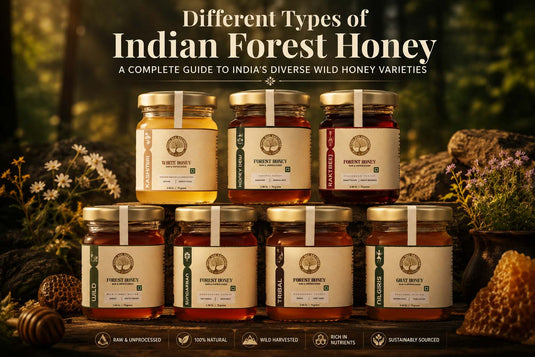
Different Types of Indian Forest Honey: A Complete Guide to India’s Diverse Wild Honey Varieties
About the Authors: The Royal Bee Brothers sourcing team works directly with tribal honey collectors across Odisha, Nagaland, and Central India, evaluating harvest quality, floral origins, and sustainability practices in deep forest reserves.
What Are the Main Types of Indian Forest Honey?
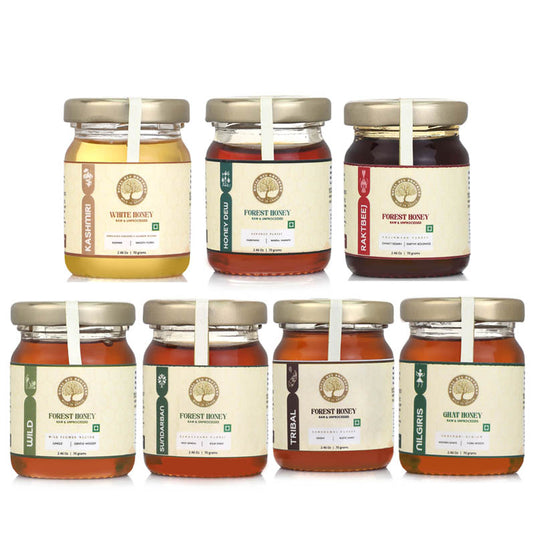
India's ecosystems produce distinct forest honey varieties, classified by regional geography and specific floral or bee origins:
- Geographic Varieties: Odisha Forest Honey, Nagaland Forest Honey, Sundarbans Honey, Himalayan Honey, Central Indian Honey, and Western Ghats Honey.
- Floral & Botanical Varieties: Mahua Honey and Jamun Honey.
- Bee Species Varieties: Stingless Bee Honey and Rock Bee Honey.
Table of Contents
- 1. Introduction
- 2. What Makes Indian Forest Honey Unique?
- 3. Classification of Indian Forest Honey
- 4. Odisha Forest Honey
- 5. Nagaland Forest Honey
- 6. Sundarbans Forest Honey
- 7. Western Ghats Forest Honey
- 8. Himalayan Forest Honey
- 9. Central Indian Forest Honey
- 10. Mahua Forest Honey
- 11. Jamun Forest Honey
- 12. Multi-Floral Forest Honey
- 13. Stingless Bee Forest Honey
- 14. Wild Rock Bee Honey
- 15. Seasonal Variations in Indian Forest Honey
- 16. How Geography Influences Honey Flavor
- 17. Which Type of Indian Forest Honey Is Best?
- 18. Choosing Authentic Indian Forest Honey
- 19. Supporting Tribal Honey Communities
- 20. The Future of Indian Forest Honey
- 21. Frequently Asked Questions (FAQs)
- 22. Conclusion
Introduction
India is one of the world's most biodiverse countries, home to tropical rainforests, mangrove ecosystems, Himalayan foothills, dry deciduous forests, alpine meadows, and thousands of species of flowering plants. This ecological diversity creates an equally broad variety of forest honeys, each carrying unique flavors, colors, aromas, nutritional characteristics, and regional identities.
Unlike commercial honey produced from managed apiaries located near agricultural fields, forest honey originates from wild ecosystems where bees forage naturally on flowering trees, shrubs, medicinal herbs, and seasonal wildflowers. The result is a collection of honey varieties that reflect the specific landscapes from which they originate.
Just as wine reflects the soil, climate, and geography of a vineyard, forest honey expresses the biodiversity of its native ecosystem. Honey harvested from Odisha's dense Sal forests tastes different from honey gathered in the mangrove forests of the Sundarbans or the mountainous valleys of Nagaland.
Before exploring individual varieties, read our Ultimate Guide to Forest Honey in India to understand harvesting methods, purity standards, benefits, and authenticity indicators.
Understanding the different types of Indian forest honey helps consumers appreciate the richness of India's natural heritage while making informed choices about quality, flavor preferences, and wellness benefits.
In this guide, we explore the primary varieties of Indian forest honey, their origins, harvesting traditions, taste profiles, and what shapes their unique character.
What Makes Indian Forest Honey Unique?
Before exploring individual varieties, it is important to understand why Indian forest honey stands apart from conventional honey. Forest honey is produced when wild bees forage freely across natural ecosystems rather than monoculture agricultural landscapes.
This means bees collect nectar from:
- Wild medicinal plants
- Native forest trees
- Flowering shrubs
- Seasonal herbs
- Mountain flora
- Mangrove vegetation
Factors influencing honey characteristics include:
- Climate, altitude, and rainfall levels
- Soil composition and floral density
- Flowering patterns and native regional biodiversity
This concept is often referred to as "honey terroir." The result is a notable diversity of flavors and nutritional profiles across India.
Classification of Indian Forest Honey

Indian forest honey can generally be classified into several categories:
Based on Geography:
- Himalayan Forest Honey & Mangrove Forest Honey
- Eastern, Central, and Western Ghats Forest Honey
Based on Floral Sources:
- Multi-floral & Wildflower Honey
- Medicinal Forest & Tree Blossom Honey
Based on Bee Species:
- Rock Bee Honey (Apis dorsata)
- Stingless Bee Honey & Wild Hive Honey
Discover Forest Terroir
Taste the character of unpasteurized wild forest honey gathered sustainably by generational tribal clans.
Explore Single-Origin VarietiesOdisha Forest Honey
Among India's recognized forest honeys is the wild honey harvested from Odisha's forest landscapes.
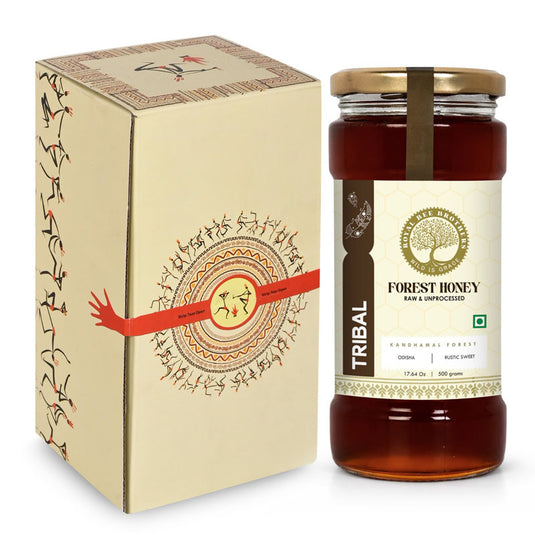
Origin: Odisha contains extensive forest areas, particularly around the Similipal Biosphere Reserve, Mayurbhanj forests, Koraput region, and Kandhamal district. These forests contain numerous flowering species that support wild bee populations.
Flavor Profile: Odisha forest honey is identified by its deep amber color, rich herbal notes, mild woody undertones, dense texture, and a lingering natural sweetness. Its flavor profile reflects the dominance of native forest trees like Sal, Arjun, Mahua, and varied medicinal herbs.
Wellness Characteristics: Many consumers appreciate Odisha honey for its antioxidant profile, flavor complexity, traditional wellness uses, and natural mineral content. The honey is utilized in traditional wellness preparations throughout Eastern India.
Nagaland Forest Honey
The mountain forests of Northeast India produce some of the country's most distinctive wild honey varieties.
Origin: Nagaland's honey comes from mountain forests, high-altitude valleys, wildflower meadows, and native wild orchid habitats. These regions maintain a minimal industrial footprint and high biodiversity.
Flavor Profile: This mountain nectar typically offers a light golden color, a clear floral aroma, delicate sweetness, citrus-like notes, and a smooth finish. Honey enthusiasts consider it among India's most refined forest honeys.
Traditional Harvesting: Honey collection here involves indigenous communities that have preserved traditional harvesting protocols for generations. These methods prioritize hive colony preservation, sustainable extraction, and forest conservation.
Sundarbans Forest Honey
Few honey varieties possess a historical background as striking as genuine Sundarbans mangrove honey.
Origin: Harvested from the world's largest mangrove forest ecosystem, Sundarbans honey is gathered mainly from Khalisha flowers, mangrove blossoms, and coastal vegetation. The region's tidal environment shapes both nectar composition and honey characteristics.
Flavor Profile: Sundarbans honey is known for its light amber appearance, floral sweetness, a distinct mild salinity, pronounced mineral notes, and a complex aftertaste. Its flavor matrix is unique compared to inland honey varieties in India.
Traditional Mouli Honey Gatherers: Local honey hunters, known as Moulis, undertake challenging expeditions through the mangrove waterways. Their seasonal craft remains one of India's traditional wild harvesting practices.
Western Ghats Forest Honey
The mountain chain of the Western Ghats represents a recognized biodiversity hotspot.
Origin: Wild forest honey from this belt originates across the tropical forests of Kerala, Karnataka, the hill regions of Tamil Nadu, and the forest zones of Maharashtra.
Flavor Profile: Western Ghats honey features a medium amber color, pleasant fruity undertones, floral complexity, a rich aroma, and balanced sweetness. Because wild bees interact with a diverse array of tropical flowering plant varieties, individual harvests vary from season to season.
Ecological Importance: The region's wild honey yields depend on the preservation of pristine forest canopies, making sustainable harvesting important to ensure ecosystem balance.
Himalayan Forest Honey
The Himalayan foothills produce a pristine and sought-after category of high-altitude forest honey.
Origin: Collected across mountainous states including Uttarakhand, Himachal Pradesh, Jammu & Kashmir, and Arunachal Pradesh. These mountainous tracts support diverse alpine and temperate flora.
Flavor Profile: Himalayan honey exhibits a clear floral aroma, a light to medium amber coloration, a crisp taste, fresh herbal notes, and a smooth finish. Altitude contributes significantly to its distinctive character.
High-Altitude Floral Sources: Major wild nectar sources include wild rhododendrons, alpine herbs, mountain wildflowers, and native shrubs, delivering monofloral and polyfloral honey varieties with distinct floral notes that define the unprocessed profile of the final harvest.
Looking for a particular regional flavor profile or custom terroir?
Explore Our Ethically Harvested Wild Collections →Central Indian Forest Honey
Central India's deciduous forest tracts contribute substantially to the country's traditional wild honey yields.
Origin: Sourced across the tribal forest belts of Madhya Pradesh, Chhattisgarh, and Jharkhand. These geographical segments house extensive deciduous forests.
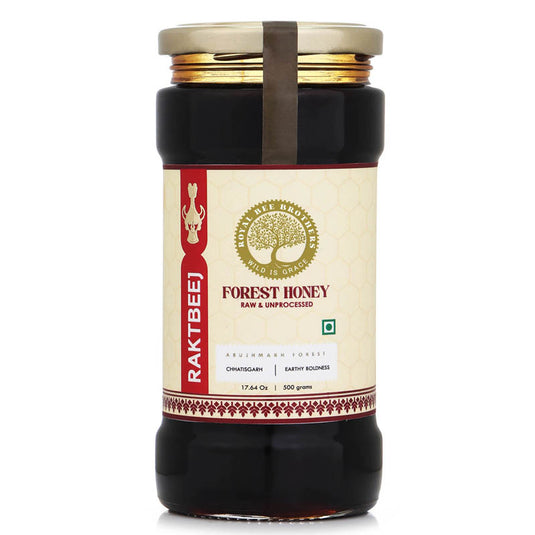
Flavor Profile: Central Indian honey features a dark amber appearance, a robust, bold flavor presentation, earthy undertones, herbal complexity, and a viscous body. Its full-bodied character appeals to consumers seeking intense flavor profiles.
Mahua Forest Honey
Among India's highly specialized, culturally integrated seasonal wild honeys is Mahua honey.
Floral Source: Extracted during specific seasonal windows when wild bees forage on the blossoms of the Mahua tree (Madhuca longifolia). These trees play an important cultural and economic role across tribal forest populations.
Taste Characteristics: Mahua honey is recognized for its floral sweetness, smooth texture, mild pleasant fruity notes, and warm aroma. It remains highly valued among local forest-dwelling communities.
Jamun Forest Honey
Jamun-dominant forest honey has earned consumer popularity due to its unique taste dynamics and traditional repute.
Floral Source: Produced naturally during summer periods when wild hives are surrounded by blooming wild Jamun (Syzygium cumini) tree canopies inside natural forest segments.
Flavor Profile: Distinctive markers include a deep dark coloration, pleasant mildly tangy undertones, balanced sweetness, and a clear aromatic signature. Many health-conscious consumers seek Jamun honey for its specific flavor properties and traditional wellness reputation.
Multi-Floral Forest Honey
The vast majority of authentic, raw forest honey harvested falls naturally into this multi-floral category.
What Is Multi-Floral Honey? It is created when wild forest bees collect nectar from numerous co-existing flowering species. This creates a finished product containing diverse native pollens, layered aromatics, complex flavors, and a broad nutritional spectrum.
Advantages: Multi-floral forest honey provides flavor complexity, seasonal uniqueness, and an inherently richer botanical diversity. Every single harvest batch mirrors the status of the forest ecosystem at that specific time.
Stingless Bee Forest Honey
One of India's rarest wild honey classifications comes from small native stingless bees.
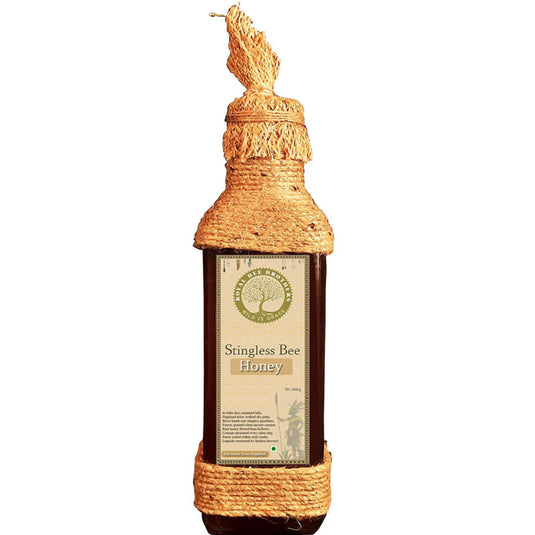
Production & Characteristics: Produced in minimal quantities by tiny stingless bee species (Meliponini) rather than conventional honeybees. Stingless bee honey is distinguished by its thin consistency, a sweet-sour tangy taste profile, high natural organic acidity, and a sharp aroma. Because annual production volumes are restricted, it commands premium values.
Regional Availability: This honey is found primarily across localized pockets of Northeast India, specific ranges of the Western Ghats, and tropical forest reserves.
Wild Rock Bee Honey

A significant percentage of India's wild forest honey originates from the Giant Indian Rock Bee.
Apis dorsata: This indigenous wild bee species constructs large, single open-air honeycombs suspended on mountain cliffs, forest tree branches, and rocky outcrops.
Characteristics: Real rock bee honey delivers an intense flavor profile, an entry of minerals, wild aroma, and biochemical complexity. Traditional tribal gatherers harvest much of India's rock bee honey using hereditary climbing techniques.
At a Glance: Regional Terroir of Indian Forest Honey
Different forest ecosystems directly shape the aesthetic, behavioral, and sensory traits of wild honeys across India. Compare the distinct profiles below:
| Region | Color | Taste Profile | Primary Floral Source |
|---|---|---|---|
| Odisha | Dark Amber | Woody & Herbal | Sal, Mahua, Arjun |
| Nagaland | Light Gold | Delicate & Floral | Wild Orchids, Mountain Flora |
| Sundarbans | Amber | Slightly Salty & Mineral-rich | Khalisha, Mangrove Blossoms |
| Himalayan | Light Amber | Fresh & Herbal | Wild Rhododendron, Alpine Flora |
Seasonal Variations in Indian Forest Honey
The composition, color, and flavor profiles of wild honey fluctuate across calendar months:
- Spring Harvests: Typically yield floral sweetness, lighter colors, and delicate botanical aromas.
- Summer Harvests: Feature stronger flavor notes, richer textures, lower moisture content, and distinctly darker color tones.
- Monsoon Influence: Rainfall impacts regional flowering schedules, nectar dilution, and total wild honey yields.
This natural fluid shift ensures that each wild harvest batch remains distinct.
How Geography Influences Honey Flavor
Regional differences across the Indian subcontinent arise from several environmental factors:
- Soil Composition: Mineral-dense soils modify plant sap chemistry and nectar trace elements.
- Climate: Temperature and humidity cycles dictate daily nectar flow rates in forest plants.
- Altitude: Elevations trigger plants to produce specialized aromatic protective chemical compounds.
- Biodiversity: A broader floral array creates a more complex final honey matrix.
Which Type of Indian Forest Honey Is Best?
There is no single correct answer. The ideal wild honey relies on your planned application and flavor preferences:
| Desired Characteristics | Recommended Indian Forest Variety |
|---|---|
| Rich, Bold & Earthy Profiles | Odisha Forest Honey, Central Indian Forest Honey |
| Delicate, Light & Floral Notes | Nagaland Mountain Honey, Himalayan Forest Honey |
| Tangy or Saline Traits | Sundarbans Mangrove Honey, Stingless Bee Honey |
| Everyday Versatility & Balanced Dietary Use | Multi-Floral Forest Honey, Jamun / Mahua Tree Blossom Honey |
Choosing Authentic Indian Forest Honey
With escalating consumer demand comes an increased market risk of sugar syrup adulteration. When selecting wild honey, evaluate these quality metrics:
- Raw and Unheated: Avoidance of high-heat industrial processing.
- Laboratory Testing: Validation reports confirming zero added C3/C4 sugars.
- Ethical Sourcing: Transparent partnerships with indigenous gatherers.
- Traceability: Identification of the regional forest track.
- Natural Crystallization: Natural granulation over time can indicate that honey is raw and unheated.
Supporting Tribal Honey Communities
Many of India's forest honeys are harvested by indigenous tribal communities who possess generational knowledge of the wilderness. Sourcing forest honey ethically supports traditional rural livelihoods, encourages community-driven forest conservation, expands sustainable harvesting practices, and safeguards cultural heritage preservation. This creates a supportive cycle for forest populations and wilderness ecosystems.

The Future of Indian Forest Honey
Global consumer demand for natural, traceable foods continues to escalate. Indian forest honey is positioned because it merges ecological biodiversity, traditional harvesting knowledge, distinct regional identities, and a rich cultural heritage. As buyers increasingly value authenticity and traceability, India's diverse wild honey lines are earning premium recognition across the worldwide stage.
Support Fair-Trade Sourcing Frameworks
Our forest selections are unpasteurized, chemical-free, and directly derived from wild rock bee combs.
Shop Authentic Wild HoneyFrequently Asked Questions (FAQs)
Q1: Can forest honey be consumed daily?
Yes, forest honey can be consumed daily in moderation as part of a balanced diet.
Q2: Is forest honey better than regular honey?
Forest honey contains nectar from diverse forest flora, giving it a unique antioxidant profile.
Q3: What are the primary forest honey benefits for standard health upkeep?
The distinct forest honey benefits are tied directly to deep biodiversity. It delivers natural carbohydrates, trace elements, and plant enzymes that support healthy metabolism, respiratory ease, and overall tissue vitality.
Q4: Why should consumers choose raw forest honey benefits over processed supermarket brands?
To absorb maximum raw forest honey benefits, the liquid must remain completely unheated. Keeping it raw ensures that wild plant enzymes, native forest pollens, and organic compounds are not broken down by high-heat factory pasteurization.
Q5: How does a structured schedule of daily honey consumption impact long-term stamina?
A moderate pattern of daily honey consumption serves as an alternative to refined white sugars. It offers a mix of fructose and glucose that satisfies natural cravings while delivering steady energy profiles.
Q6: How does utilizing deep-forest honey for immunity assist cell resilience?
Using wild honey for immunity functions due to the concentration of multi-floral bioflavonoids. These natural elements help cells manage oxidative stress, providing defense support during seasonal transitions.
Q7: What advantages do we get when integrating unpasteurized honey for gut health?
Consuming real honey for gut health delivers prebiotic compounds into the digestive tract. These specific carbohydrates nourish the micro-organisms inside the intestines, encouraging smoother assimilation of nutrients.
Q8: Can pure wild forest honey be used routinely by physical athletes?
Yes, raw wild forest honey is effective for active lifestyles. Its deep terroir means it carries a natural density of trace minerals and organic sugars harvested from untamed trees, serving as a functional tool for endurance.
Q9: Where do these varieties rank when compared to modern commercial natural energy foods?
They stand as reliable choices among clean natural energy foods. Unlike processed energy bars or synthetic glucose formulas, unheated forest honey offers rapid cellular glycogen replenishment coupled with a controlled metabolic release.
Q10: What makes an authentic antioxidant-rich honey vital for long-term health?
An authentic antioxidant-rich honey provides phenolic acids. These elements neutralize free radicals inside our system, supporting cardiovascular well-being and mitigating cellular aging.
Q11: What is an effective approach to establishing a stable honey wellness routine?
A structured honey wellness routine is simple: take a single teaspoon mixed into a glass of lukewarm water with a squeeze of fresh lime at sunrise, or stir it gently into warm milk or herbal teas right before sleep.
Q12: Why does authentic forest honey show signs of cloudiness or crystallization?
Cloudiness and natural granulation are clear indicators of raw, unfiltered honey. It indicates the presence of organic forest pollens and unheated natural sugars, verifying that the honey has not been stripped of its nutrients by commercial ultra-filtration.
Conclusion
India's forests produce a diverse range of honey varieties that reflect the country's ecological profile. From the mangrove honey of the Sundarbans and the mountain honey of Nagaland to the forest honeys of Odisha and the Western Ghats, each variety tells a unique story of landscape, biodiversity, and tradition.
Understanding the different types of Indian forest honey allows consumers to appreciate not only flavor differences but also the cultural heritage and ecological systems that make these products possible.
Whether you prefer bold, mineral-rich honey, delicate floral notes, rare stingless bee honey, or versatile multi-floral varieties, India's forests offer a broad selection of authentic wild honeys. By choosing ethically sourced forest honey, consumers help preserve traditional harvesting practices, support indigenous communities, and protect the ecosystems that sustain wild honey production.
References:
- National Bee Board (NBB), India – Standards and development guidelines for Indian apiculture sectors.
- Indian Council of Agricultural Research (ICAR) – Systematic research on honeybee management and native floral sourcing behavior.
- Food and Agriculture Organization (FAO) – Global quality frameworks and identity parameters for raw, wild honey production parameters.
- Ministry of Tribal Affairs, Government of India – Sourcing frameworks for ethical non-timber forest produce and tribal community livelihoods.
- Forest Survey of India (FSI) – Data on regional forest canopy distributions and native botanical ecosystems.
Bring Home the Legacy of India's Forests
Experience unpasteurized wild honey extracted with environmental respect and absolute traceability.
Browse Our Full Heritage Honey CollectionWant to learn more about wild honey sourced directly from India's forests?
Explore our Ultimate Guide to Forest Honey in India: Benefits, Purity, Harvesting & Uses to understand how forest honey is collected, how it differs from regular honey, and the key signs of authentic, unprocessed forest honey.
Read the Ultimate Guide to Forest Honey in India →