Table of Contents
Wild Forest Honey Harvesting in India: The Mahua Honey Journey
Deep inside the forests of central India lies an ancient tradition of wild honey harvesting practiced by tribal communities for generations. This journey through Halo Valley reveals the adventurous process of collecting raw forest honey from giant Apis dorsata beehives among blooming Mahua trees.
Journey from Bichhiya to Basniya

At 8:00 a.m., we left the wedding venue for Bichhiya and continued toward Basniya. By 10:00 a.m., we met our 14-member team from Bahraich who had arrived to assist in forest honey extraction operations near Halo Valley.
Under the scorching summer sun, we began a 3-kilometer trek toward the forests with 20 local helpers led by Raghu, an experienced traditional honey harvester.
Entering Halo Valley Forest

The Muramik forest zone is famous for producing nearly 20–25 tons of wild forest honey every year, especially from Apis dorsata bees, also known as giant rock bees.
As we entered deeper into the forest, the temperature dropped dramatically. Almost every branch carried large hanging beehives surrounded by flowering trees like Mahua, Dhanvantari, Lal Ghuma, Sobhuvana, and Kalkoma.
Mahua Trees and Apis Dorsata Bees
Mahua trees, scientifically known as Madhuca longifolia, play a crucial role in tribal culture and forest honey production. Their fragrant white flowers bloom from March to May and provide abundant nectar and pollen for honeybees.
Mahua honey is known for its deep color, rich taste, and medicinal properties. Tribal communities have harvested this honey for centuries using traditional ecological knowledge passed through generations.
Surveying the Forest for Beehives

Raghu divided the workers into several groups to survey the forest. After hours of exploration, the teams estimated nearly 20–25 tons of honey reserves spread across the region.
Careful planning was essential because the monsoon season was approaching quickly, leaving only 10–12 days for complete honey harvesting operations.
Preparation for Honey Harvesting

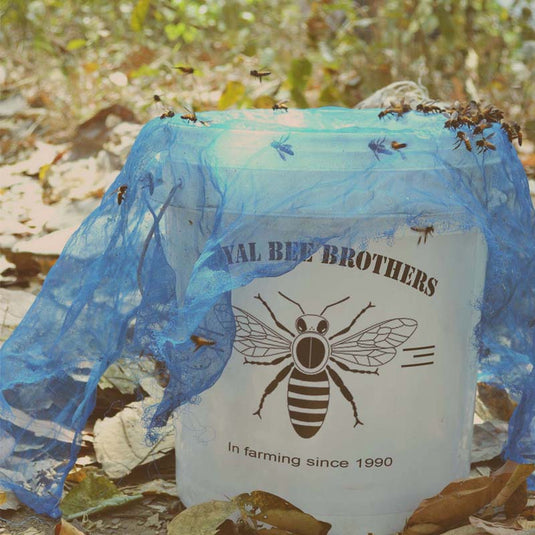
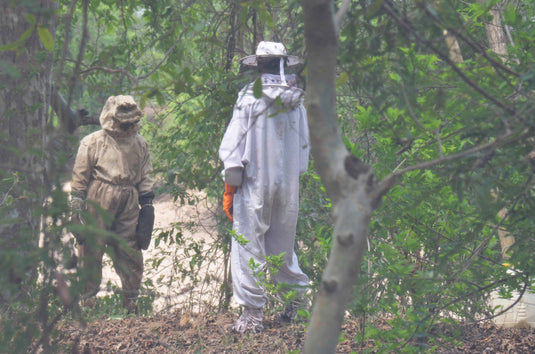
Before entering deeper forest zones, the team prepared essential tools including ropes, smoke-generating dry leaves, sharp knives, protective bee suits, mosquito nets, and honey collection buckets.
Traditional Honey Harvesting Process

After locating a giant hive on a Sal tree, the team generated smoke using dry leaves to temporarily calm the bees. Raghu and Raju climbed the towering tree carefully using ropes while others maintained safety below.
Despite protective gear, several team members were stung by bees before reaching the mosquito nets. Eventually, the hive was harvested successfully, yielding around 6 kilograms of fresh dark wild honey.
Raw Forest Honey Extraction

The harvested hives were squeezed manually and filtered through cloth into clean buckets. Remaining hive materials were collected separately to produce natural beeswax.
By evening, the teams collectively harvested nearly 350 kilograms of wild forest honey from approximately 80 hives spread throughout the forest.
Importance of Tribal Honey Harvesting
Traditional honey harvesting is far more than an economic activity. It represents the deep relationship between tribal communities and nature. Bees contribute significantly to ecological balance through pollination, while forest honey provides nutrition, medicine, and livelihood support.
Protecting forests and preserving sustainable honey harvesting traditions is essential for maintaining biodiversity and safeguarding indigenous knowledge systems.
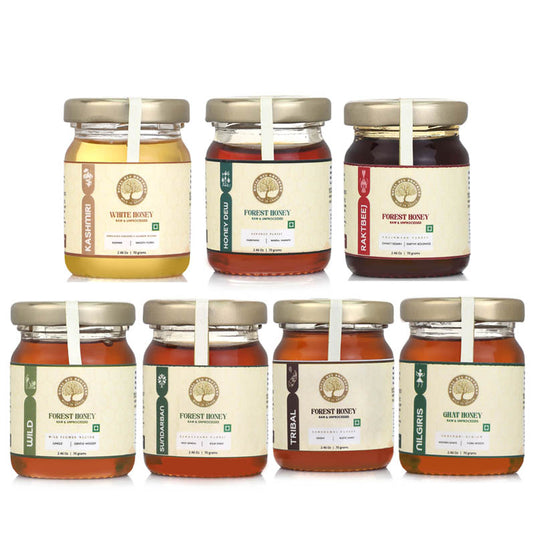
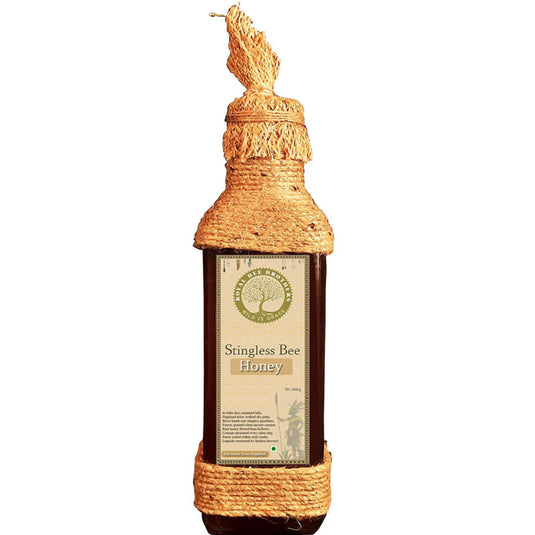
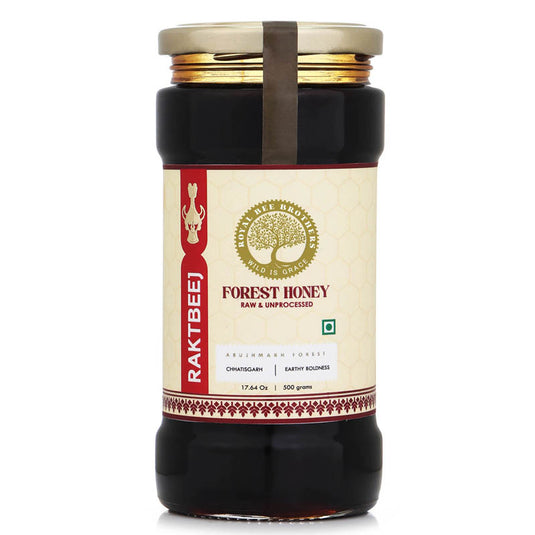
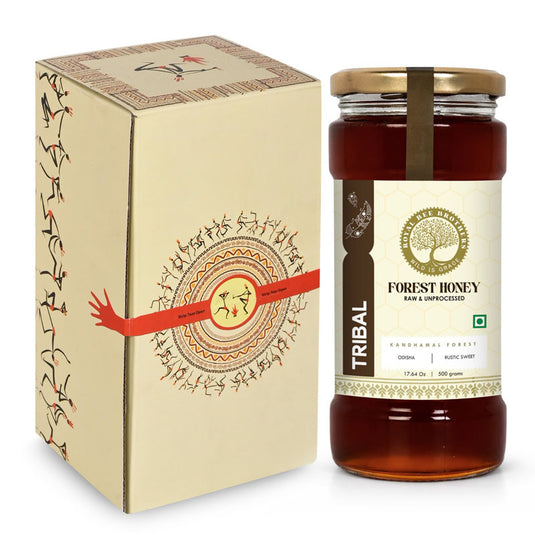
Explore More from Royal Bee Brothers
Frequently Asked Questions
What is wild forest honey?
Wild forest honey is raw natural honey collected from naturally occurring beehives inside forests without artificial bee farming practices.
What is Mahua honey?
Mahua honey is produced from the nectar of Mahua flowers and is known for its rich flavor, dark color, and medicinal properties.
Which bees produce forest honey in India?
Apis dorsata bees, commonly known as giant rock bees, are major producers of wild forest honey in India.
Why is forest honey darker than regular honey?
Forest honey contains nectar from medicinal forest flowers and trees, giving it a darker color and stronger flavor profile.
Is forest honey raw and unprocessed?
Authentic forest honey is generally minimally processed and retains natural enzymes, pollen, and nutrients.
Until next time, in the next forest adventure with Royal Bee Brothers.
Explore Our Other Stories
From wild forests to ancient traditions, discover more untold journeys of nature, honey, and heritage.
Exploring India’s Wild Bounty
Stories of ancient wisdom, wild honey traditions, sacred forests, and nature’s timeless connection with humanity.
Mahwa: The Sacred Flower of Bastar
Mahwa symbolizes tribal culture, forest traditions, natural abundance, spirituality, and sustainable indigenous living.
Bastar’s Chapda Chutney
Bastar’s Chapda Chutney is a mysterious tribal delicacy, blending forest traditions, red ants, bold flavors, and ancient indigenous heritage.
The Honey Hunter of Katarniyaghat
Discover wild forest honey traditions, tribal honey hunters, jungle survival, natural heritage, and untamed wilderness stories.
Tales from Sundarban ! Part-1
Explore how mangroves protect coastlines and sustain rare biodiversity in tidal forests.
Tales from Sundarban ! Part-2
In Sundarbans folklore, Bengal tigers guard wild honey forests, where fearless honey hunters journey through dangerous mangroves for survival.
The Lush Forests of Kandhamal & Honeyguide
Mythical stories that define the spiritual balance between humans, birds, and forest.