The Definitive Guide to B2B Honey Sourcing: Global Bulk Supplying, Botanical Authentication, and Industrial Applications
The global B2B natural sweetener landscape is undergoing a monumental paradigm shift. Driven by shifting consumer preferences toward clean-label ingredients, functional nutrition, and traceable food ecosystems, industrial food formulation, pharmaceutical compounding, and premium retail packaging operations are moving away from heavily processed high-fructose corn syrups (HFCS) and inverted sugar inputs. In their place, pure, raw unpasteurized honey has emerged as the definitive gold standard for institutional sweetening and active biological formulation.
For commercial procurers, supply chain directors, and product developers, establishing a resilient and authenticated honey pipeline is not merely a purchasing decision—it is a critical exercise in risk mitigation, regulatory compliance, and brand equity development. Substandard sourcing pipelines frequently suffer from economic adulteration (including the covert addition of C4 and C3 plant sugars like cane, corn, and rice syrups), pesticide residue contamination (such as glyphosate and neonicotinoids), and inconsistent diastase and hydroxymethylfurfural (HMF) parameters.
As a premier institutional agricultural partner, Royal Bee Brothers has constructed an elite infrastructure optimized for premium wholesale natural honey distribution, private label honey processing, and industrial-scale honey manufacturing. This comprehensive architectural treatise breaks down the complex mechanics of volume procurement, structural botanical chemistry, rigorous lab authentication matrices, and an exhaustive technical analysis of 20 distinct honey varietals cultivated for modern B2B systems.
Part 1: Strategic Mechanics of Bulk Honey Sourcing & B2B Infrastructure
To operationalize high-volume honey manufacturing without sacrificing structural, enzyme, or flavor profiles, bulk supply operations must merge biological preservation with heavy industrial scalability. Managing bulk orders from thousands of metric tons down to palletized delivery configurations requires precise technical control at every link in the supply chain.
Scale-Optimized Processing & Bulk Packaging Configurations
The structural integrity of honey changes dramatically depending on temperature profiles and physical manipulation. Royal Bee Brothers operates automated extraction and consolidation hubs designed to process significant volumes while preventing thermal degradation. Liquid honey is prepared for delivery via multi-tiered configurations tailored to specific scale requirements:
- Industrial Batches: Packaged in 300kg food-grade epoxied steel drums fitted with secure, airtight gaskets to prevent ambient moisture absorption and atmospheric oxidation.
- Co-Packing and Mid-Scale Processing: Handled via 1400kg Intermediate Bulk Containers (IBC Totes) reinforced with steel cages, optimized for direct integration into industrial pump systems.
- Global Bulk Exports: Dispatched using dedicated ISO Tankers or multi-layer Flexitanks capable of moving up to 25 metric tons per shipping container seamlessly across international trade lanes.
Precision Traceability Ecosystems
Modern regulatory compliance demands absolute provenance mapping. Royal Bee Brothers utilizes an end-to-end batch tracking infrastructure that documents every link in the supply chain:
This deep visibility ensures complete alignment with global trade standards, including FDA bioterrorism regulations, EU dynamic food tracking directives, and strict agricultural import protocols.
Part 2: The Analytical Authentication Matrix & Global Regulatory Frameworks
In high-volume B2B sourcing, analytical laboratory validation serves as the primary defense against commercial adulteration and regulatory rejection. Every batch distributed by Royal Bee Brothers undergoes strict validation protocols, generating a comprehensive Certificate of Analysis (COA) that verifies chemical purity and structural identity.
Crucial Chemical Parameters for B2B Procurement
- Hydroxymethylfurfural (HMF): HMF is the definitive chemical marker for heat-induced degradation and prolonged storage. Fresh, unadulterated honey must maintain an HMF level below 40 mg/kg (and strictly below 80 mg/kg for tropical regions under Codex Alimentarius standards). Elevated HMF indicates excessive thermal processing or age-related breakdown of fructose molecules.
- Diastase Activity: Diastase is a heat-sensitive enzyme introduced by honeybees that converts starch into maltose. It serves as a reliable proxy for raw, live honey profiles. Industrial specifications typically require a minimum Diastase activity of 8 on the Schade scale. Values below this threshold reveal over-pasteurization or structural degradation.
- Moisture Content: Excess water triggers natural yeast fermentation. Standard B2B processing requires moisture levels strictly below 18% to 20%. Royal Bee Brothers utilizes low-temperature vacuum dehydration systems to pull excess moisture from high-humidity harvests without breaking down delicate heat-sensitive enzymes.
| Analytical Test Marker | Target Threshold Range | Technical Industrial Significance |
|---|---|---|
| Hydroxymethylfurfural | < 40 mg/kg | Verifies absence of thermal damage |
| Diastase Activity | > 8 Schade Units | Validates enzymatic life & raw status |
| Moisture Content | 17% - 19.5% | Prevents wild yeast fermentation |
| C4 / C3 Sugar Profiling | Negative (< 7% EAEC) | Proves zero adulteration with corn/cane |
| Free Acidity | < 50 meq/kg | Rules out bacterial or yeast spoilage |
Advanced Laboratory Validation Protocols
To guarantee absolute purity, advanced testing methodologies verify the chemical profile of every batch:
- EA-IRMS (Stable Isotope Ratio Mass Spectrometry): Detects exogenous C4 sugars derived from corn or sugarcane by measuring the ratio of stable carbon isotopes (13C/12C).
- LC-IRMS (Liquid Chromatography coupled with IRMS): Targets C3 sugars derived from rice, beet, or wheat syrups by isolating specific sugar fractions (fructose, glucose) and verifying their individual isotopic baselines.
- NMR (Nuclear Magnetic Resonance) Profiling: Compares the complete molecular fingerprint of a sample against an expansive global reference database to instantly verify botanical origin, geographical provenance, and uncover sophisticated multi-sugar adulteration schemes.
Part 3: Exhaustive Botanical Analysis of 20 Core Honey Varietals
The specific floral source determines the chemical composition, crystallization curve, flavor notes, and industrial performance of honey. Below is an analytical evaluation of 20 distinct honey varietals offered in volume by Royal Bee Brothers for B2B formulation and private label integration.
1. Litchi Honey (Litchi chinensis)
Organoleptic Profile: Light amber hue, thin viscosity, distinctive fruity bouquet with clear floral-orchard top notes.
Chemical/Structural Makeup: High fructose-to-glucose ratio (F:G), resulting in a slow, stable liquid phase that resists crystallization for extended periods.
Best Production Fit: Premium clear retail packaging, gourmet salad dressing formulations, clean-label beverage sweetening, and high-end confectionery production.
2. Eucalyptus Honey (Eucalyptus globulus)
Organoleptic Profile: Medium to dark amber color, dense body, subtle herbal and menthol undertones with a lingering, rich finish.
Chemical/Structural Makeup: High concentration of natural eucalyptol compounds along with elevated phenolic acid levels, providing enhanced stability under thermal processing.
Best Production Fit: Active ingredient in over-the-counter cough syrups, throat lozenges, functional wellness supplements, and artisan baked goods.
3. Multi-Flora Honey (Polyfloral Blends)
Organoleptic Profile: Balanced golden color, medium viscosity, well-rounded classic honey flavor profile that blends smoothly into base mixtures.
Chemical/Structural Makeup: Variable balanced sugar profiles derived from diverse wild floral arrays, offering cost-efficient bulk sweetening performance.
Best Production Fit: High-volume commercial baking, breakfast cereal glazes, industrial sauces, marinades, and foundational retail blending lines.
4. Jamun Honey (Syzygium cumini)
Organoleptic Profile: Dark, deep amber tone, heavy body, distinct bittersweet finish with woody and dark berry notes.
Chemical/Structural Makeup: Exceptionally low glycemic index relative to standard honey varietals, containing high levels of active polyphenols and volatile constituents.
Best Production Fit: Specialized diabetic-friendly alternative sweeteners, functional wellness snacks, nutraceutical extracts, and rich dark sauces.
5. Karanj / Krunj Honey (Pongamia pinnata)
Organoleptic Profile: Dark golden amber, medium-heavy body, complex earthy aroma with a warm herbal finish.
Chemical/Structural Makeup: Noted for its high concentration of unique trace bitter principles and anti-inflammatory biomolecules.
Best Production Fit: Herbal cosmetic formulations, Ayurvedic product development, organic soap manufacturing, and targeted skin care balms.
6. Sidr Honey (Ziziphus spina-christi)
Organoleptic Profile: Thick, slow-pouring dark amber, luxurious velvety texture, deep buttery and medicinal flavor profile.
Chemical/Structural Makeup: Exceptionally high pH combined with superior antioxidant capacity and stable enzyme metrics. One of the most sought-after and biologically potent varietals worldwide.
Best Production Fit: Premium luxury private labels, high-efficacy skincare lines, natural wound care ointments, and luxury health formulations.
7. Acacia Honey (Robinia pseudoacacia)
Organoleptic Profile: Nearly water-white to pale yellow clarity, light fluid body, delicately mild sweet flavor that does not mask subtle base ingredients.
Chemical/Structural Makeup: Extremely high fructose content (F:G ≥ 1.5), giving it a highly unique property: it remains in a crystal-free liquid state for years under proper conditions.
Best Production Fit: Premium transparent retail bottles, delicate culinary infusions, sensitive dairy sweetening, and high-end beverage mixes.
8. Mustard Honey (Brassica nigra)
Organoleptic Profile: Light creamy yellow tone, high density, sweet floral character with slight peppery notes.
Chemical/Structural Makeup: Extremely high glucose concentration relative to fructose, which drives a rapid crystallization curve. It often solidifies into a smooth, fine-grained spread within weeks of harvest.
Best Production Fit: Base material for creamed/crystallized spreads, industrial baking dough conditioning, and cost-effective bulk food processing inputs.
9. Sunflower Honey (Helianthus annuus)
Organoleptic Profile: Bright golden-yellow color, medium body, clean pleasant sweetness with a slightly refreshing, waxy finish.
Chemical/Structural Makeup: Rich in natural organic acids and plant sterols, featuring a rapid, consistent crystallization curve.
Best Production Fit: Energy bar binding agents, vegan-alternative confectionery bases, bulk bakery sweetening, and health food spreads.
10. Coriander Honey (Coriandrum sativum)
Organoleptic Profile: Medium amber with an occasional greenish tint, robust medium body, unique spicy-sweet aroma with herbal citrus notes.
Chemical/Structural Makeup: Elevated concentrations of essential oil fractions and iron-heavy micronutrient profiles.
Best Production Fit: Savory marinades, premium dynamic barbecue sauces, specialty line retailing, and therapeutic wellness blends.
11. Tulsi / Holy Basil Honey (Ocimum sanctum)
Organoleptic Profile: Rich amber hue, thin-medium body, deeply aromatic with clear herbal, peppery, and anisette notes.
Chemical/Structural Makeup: Abundant in plant-derived adaptogenic compounds, essential oils (eugenol), and distinct bioflavonoids.
Best Production Fit: Organic immunity-boosting supplements, specialized natural teas, holistic health liquids, and luxury functional foods.
12. Neem Honey (Azadirachta indica)
Organoleptic Profile: Dark mahogany appearance, thin fluid viscosity, intensely complex bittersweet flavor with strong medicinal top notes.
Chemical/Structural Makeup: Highly valued for its prominent anti-bacterial, anti-fungal, and deep bioactive therapeutic profiles.
Best Production Fit: Natural cough remedies, dermatological skincare formulations, traditional health tonics, and targeted wellness private labels.
13. Ajwain Honey (Trachyspermum ammi)
Organoleptic Profile: Dark, intense amber color, sharp, robust body, pungent herbal profile that carries a clear thymol aroma.
Chemical/Structural Makeup: High essential oil concentrations, specifically rich in natural thymol, known for its digestive-support properties.
Best Production Fit: Digestive health supplements, functional gut-health drinks, specialized savory culinary sauces, and direct holistic applications.
14. Clover Honey (Trifolium)
Organoleptic Profile: Classic extra light amber to white appearance, medium body, mild sweet profile with a delicate hints of fresh grass.
Chemical/Structural Makeup: Highly uniform and dependable sugar distribution with a stable moisture profile, making it a reliable benchmark for industrial consistency.
Best Production Fit: Universal baseline ingredient for large-scale table food manufacturing, private label consumer bottles, and multi-use processing.
15. Wild Berry Honey
Organoleptic Profile: Deep reddish-amber hue, heavy body, rich tart-sweet flavor profile reminiscent of wild forest fruits.
Chemical/Structural Makeup: High natural enzyme content along with elevated antioxidant capacity, making it resilient to ambient storage.
Best Production Fit: Premium fruit preserves, direct breakfast cereal applications, healthy energy bars, and high-end table spreads.
16. Orange Blossom Honey (Citrus sinensis)
Organoleptic Profile: Light golden hue, medium viscosity, highly refined aromatic profile with unmistakable citrus and orange bloom top notes.
Chemical/Structural Makeup: High concentration of methyl anthranilate, which serves as a definitive chemical marker confirming genuine citrus origin.
Best Production Fit: Premium artisanal retail lines, fine pastries, clean-label yogurt fruit bases, and high-end cosmetics.
17. Sheesham / Rosewood Honey (Dalbergia sissoo)
Organoleptic Profile: Clear golden amber, smooth medium body, pleasantly mild floral sweetness with woody undertones.
Chemical/Structural Makeup: Extremely stable internal composition that offers uniform performance in high-temperature food formulation.
Best Production Fit: Industrial baking formulations, commercial snack coatings, general retail packaging, and base food processing.
18. Fennel / Saunf Honey (Foeniculum vulgare)
Organoleptic Profile: Medium to deep amber tone, medium body, distinctly aromatic with subtle licorice, anise, and warm spice notes.
Chemical/Structural Makeup: Contains natural volatile aromatic fractions known to aid gastrointestinal comfort and soothe mucosal tissues.
Best Production Fit: Functional herbal teas, therapeutic lozenges, distinct gourmet flavor profiles, and premium wellness lines.
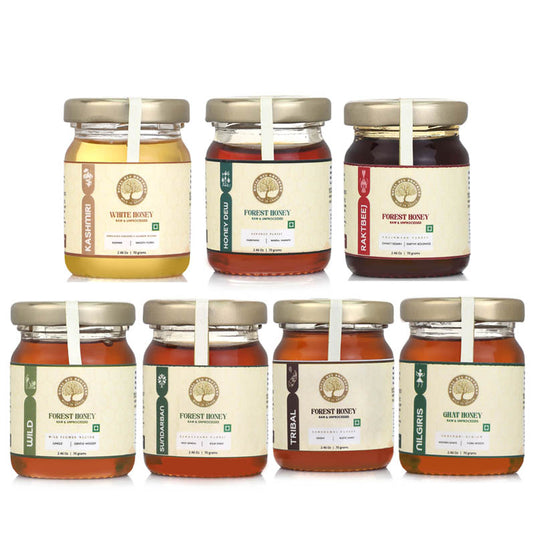
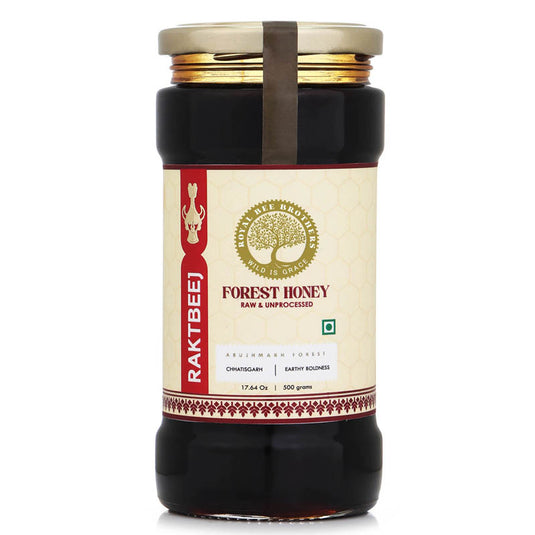
19. Forest Honey (Honeydew Origin)
Organoleptic Profile: Dark brown to near-black color, heavy viscosity, bold malty flavor profile with low relative sweetness.
Chemical/Structural Makeup: Derived from plant secretions rather than direct floral nectar. It features exceptionally high mineral content, elevated oligosaccharide counts, and superior electrical conductivity.
Best Production Fit: Functional pre-biotic wellness foods, rich dark beers, artisanal baking, and mineral-enriched health formulations.
20. Beer / Active Craft-Compatible Honey
Organoleptic Profile: Pale to bright amber, clean fermentation-friendly body, mild sweet profile that leaves a smooth grain-compatible finish.
Chemical/Structural Makeup: Carefully selected and standardized for optimal fermentable sugar content (F+G ≥ 70%) with a minimal unfermentable dextrin profile.
Best Production Fit: Commercial mead brewing, craft beer brewing (Honey Ales, Braggots), spirits distillation, and specialized industrial fermentation systems.
Part 4: Technical Matrix of Botanical Honey Performance
The table below outlines key industrial processing metrics for all 20 Royal Bee Brothers honey varietals, helping B2B buyers match the right honey to their specific technical requirements:
| Honey Varietal | Color Profile | Crystallization Rate | Key Industrial Advantage |
|---|---|---|---|
| 1. Litchi | Light Amber | Very Slow | Excellent clarity retention in liquids |
| 2. Eucalyptus | Medium Dark | Moderate | Highly stable under heat processing |
| 3. Multi-Flora | Light/Gold | Moderate | Cost-effective, versatile sweetener |
| 4. Jamun | Dark Amber | Slow | Low glycemic index, unique flavor |
| 5. Karanj / Krunj | Dark Gold | Slow | High bioactive compound concentration |
| 6. Sidr | Deep Amber | Extremely Slow | Ultra-premium positioning, highly active |
| 7. Acacia | Water-White | Extremely Slow | Permanent clarity, very low flavor interference |
| 8. Mustard | Creamy Yellow | Extremely Rapid | Ideal for smooth spreads and creamed lines |
| 9. Sunflower | Bright Yellow | Rapid | Excellent binding agent for energy bars |
| 10. Coriander | Medium Green/Amber | Moderate | Rich, complex savory pairing profile |
| 11. Tulsi | Rich Amber | Slow | High adaptogenic, clean label appeal |
| 12. Neem | Dark Mahogany | Very Slow | High therapeutic, anti-bacterial score |
| 13. Ajwain | Dark Amber | Slow | High natural thymol content |
| 14. Clover | Extra Light | Moderate | Highly standardized, universal baseline |
| 15. Wild Berry | Reddish Amber | Slow | High natural enzyme and fruit profile |
| 16. Orange Blossom | Light Gold | Moderate | Premium floral aroma, high-end appeal |
| 17. Sheesham | Golden Amber | Moderate | Uniform performance in industrial baking |
| 18. Fennel | Medium Dark | Slow | Distinct anise profile for wellness items |
| 19. Forest | Near-Black | Virtually None | High mineral density, low overall sweetness |
| 20. Beer Blend | Pale Amber | Moderate | Maximum attenuation for fermentation |
Part 5: Commercial Optimization: Maximizing Yield, Shelf Life, and Processing Efficiency
Integrating bulk honey into high-volume manufacturing lines requires close attention to the structural properties of natural sugar systems. Unprocessed honey behaves as a supercooled liquid, meaning its physical state depends heavily on environmental handling and mechanical shearing.
Preventing and Managing Crystallization
Crystallization is a natural physical process where excess glucose separates from the liquid state as monohydrate crystals. This process peaks between 11°C and 15°C. To maintain smooth, pumpable liquid lines in industrial systems, facilities should utilize targeted temperature controls:
↓
300kg Steel Drum Enclosure Core → Maintained Steady at 40°C - 45°C
↓
Continuous Dispatch via Low-Shear Pumps
- Thermal Regulation: Store inventory in climate-controlled environments held steadily between 22°C and 25°C.
- Liquefaction Protocols: When de-crystallizing bulk drums, apply heating blanket jackets set between 40°C and 45°C for 24 to 48 hours. Do not exceed 50°C, as excessive heat destroys beneficial enzymes, degrades native flavor profiles, and causes a sharp spike in HMF values.
- Shear Avoidance: Use positive displacement low-shear pumps (such as lobe or progressive cavity pumps) rather than high-speed centrifugal systems to prevent structural aeration, which can introduce micro-bubbles that seed rapid crystallization.
Optimizing Private Label and Co-Packing Operations
For brands launching premium retail lines, selecting the proper honey profile is essential for long-term shelf stability:
Shelf-Life Target Parameters Matrix:
• Transparent Clear Glass Bottles ⇒ Select Acacia or Litchi honey to maximize long-term clear phase liquid life.
• Standard Opaque Squeeze Packs ⇒ Choose Clover or Multi-Flora blends for balanced cost and flow performance.
• Structured Creamed Spreads ⇒ Utilize Mustard or Sunflower bases to run highly controlled fine creaming batches.
Part 6: Partnering with Royal Bee Brothers for B2B Success
In a global marketplace crowded with fragmented suppliers and inconsistent quality standards, Royal Bee Brothers stands out as a reliable anchor of purity, operational transparency, and heavy industrial scale. By controlling the supply chain from apiary management to advanced laboratory testing and high-volume dispatch, we remove supply chain risks for our corporate partners.
Why Leading Global Brands Choose Our Pipeline:
- Guaranteed Analytical Purity: Every shipment comes with a comprehensive Certificate of Analysis (COA) confirming zero sugar adulteration, clean chemical profiles, and optimal enzyme activity.
- Diverse Floral Portfolio: Access 20 authenticated botanical honey varietals from a single master partner, simplifying your procurement and vendor management.
- Scalable Industrial Output: Our automated processing plants, multi-ton drum staging areas, and streamlined logistics handle high-volume demands smoothly throughout the harvest year.
For custom formula consultation, current spot pricing on bulk drums, or to book contract volume allocations for the upcoming harvest cycle, reach out directly to our corporate procurement team:
- Concierge B2B Desk: 1800-890-1182
- Direct Operations (WhatsApp): +91-9818200240 | +91-9205961182
- Corporate Correspondence: info@royalbeebrothers.com
Part 7: Corporate Atlas & Production Facilities
Our physical infrastructure spans multiple optimized hubs across the region to ensure absolute supply continuity and processing excellence:
Motipur Forest, Near Katarniaghat Wildlife Sanctuary,
Bahraich - 271855, Uttar Pradesh, India.
Colonelganj Gonda, Uttar Pradesh - 271502, India.
Ghaziabad - 201016, Uttar Pradesh, India.