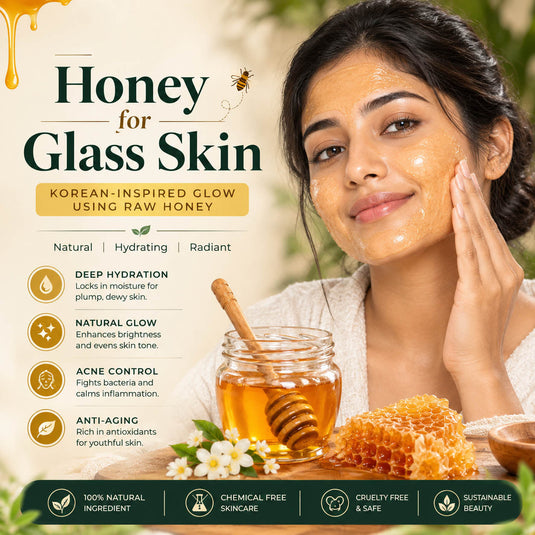
Honey for Glass Skin: Korean-Inspired Glow Using Raw Honey
Explore how raw honey can fit into a simple skincare routine focused on hydration, softness and natural radiance-without turning honey into a substitute for professional dermatological care.
Can Honey Be Part of a Glass Skin Routine?
The Korean beauty concept of glass skin describes a complexion that looks smooth, hydrated, fresh and naturally luminous. It is less about achieving perfect skin overnight and more about building consistent habits around cleansing, hydration, moisturising and skin comfort.
This is where honey becomes interesting. Honey is a naturally occurring ingredient that has long been used in traditional skincare and is also found in modern cosmetic formulations. Research has described honey's humectant, emollient and soothing properties in cosmetic contexts.
But not every honey is the same, and not every skin type reacts to every ingredient in the same way. In this guide, we look at raw honey for skin, simple honey face masks, hydration, Korean-inspired skincare and the evidence behind using honey responsibly as a cosmetic ingredient.
What Does “Glass Skin” Actually Mean?
Glass skin is a beauty term rather than a medical or dermatological diagnosis. It generally refers to skin that appears well hydrated, smooth, fresh and luminous.
A realistic glass skin routine therefore focuses on the fundamentals: gentle cleansing, adequate moisturisation, skin-friendly ingredients, sun protection and consistency.
A honey mask may complement such a routine, but it should not be viewed as a shortcut to perfect skin. Your natural skin type, environment, genetics, lifestyle and existing skincare routine all influence how your skin looks and feels.
For a deeper look at honey as a cosmetic ingredient, explore our guide to honey for skin .

Why Raw Honey Is Popular in Natural Skincare
Honey has a long history of traditional topical use and is also used as an ingredient in modern cosmetic formulations. In skincare, honey is commonly valued for its humectant and conditioning properties, which can help skin feel softer and more comfortably hydrated.
The experience can vary considerably depending on the honey itself, its floral source, processing, formulation and the individual's skin. That is why we prefer to talk about honey as a natural skincare ingredient rather than promise a particular cosmetic result.
01. Helps Support Skin Hydration
Honey is a humectant ingredient, meaning it can attract and hold moisture. In a simple skincare routine, this can leave the skin feeling soft, comfortable and moisturised.
02. A Natural Skincare Ingredient
Raw honey can be used as part of a simple, ingredient-conscious skincare routine. Its natural composition makes it interesting for people exploring traditional and botanical approaches to skincare.
03. Floral Source Matters
Honey is not one uniform ingredient. Its colour, aroma, flavour and composition can vary according to floral source, geography, season and processing.
A forest honey and a single-floral honey may therefore offer very different sensory experiences.
04. A Gentle, Minimal Approach
For people who prefer uncomplicated routines, honey can be explored as an occasional wash-off mask rather than as a replacement for a complete skincare routine.
Honey for Hydrated, Soft and Naturally Radiant Skin
The idea of glass skin is often associated with a smooth, hydrated and luminous-looking complexion. But honey skincare can be explored more broadly than the Korean beauty trend itself.
Depending on your routine and skin preferences, people may search for raw honey for skin, a honey face mask, honey for glowing skin, honey for hydration, natural skincare with honey or a simple honey skincare routine.
These phrases describe cosmetic and skincare interests rather than medical outcomes. Honey can be one ingredient within a broader routine that also includes gentle cleansing, moisturising and daily sun protection.

How to Use Honey in a Korean-Inspired Skincare Routine
A Korean-inspired routine is generally built around consistency rather than one miracle ingredient. If you want to experiment with honey, keep it simple and treat it as an occasional cosmetic step.
Begin With Gentle Cleansing
Start with a gentle cleanser suitable for your skin. The goal is to remove everyday dirt, excess oil and makeup without making your skin feel unnecessarily stripped or uncomfortable.
Use a Honey Mask Occasionally
Apply a thin layer of suitable honey to clean skin and leave it on for approximately 10–15 minutes before rinsing thoroughly with lukewarm water.
Do not leave a homemade honey mask on overnight simply because it is described online as an “overnight treatment.”
Follow With Moisturiser
After rinsing, use your normal moisturiser. This helps keep the routine focused on hydration and skin comfort rather than relying on honey alone.
Use Sun Protection During the Day
If your skincare routine is aimed at maintaining a healthy-looking complexion, daily broad-spectrum sunscreen is a more established part of daytime skincare than DIY masks.
Simple Honey Face Masks to Explore
Homemade masks should remain simple. Avoid combining too many active ingredients, especially if you are unsure how your skin responds to them.
Honey + Aloe Vera Face Mask
Combine approximately one teaspoon of honey with a small amount of plain aloe vera gel. Apply a thin layer to clean skin, leave for 10–15 minutes and rinse thoroughly.
This is best considered a simple hydration-focused cosmetic mask, not a treatment for acne, irritation or any skin condition.
Honey + Turmeric Face Mask
A small amount of turmeric can be combined with honey for a traditional, botanical-inspired face mask. Use only a very small quantity of turmeric, as it can temporarily colour the skin and may not suit everyone.
For more ideas around turmeric-based products, you can explore our guide to turmeric latte .
What Honey May Add to a Skincare Routine
- A naturally humectant ingredient for a moisturised skin feel
- A simple option for an occasional wash-off face mask
- A soft, conditioned feeling after rinsing
- An ingredient for minimalist and botanical skincare routines
- A way to explore traditional Indian honey varieties beyond food
- A complementary ingredient alongside a regular moisturising routine
These are cosmetic skincare considerations, not medical claims. Individual results vary, and honey should not be used as a substitute for treatment prescribed by a dermatologist.
Can Honey Be Used on Acne-Prone or Sensitive Skin?
Honey is sometimes included in DIY skincare routines for acne-prone or sensitive skin because of its traditional topical use and the properties studied in honey-based formulations. However, evidence for using ordinary food-grade honey to treat acne or other skin conditions is limited.
If you have acne, rosacea, eczema, dermatitis or persistently irritated skin, it is better to address the underlying condition according to professional dermatological advice rather than relying on a homemade honey mask.
For cosmetic experimentation, patch testing is a sensible precaution before applying any new ingredient to a larger area of skin.
The American Academy of Dermatology's guidance on testing skincare products recommends testing new products before adding them to a regular routine.
Raw Honey vs Processed Honey for Skincare
Not all honey is identical. Processing can affect the characteristics of honey, while floral source and geography can influence its colour, aroma, flavour and composition.
| Consideration | Raw / Minimally Processed Honey | Processed Honey |
|---|---|---|
| Processing | Generally undergoes less processing. | May undergo additional filtration or heating. |
| Appearance | Can vary naturally between batches. | May be more standardised in appearance. |
| Floral character | May retain distinctive source characteristics. | Characteristics can vary depending on processing and blending. |
| Skincare use | Neither should automatically be considered suitable for everyone. Always patch test before applying a new ingredient to your skin. | |
If you are interested in a minimally processed option, explore our unprocessed raw honey .
Our Approach to Honey Skincare
At Royal Bee Brothers, we believe that talking about honey responsibly begins with understanding where it comes from, how it is processed and what can-and cannot-reasonably be said about it.
Indian Honey Varieties
We work with different Indian honey varieties and pay attention to their floral sources, geographical origins, seasonal characteristics, colour, aroma and natural variation.
Raw & Unprocessed Honey
Where appropriate, we focus on raw or minimally processed honey and explain the difference between raw, filtered and processed honey so consumers can make more informed choices.
You can also explore our original forest honey .
Floral Sources Matter
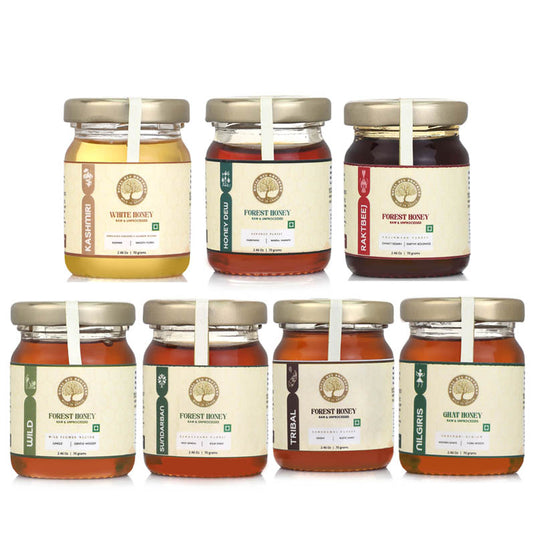
Honey from different floral sources is not identical. Forest, mustard, jamun, tulsi, wildflower and other honeys can differ in colour, aroma, flavour and texture.
We believe these differences deserve to be explained rather than hidden.
Transparency About Purity
We encourage consumers to look beyond viral home tests and understand how honey quality and authenticity are evaluated through appropriate laboratory and quality parameters.
Read our guide to honey purity and authenticity and our detailed honey testing guide .
Patch Test First
Natural does not automatically mean suitable for every person. Before applying honey or any new skincare ingredient to the face, we recommend testing a small area first and stopping use if irritation occurs.
Not a Medical Treatment
We present honey as a food and cosmetic skincare ingredient-not as a treatment for acne, eczema, pigmentation, infections, wounds or other medical conditions.
Persistent or concerning skin problems should be discussed with a qualified dermatologist.
Why the Honey's Floral Source Matters
One of the most interesting things about Indian honey is its diversity. Honey reflects the landscape in which bees forage, which means different regions and floral environments can produce distinctly different sensory characteristics.
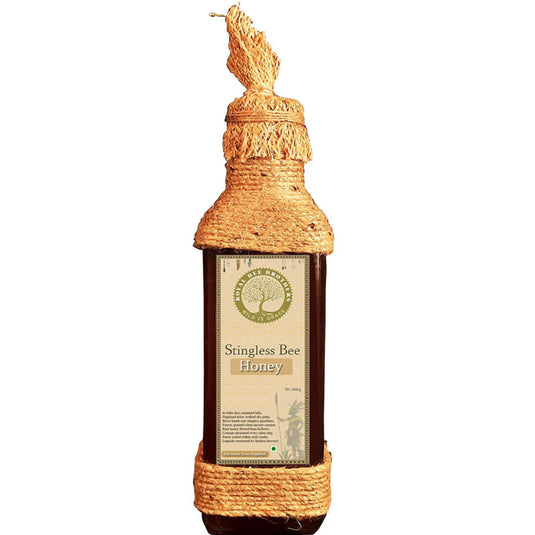
For example, Royal Bee Brothers works with honey sourced from different Indian landscapes and floral environments. Our Stingless Bee Honey from Nagaland offers a very different story from Sundarban Forest Honey .
Our Kashmiri White Honey represents another distinctive floral and geographical profile.
This diversity is one reason we prefer to talk about honey by its source, characteristics and story instead of treating all honey as one identical product.
Common Mistakes When Using Honey on the Face
- Leaving honey on overnight: A longer application is not automatically better. A short, wash-off mask is a more sensible approach for experimentation.
- Skipping a patch test: Natural ingredients can still trigger unwanted reactions.
- Using too many ingredients: Combining honey with several acids, essential oils or active ingredients can make it difficult to identify what your skin is reacting to.
- Using honey as a treatment: A homemade honey mask should not replace professional care for a skin condition.
- Ignoring honey quality: Understand the source, processing and authenticity of the honey you are using.
Our Purity Promise explains our approach to transparency across our natural product range.
Evidence & Sources
Honey has been studied in dermatology and topical care, but the strength of evidence varies considerably depending on the type of honey, formulation, intended use and clinical condition.
Research involving medical-grade honey, wound dressings or specific therapeutic formulations should not automatically be interpreted as evidence that ordinary food-grade honey used in a homemade face mask can treat a skin condition.
American Academy of Dermatology
Dermatology guidance on testing skincare products before regular use and reducing the risk of unwanted skin reactions.
How to Test Skin Care ProductsHoney in Dermatology and Skin Care
A peer-reviewed review examining historical, cosmetic and dermatological uses of honey, including its reported humectant, emollient and soothing properties in cosmetic formulations.
PubMed - Honey in Dermatology and Skin CareCochrane Review: Honey as a Topical Treatment
A systematic review evaluating honey in wound care and highlighting the differences in evidence quality across clinical applications.
PubMed - Honey as a Topical Treatment for WoundsAmerican Academy of Dermatology - Patch Testing
Dermatology guidance explaining how patch testing can help identify substances responsible for allergic skin reactions.
AAD - Patch TestingExplore Honey, Purity & Indian Forests
If you would like to explore the story behind Indian honey in greater depth, these guides and products provide useful context.
Frequently Asked Questions About Honey for Glass Skin
Can honey give you glass skin?
Honey cannot guarantee glass skin. It can be used as a cosmetic skincare ingredient in a routine focused on hydration and skin comfort, but overall skin appearance depends on many factors.
Is raw honey good for skin?
Raw honey is used in some natural skincare routines and is studied for properties such as humectant and emollient effects. Individual skin responses vary, so patch testing is recommended.
How long should I leave honey on my face?
If you choose to use honey as a wash-off mask, approximately 10–15 minutes is a reasonable simple approach. There is no need to leave a homemade honey mask on overnight.
Can I use honey on acne-prone skin?
Honey should not be presented as an acne treatment. If you want to experiment with it cosmetically, patch test first. Persistent acne or irritated skin should be discussed with a qualified dermatologist.
Can honey hydrate the skin?
Honey has humectant properties and is used in cosmetic formulations intended to support a moisturised skin feel. It should be considered one ingredient within a broader skincare routine.
Is honey a medical treatment for skin problems?
No. Royal Bee Brothers does not position ordinary food-grade honey as a medical treatment for acne, eczema, infections, wounds or other skin conditions.
Why does honey colour and texture vary?
Honey naturally varies according to floral source, geography, season, harvesting conditions and processing. This is why different Indian honey varieties can look and taste very different.
Should I patch test honey before using it on my face?
Yes. A patch test is a sensible precaution before introducing a new skincare ingredient, especially if your skin is sensitive or reactive.
From Forest Flowers to Golden Honey
Honey is more than a sweet ingredient. Its story begins with flowers, landscapes, bees, seasons and the communities connected to them. Discover the diversity of Indian forest honey and learn how floral sources shape colour, aroma, flavour and character.
Explore the Forest Honey Guide