```html
Processed vs Unprocessed Raw Honey: What Is the Difference?
Discover how filtration, heating, extraction and bottling can change honey's appearance, texture, aroma and natural characteristics — and what to look for when choosing quality raw honey.
Honey may look like a simple food, but the journey from hive or forest to jar can involve several steps. If you are comparing processed vs unprocessed raw honey, understanding filtration, heating, crystallisation, floral origin and traceability can help you make a more informed choice.
It is also important to understand that "processed" does not automatically mean adulterated, and "raw" does not automatically prove purity. The processing method, sourcing practices and quality controls all matter.
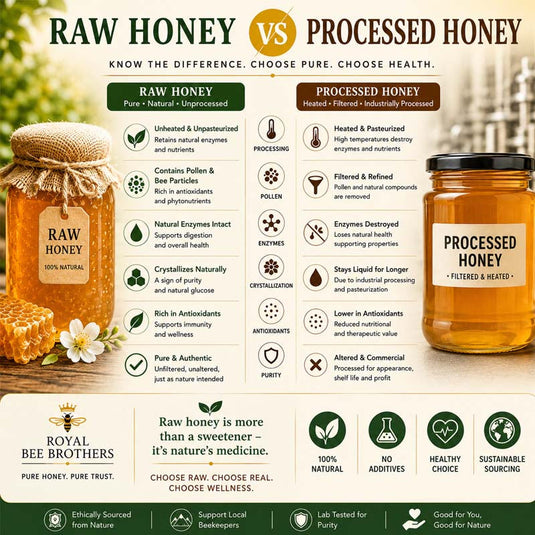
Processed vs Unprocessed Raw Honey at a Glance
| Feature | Processed Honey | Unprocessed / Minimally Processed Raw Honey |
|---|---|---|
| Filtration | May involve finer filtration. | Usually strained or coarsely filtered. |
| Heating | May be warmed during processing. | Generally handled with minimal heating. |
| Appearance | Often clearer and more uniform. | Can be cloudy or naturally variable. |
| Crystallisation | Processing and filtration can influence crystallisation behaviour. | Natural crystallisation is common in many varieties. |
| Aroma & flavour | Can be more consistent between batches. | May retain more distinctive floral characteristics. |
| Natural particles | More extensive filtration can remove fine particles. | More likely to retain naturally occurring fine particles. |
What Is Processed Honey?
Processed honey is honey that has undergone additional handling after extraction to achieve a particular appearance, consistency, texture or shelf presentation. Commercial processing can include settling, filtration, warming and blending.
Freshly harvested honey can contain wax particles and other naturally occurring material. Processing may remove these particles and produce a smoother, clearer-looking product.
What Is Unprocessed or Minimally Processed Raw Honey?
Unprocessed or minimally processed raw honey generally undergoes fewer interventions after harvesting. Depending on the producer, honey may be allowed to settle and then passed through a coarse strainer to remove larger wax particles before bottling.
The term raw honey can be used differently by different producers, so consumers should look beyond the label. Ask how the honey was extracted, filtered, warmed and bottled.
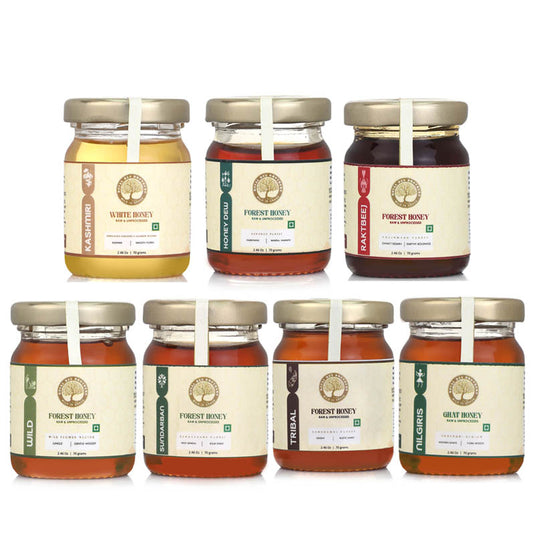
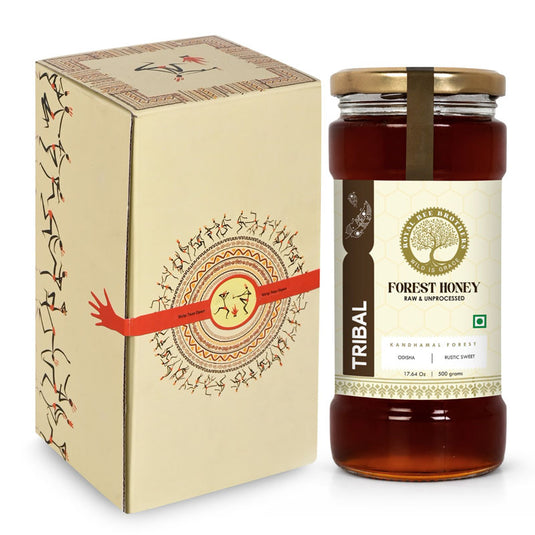
For shoppers interested in distinctive regional varieties, exploring wild forest honey from India can also help explain why colour, aroma and flavour vary so much between different honey sources.
How Honey Is Processed After Harvest
Extraction
Honey is removed from combs or harvested from natural colonies depending on the production system.
Straining
Larger particles such as pieces of wax can be removed through basic straining.
Filtration
Finer filtration can create a clearer and more uniform-looking honey.
Heating and Warming
Honey becomes less viscous when warmed, which can make pumping, filtration and bottling easier. Commercial honey may therefore undergo controlled warming during processing.
Temperature and duration matter because excessive heat can affect certain heat-sensitive characteristics of honey. This is why responsible producers should be transparent about their processing practices rather than relying only on the word "raw."
Blending
Commercial honey may be blended from different floral sources or batches to achieve a more consistent flavour, colour or texture.
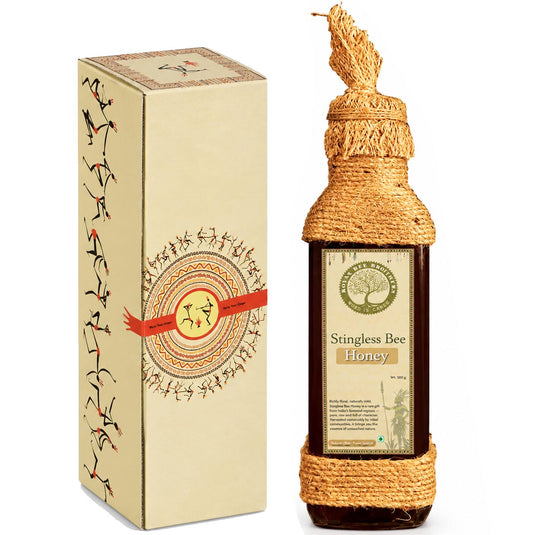
By contrast, single-origin honey may be marketed around its specific geographical or floral identity. If you are exploring different varieties, our guide to Stingless Bee Honey from Nagaland provides an example of how a distinctive regional honey can have its own characteristic sensory profile.
Does Processing Change Honey's Natural Composition?
Honey is primarily made up of naturally occurring sugars and water, along with smaller quantities of organic acids, minerals, enzymes, phenolic compounds and other substances. Its composition varies according to floral source, geography, season and other factors.
Processing, particularly excessive heating, can affect some heat-sensitive characteristics. However, it would be inaccurate to claim that every processed honey has dramatically fewer nutrients or that every raw honey has a superior nutritional profile.
Raw Does Not Automatically Mean Pure
The word "raw" describes a style of handling, not a complete laboratory authentication report. Colour, thickness, aroma and crystallisation can all provide useful sensory information, but none of them independently proves honey purity.
For a deeper look at authenticity and quality testing, explore the honey purity and testing guide before relying on home appearance tests alone.
Why Does Raw Honey Crystallise?
Crystallisation is one of the most misunderstood characteristics of honey. Genuine honey can naturally crystallise because it is a supersaturated solution of sugars.
The speed and texture of crystallisation depend on factors such as the glucose-to-fructose ratio, moisture content, floral source, storage temperature and the presence of microscopic particles that can provide sites for crystal formation.
Some honeys crystallise quickly, while others remain liquid for a long time. Therefore, crystallised honey is not automatically spoiled or adulterated, and liquid honey is not automatically proof of superior quality.
Is Clear Honey Better Than Cloudy Honey?
Not necessarily.
A very clear appearance can result from more extensive filtration, while minimally processed honey may retain fine naturally occurring particles that make it look cloudy.
Appearance is therefore only one sensory characteristic. For a broader understanding of honey quality, read our detailed Honey Purity Promise and look for transparent information about sourcing, testing and handling.
How to Choose Good Quality Raw Honey
1. Look at the Source
Look for information about the geographical or floral origin of the honey. A clearly identified source provides more context than a generic "natural honey" claim.
2. Understand the Processing
Find out whether the honey is strained, filtered, warmed or blended. Transparent processing information helps you understand what a producer means by "raw" or "minimally processed."
3. Look for Traceability
Batch information, sourcing details and appropriate quality documentation can provide useful evidence about how a honey product reaches the consumer.
4. Do Not Judge Purity by Thickness
Honey viscosity changes with temperature, moisture content and floral origin. Thick honey is not automatically pure, and thinner honey is not automatically adulterated.
Our detailed guide on everything you need to know about honey explains several of the physical and quality characteristics consumers commonly associate with honey.
5. Do Not Fear Natural Crystallisation
Crystallisation is a natural characteristic of many genuine honeys. If you prefer liquid honey, it can generally be gently warmed under controlled conditions rather than overheated.
Processed Honey vs Raw Honey: Taste and Aroma
One of the most noticeable differences between honey varieties is sensory character.
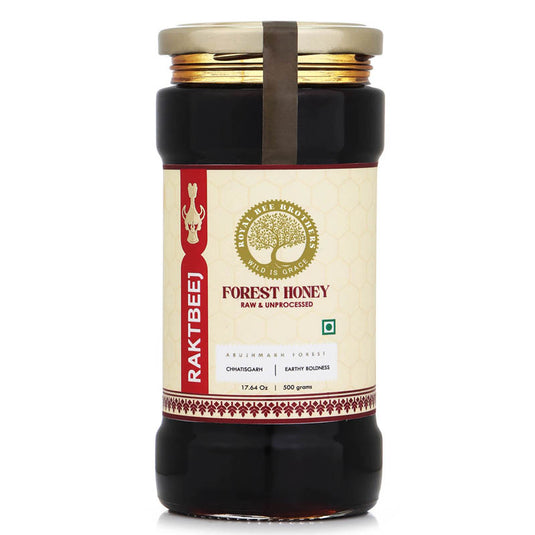
Honey from different flowers can have remarkably different flavour profiles. Forest honey may have deeper, earthy or caramel-like notes, while floral honeys can be lighter and more aromatic.
Stingless bee honey can have a distinctive sweet-and-sour profile compared with conventional honey. This makes Nagaland Stingless Bee Honey an interesting example of how bee species, geography and floral environment can contribute to a honey's identity.
What About "Unfiltered" Honey?
"Unfiltered" can mean different things depending on the producer. Some unfiltered honey may still be strained to remove larger wax particles, while other products may undergo very little physical processing.
Therefore, it is useful to ask a simple question: How is the honey extracted, filtered, heated and bottled?
The answer can tell you more about the product than a single front-label claim.
Processed vs Unprocessed Raw Honey: What Really Matters?
The comparison should not simply be reduced to "processed equals bad" and "raw equals good." Honey naturally requires some degree of handling between harvesting and consumption.
- Where did the honey come from?
- What floral source does it represent?
- How was it harvested?
- How much filtration was used?
- Was it warmed, and under what conditions?
- Is the honey traceable?
- Does the producer provide appropriate quality information?
- Is the product labelled accurately?
Explore More Honey Knowledge
Curious about how honey reaches your kitchen? Read how wild forest honey is harvested in India and discover how geography, season and traditional harvesting influence different honey varieties.
Frequently Asked Questions
Is raw honey healthier than processed honey?
Raw and processed honey can differ in processing and composition, but it is not accurate to assume that raw honey is automatically healthier. Honey is primarily a sugar-containing food, and differences depend on source and processing conditions.
Does processed honey contain added sugar?
Not necessarily. Processing describes how honey is handled after harvesting. It does not by itself mean that sugar or syrup has been added. Authenticity and processing are separate questions.
Does raw honey always crystallise?
No. Some raw honeys crystallise quickly, while others remain liquid for long periods. Floral source, sugar composition, moisture and storage conditions all influence crystallisation.
Is cloudy honey better than clear honey?
Cloudiness can occur because honey retains naturally occurring fine particles. However, appearance alone cannot establish quality or purity.
Does heating honey destroy everything beneficial?
That is an oversimplification. Heat can affect some heat-sensitive components, but the degree of change depends on temperature, duration and the particular honey. Specific processing conditions matter.
How should raw honey be stored?
Keep honey tightly closed in a clean, dry container away from excessive heat and moisture. Normal room-temperature storage is generally suitable.
The Bottom Line
The difference between processed vs unprocessed raw honey largely comes down to what happens between harvesting and the final jar.
Processed honey may undergo more extensive filtration, warming and blending to create a clear and consistent product. Minimally processed raw honey generally undergoes fewer interventions and may retain more of its original appearance, aroma, texture and natural tendency to crystallise.
Neither colour nor thickness nor crystallisation alone proves honey quality. Instead, focus on traceable origin, transparent processing, responsible sourcing, appropriate quality testing and accurate labelling.
Discover Honey in Its Natural Variety
Explore distinctive Indian honey varieties sourced from different landscapes, floral environments and traditional honey-producing communities.
Explore Royal Bee Brothers```