Honey Extraction Methods: Traditional and Modern Techniques That Preserve Nature's Liquid Gold
From ancient forest honey hunters climbing towering trees to modern stainless-steel extractors preserving every drop of raw honey, discover the fascinating journey of honey extraction. Learn how traditional wisdom and modern science work together to protect bees, preserve purity, and deliver premium honey from the hive to your table.
Table of Contents
- Introduction
- A Story Behind Every Drop
- What is Honey Extraction?
- Journey from Hive to Jar
- Traditional Honey Extraction Methods
- Modern Honey Extraction Techniques
- Traditional vs Modern Comparison
- Equipment Used in Honey Extraction
- How Honey Quality is Preserved
- Wild Forest Honey Harvesting
- Indian Tribal Honey Traditions
- Common Extraction Mistakes
- Future of Sustainable Honey Harvesting
- Frequently Asked Questions
- Conclusion
Honey Extraction Methods: More Than Just Harvesting Honey
Every jar of pure honey begins with millions of tiny journeys made by hardworking bees. A single worker bee may visit thousands of flowers during its lifetime, collecting tiny droplets of nectar that are transformed inside the hive into one of nature's most remarkable foods. Yet the story of honey does not end when bees seal the honeycomb. It continues through the careful process known as honey extraction—the art and science of removing mature honey while preserving its purity, nutritional value, aroma, and natural character.
Today, consumers are more informed than ever before. They don't simply ask whether honey tastes sweet—they want to know where it came from, how it was harvested, whether it was heated, how it was filtered, and whether bees were treated responsibly during the harvesting process. These questions have made honey extraction methods one of the most important topics in modern beekeeping and premium honey production.
From ancient tribal honey hunters climbing 80-foot forest trees using handmade ropes to modern beekeepers operating stainless-steel centrifugal extractors in hygienic processing rooms, honey extraction has evolved dramatically over thousands of years. While equipment has changed, one principle has remained constant:
At Royal Bee Brothers, we believe that every drop of honey carries the story of blooming forests, hardworking bees, experienced honey collectors, ethical beekeepers, and generations of traditional knowledge. Whether the honey comes from Himalayan valleys, dense Central Indian forests, mustard fields, eucalyptus plantations, or wild cliff colonies, the extraction process determines whether those natural qualities remain intact inside the final jar.
In this comprehensive guide, you'll discover traditional honey extraction methods, modern commercial techniques, sustainable forest harvesting practices, quality preservation methods, common mistakes to avoid, and the fascinating journey that transforms floral nectar into nature's liquid gold.
A Story Behind Every Drop of Honey
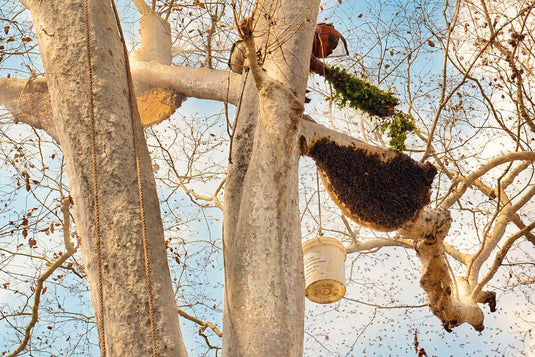
The forest was still wrapped in darkness when the first honey hunters began their journey. The air carried the earthy fragrance of damp leaves, flowering trees, and wild herbs after the previous night's rain. As dawn slowly painted the eastern sky golden, birds welcomed the new day while distant streams echoed softly through the valley.
For generations, indigenous honey collectors have followed nearly the same path through these forests. There are no signboards, GPS devices, or marked trails. Instead, they navigate using ancient knowledge—recognizing particular trees, reading the flight patterns of bees, and understanding the changing rhythms of the seasons.
After walking for several hours, the group stopped beneath a towering tree where thousands of wild bees had built enormous honeycombs hanging gracefully from thick branches. Before anyone climbed upward, the eldest member quietly touched the trunk and offered a simple prayer of gratitude.
🌿 A Tradition of Respect
Many forest-dwelling communities in India believe honey is a sacred gift rather than a resource to be exploited. Before every harvesting season, they express gratitude to nature, promising to take only what is needed and leave enough honey and brood for the bees to rebuild their colony.
Smoke from dried forest leaves was carefully directed beneath the hive—not to harm the bees, but to encourage them to move safely away from the honeycomb. Skilled climbers slowly reached the hive using ropes made from natural fibers. With remarkable precision, they removed only the mature honey-filled sections while leaving the brood comb untouched.
Within weeks, the colony would rebuild naturally, continuing the cycle that had existed long before humans ever discovered honey.
This philosophy of harvesting with care continues to inspire ethical honey producers around the world. Modern extraction equipment may improve hygiene and efficiency, but true quality still begins with respect for bees, forests, and biodiversity.
What is Honey Extraction?
Honey extraction is the process of removing ripe honey from honeycomb while preserving its natural quality and minimizing damage to the comb or bee colony. It represents one of the most important stages in honey production because even the highest-quality nectar can lose its unique characteristics if harvested or processed incorrectly.
Unlike many processed foods, honey requires very little human intervention. Bees themselves perform nearly all of the complex work. They gather nectar, add natural enzymes, evaporate excess moisture, and seal mature honey inside beeswax cells. The beekeeper's responsibility is simply to harvest this finished product carefully and hygienically.
🐝 Preserve Natural Enzymes
Gentle extraction methods help maintain valuable naturally occurring enzymes that contribute to honey's freshness and authenticity.
💧 Control Moisture
Proper harvesting ensures moisture remains within acceptable limits, reducing the possibility of fermentation.
🌼 Protect Floral Aroma
Minimal processing preserves the distinctive aroma and flavor developed from each flower source.
🍯 Maintain Purity
Clean equipment and careful filtration remove natural debris without unnecessarily stripping honey of its beneficial components.
The extraction method also determines whether bees can reuse their honeycomb. Modern centrifugal extraction allows intact combs to be returned to the hive, saving colonies significant time and energy that would otherwise be spent rebuilding wax structures.
The Incredible Journey from Hive to Jar
To truly appreciate honey extraction methods, it's important to understand what happens long before harvesting begins. Every spoonful of honey represents weeks of continuous work performed by tens of thousands of bees working together with astonishing efficiency.
Step 1 – Collecting Floral Nectar
Worker bees travel several kilometers searching for blooming flowers. Depending on the season, nectar may come from mustard blossoms, eucalyptus trees, litchi orchards, acacia forests, Himalayan wildflowers, jamun trees, or countless other flowering plants. During a single foraging trip, one bee may visit hundreds of flowers before returning to the hive.
Step 2 – Nature's Transformation
Inside the hive, nectar is passed from one worker bee to another. Natural enzymes begin breaking down complex sugars while thousands of bees fan their wings continuously to evaporate excess moisture. Gradually, watery nectar transforms into thick, stable honey capable of remaining fresh for years.
Step 3 – Capping the Honeycomb
Once moisture reaches approximately 17–20%, bees seal each honey-filled cell with a thin layer of fresh beeswax. This wax cap is nature's own quality certificate, indicating that the honey has matured and is ready for long-term storage.
Did You Know?
Professional beekeepers generally wait until at least 80–90% of a honey frame is capped before harvesting. Extracting uncapped honey often results in higher moisture content, increasing the risk of fermentation and reducing shelf life.
Step 4 – Responsible Harvesting
Only surplus honey is collected. Ethical beekeepers always leave sufficient honey for the bees themselves, particularly before winter or during periods when flowers become scarce. Sustainable harvesting ensures colonies remain healthy and productive throughout the year.
Step 5 – Honey Extraction
Depending on the type of beekeeping, honey may be extracted using traditional crushing, gravity filtration, mechanical pressing, centrifugal extraction, or other specialized methods. Each technique offers different advantages depending on the bee species, production scale, and desired quality.
Step 6 – Gentle Filtration and Settling
Freshly extracted honey naturally contains tiny wax particles, air bubbles, and traces of pollen. Gentle filtration removes visible impurities while preserving honey's natural composition. The honey is then allowed to rest in settling tanks, where remaining bubbles rise to the surface before bottling.
Step 7 – Bottling Nature's Liquid Gold
Finally, the honey is packed into clean, food-grade containers under hygienic conditions. When handled with care and stored correctly, pure honey retains its remarkable flavor, aroma, and natural properties for an exceptionally long time.
Every Jar Tells a Story
Behind every bottle of Royal Bee Brothers honey lies an extraordinary journey—from flowering forests and hardworking bees to ethical harvesting, careful extraction, and responsible quality control. Our commitment is not simply to collect honey, but to preserve the authenticity that nature created.
Traditional Honey Extraction Methods: Ancient Wisdom That Still Inspires Modern Beekeeping
Long before stainless-steel extractors, electric uncapping machines, or food-grade processing facilities existed, honey was harvested using simple tools, patience, and an intimate understanding of nature. Across Asia, Africa, Europe, and South America, communities developed unique honey extraction methods that reflected their local landscapes, bee species, and cultural traditions.
Although modern commercial beekeeping now prioritizes efficiency and hygiene, many traditional techniques continue to influence sustainable honey harvesting today. These methods remind us that successful honey extraction depends not only on equipment but also on timing, respect for bees, and careful observation of natural cycles.
🌿 Traditional Knowledge Meets Modern Science
Many sustainable beekeeping principles promoted today—such as harvesting only mature honey, protecting brood comb, minimizing stress to bee colonies, and leaving enough honey for bees—have been practiced by indigenous communities for centuries.
1. Traditional Crushing Method
The traditional crushing method is one of the oldest honey extraction techniques known to humanity. Archaeological evidence suggests that people have harvested honey using this approach for thousands of years.
Instead of preserving the honeycomb, collectors carefully remove the mature comb from the hive and gently crush it by hand or using wooden tools. The mixture of honey and wax is then placed inside a clean cotton cloth or fine mesh, allowing gravity to separate liquid honey from pieces of beeswax.
Although simple, this method requires considerable patience. Depending on the temperature and viscosity of the honey, filtration may take several hours before the honey becomes clear enough for storage.
How the Crushing Method Works
- Locate mature honeycomb with capped cells.
- Remove the comb carefully from the hive.
- Break the comb into smaller pieces.
- Gently crush the honeycomb.
- Filter using cotton cloth or food-grade mesh.
- Allow honey to settle naturally.
- Bottle after impurities rise to the surface.
Advantages
- Simple and inexpensive.
- No specialized machinery required.
- Suitable for remote forest communities.
- Preserves natural flavor.
- Excellent for small-scale beekeeping.
Limitations
- Honeycomb cannot be reused.
- Bees must rebuild wax structures.
- Lower extraction efficiency.
- More wax particles require filtration.
Even today, many rural beekeepers continue using this method because it requires minimal investment while producing exceptionally natural honey. Artisan honey producers often choose crushing for specialty batches where authenticity is valued more than production speed.
A Morning Inside a Traditional Honey Harvest
Imagine standing beneath a flowering neem tree as the morning sun filters through its branches. The air carries the sweet fragrance of blossoms while bees move calmly between flowers and their hive.
The beekeeper approaches quietly, avoiding sudden movements. Instead of rushing, they spend several minutes observing the colony. Are the bees calm? Is most of the honeycomb capped? Is the weather suitable for harvesting?
Only after confirming these conditions does harvesting begin.
Using a sharp knife, sections filled with mature honey are carefully removed while leaving brood comb untouched. The harvested comb is carried to a clean workspace where the golden cells are gently crushed. Thick streams of fragrant honey slowly begin flowing through layers of cotton cloth.
No pumps. No motors. No electricity. Only gravity, patience, and generations of experience.
This quiet process beautifully illustrates humanity's earliest relationship with honey—one built on respect rather than speed.
2. Centrifugal Honey Extraction
As commercial beekeeping expanded during the nineteenth century, beekeepers searched for ways to harvest larger quantities of honey without destroying valuable honeycomb.
The invention of the centrifugal honey extractor transformed the industry forever. Instead of crushing the comb, entire wooden frames containing capped honey are placed inside a rotating stainless-steel drum. As the drum spins, centrifugal force pulls honey from the cells while leaving the wax comb almost completely intact.
Once emptied, the frames are returned to the hive, allowing bees to refill them immediately. This innovation saves colonies enormous amounts of energy because producing beeswax requires significant quantities of honey.
Did You Know?
Bees consume approximately 6–8 kilograms of honey to produce just 1 kilogram of beeswax. By reusing intact honeycomb, centrifugal extraction helps bees focus on collecting nectar instead of rebuilding wax structures.
How Centrifugal Extraction Works
- Remove mature honey frames.
- Brush remaining bees safely from the frames.
- Transport frames to a hygienic extraction room.
- Remove wax caps using an uncapping knife or fork.
- Place frames inside the extractor.
- Spin gradually to remove honey.
- Reverse frames if required.
- Filter extracted honey.
- Transfer honey to settling tanks.
- Return empty comb to the hive.
Benefits
- High extraction efficiency.
- Honeycomb remains reusable.
- Reduced workload for bees.
- Improved hygiene.
- Ideal for commercial beekeeping.
- Consistent honey quality.
Possible Challenges
- Higher equipment investment.
- Requires electricity (for electric models).
- Needs regular cleaning and maintenance.
- Operators require proper training.
Today, centrifugal extraction has become the global standard for commercial honey production because it combines speed, efficiency, sustainability, and food safety. From small family apiaries with manual extractors to industrial processing plants handling thousands of frames daily, the same basic principle remains unchanged.
Why Extraction Method Matters
Two jars of honey may look nearly identical on a supermarket shelf, yet their journey from hive to bottle can be dramatically different. Ethical harvesting, careful extraction, minimal processing, and respect for bees all contribute to preserving the authentic flavor, aroma, enzymes, and natural qualities that make premium honey truly exceptional.
Modern Honey Extraction Methods: Preserving Nature with Science
As consumer awareness has grown, the honey industry has evolved beyond simply extracting honey quickly. Modern beekeepers and premium honey brands now focus on preserving the natural characteristics that make each variety of honey unique. Factors such as enzyme activity, floral aroma, pollen content, moisture level, color, and antioxidant compounds all influence the final quality of honey.
Today's extraction techniques combine traditional knowledge with scientific precision. Stainless-steel equipment, hygienic processing rooms, moisture monitoring, food-grade filtration systems, and controlled temperatures help ensure that every jar of honey reaches consumers in its purest possible form.
Among these modern techniques, cold honey extraction has become one of the most respected methods for producing premium raw honey because it prioritizes quality over speed.
3. Cold Honey Extraction Method
Cold honey extraction is not a completely different way of removing honey from the comb. Instead, it refers to an extraction and processing philosophy where honey is handled with minimal heat throughout the entire journey from hive to bottle.
Unlike highly processed commercial honey that may be heated aggressively to improve flow and speed up bottling, cold extraction aims to preserve the natural enzymes, delicate floral aromas, antioxidants, pollen, and beneficial compounds naturally present in mature honey.
Because honey naturally becomes thicker at lower temperatures, cold extraction requires greater patience. Processing may take longer, but many honey lovers believe the improved flavor and authenticity are well worth the extra effort.
🍯 What Makes Cold Extraction Different?
The goal is simple: allow honey to remain as close to its natural state as possible. Instead of exposing honey to unnecessary high temperatures, producers use gentle handling, slow filtration, and carefully controlled processing conditions to preserve nature's original masterpiece.
Step-by-Step Cold Honey Extraction Process
- Harvest only fully capped honeycomb.
- Transport frames carefully to a clean extraction room.
- Remove wax cappings using uncapping tools.
- Extract honey with minimal mechanical stress.
- Avoid unnecessary heating during extraction.
- Filter gently through food-grade mesh.
- Allow honey to settle naturally inside stainless-steel tanks.
- Bottle without excessive processing.
Why Premium Honey Brands Prefer Cold Extraction
Every floral source produces a unique combination of sugars, enzymes, aromatic compounds, minerals, vitamins, amino acids, and antioxidants. Excessive heating can alter many of these naturally occurring characteristics.
Cold extraction helps preserve the distinctive personality of each honey variety. Whether it is the light floral sweetness of acacia honey, the rich caramel notes of wild forest honey, or the fruity aroma of litchi honey, gentle processing allows consumers to experience flavors that closely resemble honey fresh from the hive.
🌼 Better Floral Aroma
Natural volatile compounds responsible for honey's fragrance remain better preserved when excessive heating is avoided.
🧬 Enzyme Protection
Important naturally occurring enzymes such as diastase and invertase are less affected by gentle processing methods.
🌾 Natural Pollen
Minimal filtration allows much of the naturally occurring pollen to remain in the honey.
🍯 Authentic Taste
Consumers enjoy honey that more closely reflects the original nectar collected by bees.
A Story from the Extraction Room
Inside a modern honey processing facility, everything appears calm. Stainless-steel tanks shine under bright lights while freshly extracted honey flows slowly through fine filters.
A visitor might wonder why the technicians aren't heating the honey to make it flow faster.
The answer is simple.
Quality cannot be rushed.
Experienced honey processors understand that every batch is unique. A Himalayan wildflower honey behaves differently from eucalyptus honey. A thick forest honey flows differently from delicate acacia honey.
Rather than forcing honey through the process, skilled technicians patiently allow gravity and time to do much of the work. They monitor moisture, cleanliness, filtration, and storage conditions while preserving the honey's natural integrity.
This careful attention is often invisible to consumers, yet it makes an enormous difference inside every bottle.
Advantages of Cold Honey Extraction
- Excellent preservation of natural flavor.
- Minimal damage to naturally occurring enzymes.
- Better retention of antioxidants.
- Maintains authentic floral characteristics.
- Appeals to consumers seeking minimally processed honey.
- Suitable for premium and artisanal honey brands.
- Supports high-quality raw honey production.
Challenges of Cold Extraction
- Slower processing speed.
- Honey flows more slowly during filtration.
- Requires experienced handling.
- Higher production costs.
- May crystallize sooner because natural glucose remains unchanged.
Did You Know?
Natural crystallization is a sign of authenticity rather than spoilage. Many cold-extracted raw honeys crystallize over time because they retain their natural glucose balance. The speed of crystallization depends on the floral source, storage temperature, and natural sugar composition.
Cold Extraction and Honey Quality Testing
Premium honey producers often verify the quality of cold-extracted honey through laboratory analysis. Parameters such as moisture content, diastase activity, HMF (Hydroxymethylfurfural), electrical conductivity, pollen profile, and sugar composition help ensure that the honey maintains its natural characteristics while meeting food safety standards.
These quality checks provide confidence that consumers receive genuine honey that has been responsibly harvested and carefully processed.
Gentle Processing Preserves Nature's Original Recipe
Cold extraction is more than a production method—it is a commitment to preserving the remarkable work already completed by millions of honey bees. By minimizing unnecessary processing, premium honey producers allow consumers to experience honey as nature intended: rich in aroma, authentic in flavor, and full of the character created by flowers, forests, and hardworking bees.
4. Gravity Honey Extraction Method
Among all honey extraction methods, gravity extraction is perhaps the gentlest. As the name suggests, this method relies entirely on gravity to separate honey from the honeycomb without applying centrifugal force, hydraulic pressure, or excessive heat.
Although slower than commercial extraction methods, gravity extraction has earned tremendous respect among artisan beekeepers and premium honey producers because it places minimal stress on the honey itself. The process allows honey to flow naturally, preserving its texture, aroma, and delicate floral compounds.
For centuries, gravity has been nature's own extractor. Long before stainless-steel machinery became available, honey collectors suspended crushed honeycomb inside woven baskets or cotton cloth and patiently waited for the golden liquid to drip into earthen pots below.
Nature Works Best When It Isn't Rushed
Gravity extraction demonstrates an important principle: sometimes the best processing method is the one that interferes the least. Instead of forcing honey out of the comb, it is allowed to flow naturally under its own weight.
How Gravity Extraction Works
- Harvest mature honeycomb.
- Cut the comb into manageable sections.
- Place the comb inside a food-grade mesh or stainless-steel sieve.
- Position a clean collection vessel beneath the filter.
- Allow gravity to slowly drain the honey.
- Wait several hours—or even a full day—for complete extraction.
- Transfer the honey to settling tanks before bottling.
Why Artisan Honey Producers Appreciate Gravity Extraction
Unlike mechanical extractors that depend on rotational force, gravity extraction minimizes agitation. This gentle approach helps maintain the honey's natural viscosity and reduces the incorporation of air bubbles, which can affect appearance during bottling.
Because the process is slow, honey has more time to separate naturally from tiny wax particles. After settling, the honey develops remarkable clarity while retaining much of its original character.
🍯 Gentle Processing
Honey experiences almost no mechanical stress during extraction, helping preserve its natural texture.
🌼 Rich Aroma
The floral fragrance remains remarkably close to freshly harvested honeycomb.
🌿 Ideal for Small Batches
Perfect for artisan producers focusing on quality rather than production volume.
⏳ Slow but Rewarding
The process may take many hours, but the resulting honey often reflects exceptional craftsmanship.
A Lesson in Patience
Imagine visiting a small mountain apiary during harvest season. Instead of hearing the sound of electric motors, you hear birds singing outside while thick amber honey slowly drips from freshly cut honeycomb into a polished stainless-steel container.
Each drop falls silently.
There is no urgency. No rushing. No shortcuts. Only patience.
The beekeeper smiles and says, "The bees spent weeks making this honey. We can certainly wait one more day to harvest it properly."
That simple philosophy reflects why many consumers continue choosing minimally processed honey despite the availability of faster industrial alternatives.
Advantages of Gravity Extraction
- Extremely gentle on honey.
- No heat required.
- Low equipment cost.
- Excellent flavor retention.
- Suitable for premium artisan honey.
- Simple to perform on a small scale.
Limitations
- Very slow process.
- Not practical for large commercial production.
- Lower extraction efficiency.
- Requires additional settling time.
Traditional vs Modern Honey Extraction Methods
Each honey extraction method has its own strengths. The ideal choice depends on the scale of production, bee species, equipment availability, sustainability goals, and the desired characteristics of the final honey.
| Extraction Method | Heat Used | Comb Reusable | Processing Speed | Best For | Quality |
|---|---|---|---|---|---|
| Traditional Crushing | No | ❌ No | Slow | Village Beekeeping | ★★★★☆ |
| Centrifugal Extraction | No | ✅ Yes | Fast | Commercial Apiaries | ★★★★★ |
| Cold Extraction | Minimal | ✅ Yes | Moderate | Premium Raw Honey | ★★★★★ |
| Gravity Extraction | No | Usually No | Very Slow | Artisan Honey | ★★★★★ |
Which Honey Extraction Method is Best?
There is no single "best" extraction method for every situation. Large commercial apiaries benefit from centrifugal extractors because they preserve reusable combs and improve efficiency. Small-scale producers may prefer gravity or cold extraction to emphasize craftsmanship and natural quality. Traditional forest honey collectors continue using time-tested methods suited to wild bee colonies, proving that sustainability often depends more on harvesting ethics than on machinery.
Regardless of the technique, the finest honey always shares certain qualities—it is harvested only after the honeycomb has matured, processed hygienically, handled with care, and bottled with minimal unnecessary intervention.
Coming Next: From Honeycomb to Bottle
In the next section, we'll explore the equipment used in modern honey extraction, the complete step-by-step extraction workflow, filtration methods, quality testing, moisture control, sustainable harvesting practices, and how Royal Bee Brothers preserves the purity of every jar of honey.
Equipment Used in Modern Honey Extraction
Behind every jar of premium honey lies a carefully designed extraction process supported by specialized equipment. While bees perform the remarkable task of transforming nectar into honey, modern beekeepers rely on hygienic food-grade tools to ensure that the honey reaches consumers without contamination or unnecessary processing.
Today's honey extraction equipment is designed with two primary objectives:
- Preserve the natural quality of honey.
- Protect the health and productivity of bee colonies.
Unlike heavily processed foods that pass through multiple industrial stages, honey requires only a few carefully controlled steps. Each piece of equipment plays an important role in maintaining cleanliness, minimizing waste, and preserving the honey's natural enzymes, floral aroma, and nutritional profile.
🍯 Quality Begins with Clean Equipment
Professional honey producers use food-grade stainless steel because it is non-reactive, corrosion-resistant, easy to sanitize, and does not alter the natural taste or composition of honey.
1. Bee Brush
Before honey extraction begins, bees must be safely removed from the honey frames. A soft bee brush gently encourages worker bees to return to the hive without causing injury.
Experienced beekeepers avoid sudden movements during this process. Calm handling minimizes stress on the colony and reduces defensive behavior, creating a safer environment for both bees and humans.
Purpose
Safely remove bees from honey frames before transport to the extraction room.
Material
Soft synthetic or natural bristles designed to avoid damaging delicate bee wings.
2. Uncapping Knife
Once mature honey frames are collected, each honey-filled cell remains sealed beneath a thin layer of fresh beeswax. This protective wax covering must be removed before extraction can begin.
The uncapping knife slices through these wax caps with precision while leaving the honeycomb structure intact. Maintaining an intact comb allows bees to reuse it after extraction, saving them significant energy.
Advantages
- Quick wax removal.
- Preserves reusable honeycomb.
- Suitable for commercial production.
- Produces clean extraction surfaces.
3. Uncapping Fork
Not every honeycomb surface is perfectly flat. Bees naturally build irregular combs, especially in smaller apiaries or traditional wooden hives.
An uncapping fork helps remove wax from uneven areas that a knife cannot easily reach. Many professional beekeepers use both tools together for maximum efficiency.
Did You Know?
The thin wax removed during uncapping is far from waste. It is carefully collected and later purified into premium beeswax, which is used to manufacture candles, cosmetics, lip balms, soaps, food wraps, and natural wood polish.
4. Stainless Steel Honey Extractor
The honey extractor is considered the heart of every modern extraction facility. Available in both manual and electric versions, this machine uses centrifugal force to remove honey without destroying the delicate wax comb.
Frames are placed inside a rotating drum. As the drum spins, honey is gently forced from the cells and collects along the walls of the extractor before flowing toward the bottom outlet.
Once empty, the honey frames can be returned directly to the hive where bees immediately begin refilling them with fresh nectar.
| Extractor Type | Suitable For | Power Source |
|---|---|---|
| Manual Extractor | Small Apiaries | Hand Operated |
| Electric Extractor | Commercial Farms | Electric Motor |
| Radial Extractor | Large Scale Production | Electric |
| Tangential Extractor | Medium Scale Operations | Manual/Electric |
5. Food-Grade Honey Filters
Freshly extracted honey naturally contains tiny wax flakes, pollen clusters, propolis fragments, and occasional air bubbles. Gentle filtration removes visible particles while preserving the natural characteristics that consumers expect from premium honey.
Most quality producers use multiple filtration stages rather than a single extremely fine filter. This balanced approach removes unwanted debris without excessively stripping honey of naturally occurring pollen.
6. Settling Tank
After filtration, honey is transferred into large stainless-steel settling tanks. During this resting period, tiny air bubbles rise naturally to the surface while remaining microscopic wax particles float upward.
This simple step greatly improves the clarity and appearance of honey without requiring additional processing.
Depending on the honey variety, settling may take between 24 and 48 hours before bottling begins.
Inside a Modern Honey Processing Facility
Walk inside a premium honey processing unit and you may be surprised by how peaceful it feels. Instead of loud industrial machinery, you'll notice clean stainless-steel equipment, carefully organized workstations, and technicians quietly inspecting each batch.
Every container is cleaned before use. Every tool is sanitized. Every batch is monitored for moisture and clarity. Workers wear protective clothing not because honey is fragile, but because consumers deserve the highest standards of food safety.
This attention to detail transforms a naturally wonderful product into one that can confidently reach families around the world without compromising its authenticity.
From Equipment to Craftsmanship
Modern tools make honey extraction more efficient, but equipment alone cannot produce exceptional honey. Experience, patience, ethical harvesting, and respect for bees remain the true ingredients behind every premium jar of honey.
The Complete Honey Extraction Process: From Hive to Bottle
Every bottle of premium honey represents weeks of work performed by thousands of honey bees and several carefully managed stages completed by experienced beekeepers. Although honey extraction appears simple, each stage directly affects the purity, aroma, texture, shelf life, and nutritional quality of the final product.
Professional honey extraction is not about removing honey as quickly as possible. It is about preserving the remarkable work already completed by the bees while ensuring the honey remains clean, safe, and minimally processed.
🐝 Every Step Matters
Skipping or rushing even one stage of the extraction process can affect honey quality. Proper timing, hygiene, filtration, moisture control, and storage all work together to preserve nature's original masterpiece.
Step 1 – Inspecting the Hive
Honey extraction begins long before the first frame is removed from the hive. Experienced beekeepers carefully inspect each colony to determine whether the honey is fully mature.
The most reliable indicator is the presence of capped honeycomb. Bees naturally seal ripe honey beneath a thin layer of beeswax once its moisture content has reached an ideal level for long-term storage.
- Check colony health.
- Inspect brood pattern.
- Confirm 80–90% capped honeycomb.
- Assess weather conditions.
- Avoid harvesting during nectar shortages.
Harvesting uncapped honey can result in excessive moisture, leading to fermentation and reduced shelf life.
Step 2 – Removing Honey Frames
Once mature honey frames have been identified, they are carefully removed from the hive. Calm handling minimizes stress on the colony and prevents unnecessary disturbance to the queen and developing brood.
Professional beekeepers harvest only surplus honey, always leaving enough reserves for the bees themselves, particularly before winter or periods of low nectar availability.
Step 3 – Safely Removing Bees
Before transport to the extraction room, remaining bees are gently removed using soft bee brushes or bee escape boards. Some commercial apiaries also use gentle air blowers designed specifically for beekeeping.
The objective is always the same: remove bees safely without causing injury or unnecessary stress.
Step 4 – Transporting Frames to the Extraction Room
Honey frames are transferred immediately to a clean, enclosed extraction room where they remain protected from dust, insects, excessive humidity, and direct sunlight.
Maintaining a hygienic environment is one of the most important food safety practices in professional honey production.
Clean Environment
Reduces contamination risks and preserves honey purity.
Controlled Temperature
Improves extraction while avoiding unnecessary heating.
Food-Grade Equipment
Prevents unwanted chemical reactions with honey.
Fast Processing
Maintains freshness and natural aroma.
Step 5 – Uncapping the Honeycomb
Every honey-filled cell is sealed beneath a delicate beeswax cap. Before extraction, these caps must be removed using specialized uncapping knives or forks.
The wax collected during this stage is carefully preserved and later refined into valuable beeswax products such as candles, cosmetics, soaps, lip balms, and food wraps.
Step 6 – Honey Extraction
The uncapped frames are placed inside a centrifugal extractor where controlled spinning gently removes honey from the comb without destroying its structure.
This allows the empty frames to be returned to the hive, enabling bees to refill them with fresh nectar instead of rebuilding new comb from scratch.
| Extraction Method | Comb Reusable | Commercial Scale |
|---|---|---|
| Centrifugal | ✅ Yes | Excellent |
| Gravity | Usually No | Limited |
| Crushing | ❌ No | Small Scale |
| Press Extraction | ❌ No | Specialized |
Step 7 – Gentle Filtration
Freshly extracted honey naturally contains tiny wax particles, air bubbles, propolis fragments, and pollen. Gentle filtration removes visible debris while preserving much of honey's naturally occurring pollen and beneficial compounds.
Premium honey producers avoid excessive ultra-filtration because consumers increasingly value minimally processed honey that retains its authentic floral identity.
Filtration vs Ultra-Filtration
Simple filtration improves clarity while maintaining honey's natural characteristics. Ultra-filtration removes microscopic particles, including pollen, resulting in a highly processed product. Many artisan honey brands therefore choose gentle filtration instead.
Step 8 – Settling and Natural Clarification
After filtration, honey rests in stainless-steel settling tanks for 24–48 hours. During this period, tiny air bubbles rise naturally to the surface, improving clarity without requiring additional processing.
This simple resting period also allows honey to stabilize before bottling, resulting in a cleaner appearance and smoother consistency.
Step 9 – Hygienic Bottling
Only after passing quality inspections is honey transferred into sterilized glass jars or food-grade containers. Every container is sealed immediately to prevent moisture absorption because honey is naturally hygroscopic and readily absorbs water from the surrounding air.
Accurate labeling ensures consumers know the floral source, batch number, harvest season, and best-before information.
The Journey Doesn't End at Bottling
After extraction comes another critical stage—maintaining honey quality. Moisture control, laboratory testing, storage conditions, HMF levels, diastase activity, and authenticity testing all determine whether the honey reaching consumers truly reflects nature's original quality.
The Complete Honey Extraction Process: From Hive to Bottle
Every bottle of premium honey represents weeks of work performed by thousands of honey bees and several carefully managed stages completed by experienced beekeepers. Although honey extraction appears simple, each stage directly affects the purity, aroma, texture, shelf life, and nutritional quality of the final product.
Professional honey extraction is not about removing honey as quickly as possible. It is about preserving the remarkable work already completed by the bees while ensuring the honey remains clean, safe, and minimally processed.
🐝 Every Step Matters
Skipping or rushing even one stage of the extraction process can affect honey quality. Proper timing, hygiene, filtration, moisture control, and storage all work together to preserve nature's original masterpiece.
Step 1 – Inspecting the Hive
Honey extraction begins long before the first frame is removed from the hive. Experienced beekeepers carefully inspect each colony to determine whether the honey is fully mature.
The most reliable indicator is the presence of capped honeycomb. Bees naturally seal ripe honey beneath a thin layer of beeswax once its moisture content has reached an ideal level for long-term storage.
- Check colony health.
- Inspect brood pattern.
- Confirm 80–90% capped honeycomb.
- Assess weather conditions.
- Avoid harvesting during nectar shortages.
Harvesting uncapped honey can result in excessive moisture, leading to fermentation and reduced shelf life.
Step 2 – Removing Honey Frames
Once mature honey frames have been identified, they are carefully removed from the hive. Calm handling minimizes stress on the colony and prevents unnecessary disturbance to the queen and developing brood.
Professional beekeepers harvest only surplus honey, always leaving enough reserves for the bees themselves, particularly before winter or periods of low nectar availability.
Step 3 – Safely Removing Bees
Before transport to the extraction room, remaining bees are gently removed using soft bee brushes or bee escape boards. Some commercial apiaries also use gentle air blowers designed specifically for beekeeping.
The objective is always the same: remove bees safely without causing injury or unnecessary stress.
Step 4 – Transporting Frames to the Extraction Room
Honey frames are transferred immediately to a clean, enclosed extraction room where they remain protected from dust, insects, excessive humidity, and direct sunlight.
Maintaining a hygienic environment is one of the most important food safety practices in professional honey production.
Clean Environment
Reduces contamination risks and preserves honey purity.
Controlled Temperature
Improves extraction while avoiding unnecessary heating.
Food-Grade Equipment
Prevents unwanted chemical reactions with honey.
Fast Processing
Maintains freshness and natural aroma.
Step 5 – Uncapping the Honeycomb
Every honey-filled cell is sealed beneath a delicate beeswax cap. Before extraction, these caps must be removed using specialized uncapping knives or forks.
The wax collected during this stage is carefully preserved and later refined into valuable beeswax products such as candles, cosmetics, soaps, lip balms, and food wraps.
Step 6 – Honey Extraction
The uncapped frames are placed inside a centrifugal extractor where controlled spinning gently removes honey from the comb without destroying its structure.
This allows the empty frames to be returned to the hive, enabling bees to refill them with fresh nectar instead of rebuilding new comb from scratch.
| Extraction Method | Comb Reusable | Commercial Scale |
|---|---|---|
| Centrifugal | ✅ Yes | Excellent |
| Gravity | Usually No | Limited |
| Crushing | ❌ No | Small Scale |
| Press Extraction | ❌ No | Specialized |
Step 7 – Gentle Filtration
Freshly extracted honey naturally contains tiny wax particles, air bubbles, propolis fragments, and pollen. Gentle filtration removes visible debris while preserving much of honey's naturally occurring pollen and beneficial compounds.
Premium honey producers avoid excessive ultra-filtration because consumers increasingly value minimally processed honey that retains its authentic floral identity.
Filtration vs Ultra-Filtration
Simple filtration improves clarity while maintaining honey's natural characteristics. Ultra-filtration removes microscopic particles, including pollen, resulting in a highly processed product. Many artisan honey brands therefore choose gentle filtration instead.
Step 8 – Settling and Natural Clarification
After filtration, honey rests in stainless-steel settling tanks for 24–48 hours. During this period, tiny air bubbles rise naturally to the surface, improving clarity without requiring additional processing.
This simple resting period also allows honey to stabilize before bottling, resulting in a cleaner appearance and smoother consistency.
Step 9 – Hygienic Bottling
Only after passing quality inspections is honey transferred into sterilized glass jars or food-grade containers. Every container is sealed immediately to prevent moisture absorption because honey is naturally hygroscopic and readily absorbs water from the surrounding air.
Accurate labeling ensures consumers know the floral source, batch number, harvest season, and best-before information.
The Journey Doesn't End at Bottling
After extraction comes another critical stage—maintaining honey quality. Moisture control, laboratory testing, storage conditions, HMF levels, diastase activity, and authenticity testing all determine whether the honey reaching consumers truly reflects nature's original quality.
Preserving Honey Quality: Why Careful Processing Matters
Harvesting honey is only one part of producing premium honey. The real challenge begins after extraction, where every decision influences the aroma, taste, texture, nutritional profile, shelf life, and authenticity of the final product.
Pure honey is naturally stable because bees reduce its moisture content before sealing each honeycomb cell with beeswax. However, improper handling after extraction can quickly reduce its quality. Excess humidity, poor hygiene, overheating, or incorrect storage may alter the honey's natural characteristics.
For this reason, responsible honey producers combine traditional harvesting knowledge with modern laboratory testing to ensure every batch meets strict quality standards before reaching consumers.
🍯 Premium Honey Requires Premium Care
Every batch of honey is unique. Differences in floral source, climate, bee species, and harvest season mean that no two harvests are exactly alike. Careful quality control preserves these natural differences instead of masking them through excessive processing.
Moisture Control: The Foundation of Long-Lasting Honey
One of the most important quality parameters is moisture content. Honey naturally attracts moisture from the surrounding air because it is hygroscopic. If the moisture level becomes too high, naturally occurring yeast may begin fermenting the sugars, producing unwanted flavors and reducing shelf life.
Professional honey processors therefore monitor moisture at multiple stages during production. Digital refractometers allow technicians to measure moisture accurately within seconds.
| Moisture Level | Quality Assessment |
|---|---|
| Below 18% | Excellent Stability |
| 18–20% | Acceptable for Most Honeys |
| Above 20% | Higher Fermentation Risk |
Maintaining the correct moisture level helps preserve flavor, aroma, and natural shelf life without the need for artificial preservatives.
HMF: An Indicator of Heat Exposure
Hydroxymethylfurfural (HMF) is a naturally occurring compound that increases when honey is exposed to excessive heat or stored for long periods under unsuitable conditions.
Freshly harvested honey generally contains very low HMF levels. Excessive heating during processing or prolonged storage at high temperatures may cause HMF values to rise.
Low HMF
Indicates fresher honey with minimal heat exposure.
High HMF
May indicate overheating or long-term improper storage.
Responsible honey producers minimize unnecessary heating to help preserve honey's natural quality and maintain acceptable HMF levels.
Diastase Activity: Preserving Natural Enzymes
Honey naturally contains enzymes introduced by honey bees during nectar processing. One commonly measured enzyme is diastase, which contributes to honey's natural characteristics and serves as an indicator of freshness and careful processing.
High temperatures may reduce enzyme activity over time. Premium honey producers therefore avoid excessive heating whenever possible, helping preserve the natural enzyme profile created by the bees.
Pollen Analysis
Each flower leaves behind a unique pollen signature. Laboratory pollen analysis helps identify the botanical and geographical origin of honey.
For example, mustard honey, eucalyptus honey, acacia honey, litchi honey, jamun honey, and wild forest honey each contain different pollen profiles that reflect the flowers visited by bees.
Pollen analysis supports authenticity while helping consumers understand the natural diversity of honey.
C3 and C4 Sugar Testing
Consumers increasingly want assurance that the honey they purchase is genuine and free from sugar adulteration. One important laboratory assessment is C3/C4 sugar analysis.
This scientific method helps identify whether unusual sugar sources have altered honey's natural composition. Together with other analytical techniques, it contributes to a more comprehensive authenticity assessment.
Why Authenticity Testing Matters
Laboratory testing protects both consumers and ethical beekeepers. Genuine honey reflects the work of bees and flowering plants—not artificial sugar syrups.
Additional Laboratory Quality Tests
| Quality Parameter | Purpose |
|---|---|
| Moisture Content | Reduces fermentation risk. |
| HMF | Evaluates heat exposure. |
| Diastase Activity | Measures enzyme preservation. |
| Pollen Analysis | Helps identify floral origin. |
| Electrical Conductivity | Supports botanical classification. |
| C3/C4 Sugar Analysis | Assesses authenticity. |
| Sensory Evaluation | Checks aroma, flavor, color, and texture. |
Storage After Extraction
Even perfectly extracted honey requires proper storage. Exposure to sunlight, moisture, or fluctuating temperatures can gradually affect quality.
Professional storage recommendations include:
- Store in airtight food-grade containers.
- Keep away from direct sunlight.
- Avoid excessive heat.
- Maintain a clean, dry storage area.
- Seal containers immediately after filling.
Following these simple practices helps preserve honey's natural aroma, flavor, and appearance for an extended period.
The Royal Bee Brothers Commitment to Quality
At Royal Bee Brothers, every jar of honey represents more than a product—it reflects our commitment to responsible sourcing, ethical harvesting, and scientific quality assurance.
We believe that consumers deserve honey that remains as close to nature as possible. By combining traditional honey harvesting knowledge with modern quality standards, we strive to preserve the authenticity of every harvest while supporting sustainable beekeeping and responsible forest honey collection.
Nature Creates. We Preserve.
From carefully selected apiaries and responsibly harvested wild forest honey to hygienic extraction and quality-focused processing, our goal is simple: deliver premium honey that celebrates the remarkable work of bees while honoring the traditions of beekeepers and honey hunters across India.
Sustainable Honey Harvesting: Protecting Bees While Harvesting Nature's Sweetest Gift
Honey is one of the few foods produced almost entirely by nature. Unlike many agricultural products, humans do not manufacture honey—we simply collect the surplus created by honey bees. Because of this unique relationship, responsible honey harvesting must always place the welfare of bees and the health of ecosystems ahead of production volume.
Sustainable honey harvesting is a balanced approach that allows beekeepers and forest honey collectors to gather mature honey while ensuring that colonies remain healthy, productive, and capable of thriving for future seasons.
Modern consumers increasingly look beyond taste and price. They want to know whether honey has been harvested ethically, whether bees were protected, and whether forests continue to flourish after each harvest.
🍯 True Sustainability Means Taking Only What Nature Can Spare
Responsible honey harvesting is not about collecting every drop of honey from a hive. It is about leaving enough food for the bees, protecting brood comb, minimizing disturbance, and allowing colonies to continue their natural lifecycle.
Why Sustainable Honey Harvesting Matters
Honey bees play an essential role in pollinating flowering plants, fruit orchards, vegetables, medicinal herbs, and countless wild species. Healthy bee populations support biodiversity, agricultural productivity, and ecosystem stability.
Unsustainable harvesting practices can weaken colonies by removing excessive honey reserves or damaging brood comb where future generations of bees develop.
Responsible harvesting benefits everyone:
- Protects honey bee colonies.
- Supports healthy pollination.
- Maintains biodiversity.
- Produces better-quality honey.
- Ensures long-term honey production.
- Supports rural livelihoods.
Principles of Ethical Honey Harvesting
Ethical beekeeping focuses on maintaining strong colonies rather than maximizing short-term production. Experienced beekeepers understand that healthy bees consistently produce better honey over many years.
1. Harvest Only Mature Honey
Professional beekeepers wait until most honeycomb cells are capped before harvesting. This ensures the honey has naturally reached an appropriate moisture level, reducing the risk of fermentation.
2. Leave Enough Honey for Bees
Honey is the colony's food supply. Ethical beekeepers never remove all available honey. Adequate reserves are left to support the colony during periods of poor nectar availability.
3. Protect Brood Comb
Brood comb contains developing eggs, larvae, and pupae that will become the next generation of worker bees. Responsible harvesting removes only honey-filled sections while leaving brood areas undisturbed.
4. Minimize Colony Stress
Gentle handling, limited smoke, calm movements, and efficient harvesting reduce stress and help colonies recover quickly after extraction.
The Story of the Last Honey Hunter
Before sunrise, the forest is silent except for distant birds and the rustling of leaves beneath careful footsteps.
An elderly honey hunter walks confidently along a narrow trail that few outsiders know exists. Every tree reminds him of stories passed down by his grandparents—stories not only about finding honey, but about living in harmony with the forest.
After several hours of walking, he reaches an ancient tree supporting a large colony of wild honey bees.
He pauses.
Instead of climbing immediately, he quietly places his hand on the tree trunk.
For his community, harvesting honey begins with gratitude.
Only mature honeycomb is collected. The brood is left untouched. Enough honey remains for the bees to survive until flowers bloom again.
When the work is complete, the forest appears almost unchanged—as though people had never been there.
That quiet respect represents the true meaning of sustainable honey harvesting.
Indian Tribal Honey Harvesting Traditions
Across India, numerous indigenous communities have harvested wild forest honey for generations using knowledge developed through centuries of observation.
Rather than treating honey simply as a commercial product, many tribal traditions view honey as a sacred gift shared between forests, flowering plants, bees, and people.
Although harvesting techniques vary between regions, several traditional principles remain remarkably consistent.
🌳 Respect Sacred Trees
Many communities believe ancient honey trees deserve protection and gratitude before harvesting begins.
🐝 Protect Bee Colonies
Only mature honey sections are harvested while brood comb remains untouched.
🍯 Harvest Seasonally
Collections follow flowering seasons rather than fixed commercial schedules.
🌿 Leave Enough Honey
A portion of honey is intentionally left for bees to rebuild naturally.
Wild Forest Honey Collection
Unlike managed apiaries, wild forest honey comes from naturally occurring bee colonies living in cliffs, hollow trees, rocky caves, and dense forests.
Harvesting wild honey requires exceptional knowledge of bee behavior, seasonal flowering cycles, climbing techniques, and forest ecology.
Responsible collectors avoid destroying nests. Instead, they remove only surplus honey before allowing the colony to continue its natural lifecycle.
This careful balance helps preserve wild bee populations while supporting the livelihoods of forest communities.
Honey Bees and Biodiversity
Honey bees contribute far more than honey production. Every foraging flight supports pollination, enabling flowering plants to reproduce and produce seeds and fruits.
Healthy pollinator populations strengthen forests, farms, orchards, and grasslands. Many fruits, vegetables, nuts, medicinal plants, and wildflowers depend partly on insect pollination for successful reproduction.
By supporting ethical beekeeping and sustainable honey harvesting, consumers also contribute to healthier ecosystems and stronger biodiversity.
Did You Know?
A thriving honey bee colony may visit millions of flowers during a single flowering season. These countless journeys not only produce honey but also help sustain entire ecosystems through pollination.
Harvest with Respect. Preserve for Tomorrow.
Every responsible honey harvest represents a partnership between people, bees, forests, and flowering plants. By choosing ethically harvested honey, consumers support sustainable livelihoods, healthier bee colonies, and the long-term preservation of nature's remarkable gift.
Common Honey Extraction Mistakes That Can Reduce Quality
Even when bees produce exceptional honey, poor extraction practices can reduce its natural quality. The best honey producers understand that every stage—from harvesting to bottling—requires patience, cleanliness, and careful attention to detail.
| Mistake | Possible Impact | Recommended Practice |
|---|---|---|
| Harvesting uncapped honey | High moisture and fermentation risk | Harvest only mature capped frames |
| Overheating honey | Loss of enzymes and aroma | Use gentle or cold extraction |
| Poor hygiene | Contamination | Use sanitized food-grade equipment |
| Improper storage | Moisture absorption and quality loss | Store in airtight containers |
| Removing all hive honey | Weakens bee colonies | Leave sufficient honey for bees |
Remember
Excellent honey is the result of many small decisions made correctly—not one single processing step.
How to Choose High-Quality Honey
Consumers today have access to many varieties of honey, from monofloral honey to wild forest honey. Understanding a few quality indicators can help you make informed choices.
- Choose honey from trusted and transparent producers.
- Look for information about the floral source and harvest region.
- Check that food-grade packaging is properly sealed.
- Read labels for quality certifications or laboratory testing.
- Understand that natural crystallization is normal.
- Support brands committed to ethical and sustainable harvesting.
Frequently Asked Questions About Honey Extraction Methods
1. What is the best honey extraction method?
There is no single best method for every situation. Centrifugal extraction is ideal for commercial beekeeping because it preserves reusable combs, while cold and gravity extraction are preferred for premium artisan honey.
2. Does heating honey reduce quality?
Excessive heating may affect natural enzymes, aroma, and other quality parameters. Gentle processing helps preserve honey's original characteristics.
3. Why do beekeepers wait until honey is capped?
Capped honey has reached an appropriate moisture level, reducing the likelihood of fermentation and improving shelf stability.
4. Why is stainless steel used during extraction?
Food-grade stainless steel is durable, hygienic, corrosion-resistant, and does not react with honey.
5. Is crystallized honey spoiled?
No. Natural crystallization is a normal characteristic of many genuine honeys and does not indicate spoilage.
6. Why is moisture important?
Excess moisture increases the risk of fermentation. Proper harvesting and storage help maintain stable moisture levels.
7. What is HMF?
HMF is a naturally occurring compound used as one indicator of heat exposure and storage conditions in honey.
8. What is diastase activity?
Diastase is a naturally occurring enzyme in honey. Measuring its activity helps evaluate freshness and processing quality.
9. Why is pollen analysis performed?
Pollen analysis helps identify the botanical origin of honey and supports authenticity assessment.
10. Why is sustainable harvesting important?
Responsible harvesting protects bee colonies, supports biodiversity, and ensures honey production can continue for future generations.
Conclusion: Every Drop of Honey Carries a Story
Honey is much more than a natural sweetener. It is the result of millions of journeys made by honey bees, countless flowers blooming across forests and farms, and the dedication of beekeepers and honey hunters who harvest responsibly.
Whether extracted using traditional crushing techniques, modern centrifugal equipment, gravity filtration, or cold extraction methods, the finest honey always reflects the same principles:
- Respect for honey bees.
- Protection of biodiversity.
- Harvesting only mature honey.
- Minimal processing.
- Scientific quality assurance.
- Ethical and sustainable practices.
As consumers become increasingly aware of food quality and sustainability, understanding honey extraction methods helps us appreciate the craftsmanship behind every jar and encourages support for producers who prioritize authenticity over shortcuts.
Nature Perfected Honey. Our Responsibility Is to Preserve It.
Every careful harvest, every clean extraction, and every quality test helps ensure that the honey reaching your table reflects the remarkable work already completed by bees and the ecosystems they support.
Experience Premium Honey with Royal Bee Brothers
At Royal Bee Brothers, we celebrate India's diverse floral landscapes, traditional honey harvesting knowledge, and modern quality standards. Our commitment extends beyond producing premium honey—we strive to preserve the relationship between bees, forests, and people through responsible sourcing and careful processing.
From wild forest honey and monofloral varieties to artisanal collections inspired by India's rich natural heritage, every jar reflects our dedication to authenticity, sustainability, and uncompromising quality.
Discover the Story Behind Every Jar
Explore our collection of ethically sourced premium honey and experience the remarkable flavors created by nature, protected by responsible beekeeping, and preserved through thoughtful extraction methods. Taste the difference that respect for bees, forests, and craftsmanship can make.
🍯 Shop Premium HoneyWant to learn more about wild honey sourced directly from India's forests?
Explore our Ultimate Guide to Forest Honey in India: Benefits, Purity, Harvesting & Uses to understand how forest honey is collected, how it differs from regular honey, and the key signs of authentic, unprocessed forest honey.
Read the Ultimate Guide to Forest Honey in India →